
About the Authors

We're Tom (33) and Sophie (31) — a Bath couple who launched BabyMade after becoming first-time parents to Freddie. Sophie's midwifery background and our shared obsession with finding genuinely good baby products turned into this blog. We write everything we wish we'd had when Freddie arrived.
Disclosure: This article contains affiliate links. If you buy through them we may earn a small commission at no extra cost to you. We only recommend products we genuinely rate.
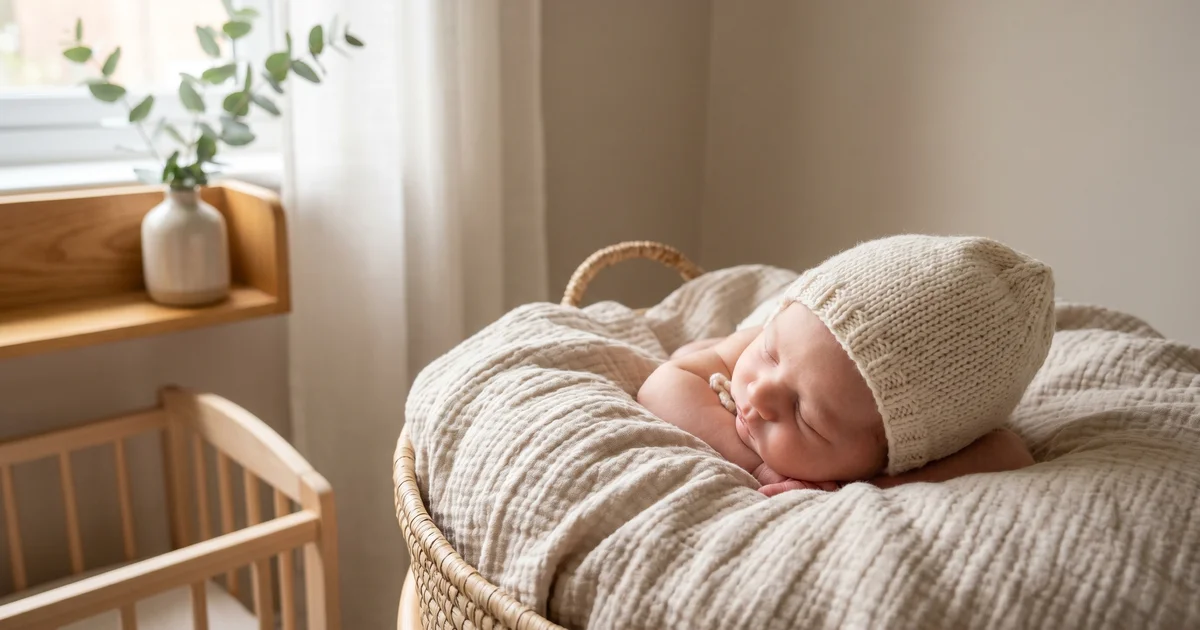
Freddie's first photograph in the world was a tiny scrunched face poking out of a hospital-issue cotton baby bonnet. We didn't think much of it at the time — we were running on three hours' sleep and adrenaline — but two years and another baby later, we've come round to the bonnet. They keep ears warm. They stay on. They photograph beautifully. And in the UK, where it's a bit chilly nine months of the year and a bit too sunny for the other three, a good baby bonnet is one of those small purchases that earns its keep.
This guide is everything we've worked out since Freddie — the difference between a knitted, cotton and sun bonnet, when to use which, how to size them so they actually stay put, and the UK picks that we (and the friends we've polled) genuinely rate. For the wider context on what to dress your baby in, our full baby clothing guide covers fabrics, sizing and seasonal layering from newborn upwards.
What Is a Baby Bonnet, and Why Are They Back?
A baby bonnet is essentially a hat with proper ear coverage and a chin tie. The shape goes back centuries — the Victorians used them religiously — and the reason they've come back into UK nurseries is simple: they stay on. A beanie hat slides off the back of a wriggly baby's head every five minutes. A bonnet, with its little ribbon under the chin, doesn't go anywhere. That, plus the photo-friendly look, is why most UK parents end up with at least one or two by the time their baby is six months old.
The four styles you'll see in the UK are knitted bonnets (winter, heirloom-y), cotton bonnets (everyday, all-season), sun bonnets (summer, with a brim and UPF protection) and christening bonnets (lace, ivory, ceremonial). Each has its place — and most parents end up with a small rotation rather than just one.
Are Baby Bonnets Actually Practical or Just Cute?
Both, honestly. The cute side is obvious — a baby in a knitted bonnet looks like every Pinterest newborn shoot you've ever scrolled past. But the practical case is real, and it comes down to three things: heat retention, sun protection and fit security.
Newborns lose about 20% of their body heat through the head, which is why every UK maternity ward sticks a bonnet on a baby within the first hour. They also have absolutely no scalp protection from UV — a baby's skin burns in minutes — so a bonnet with a brim is one of the safest summer hats going. And unlike a stretch beanie, the chin tie means it stays on even when baby decides to pull at it.
If you're researching what to dress your baby in for sleep specifically, our night-dressing guide covers the NHS guidance on bare-headed sleep — bonnets are for outings and photos, not the cot.
Knitted Baby Bonnets: The Heirloom Choice
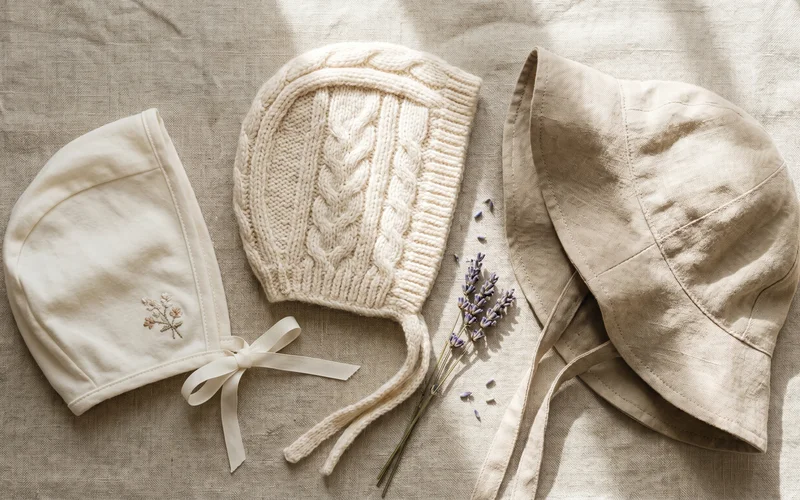
A knitted baby bonnet is the one you'll see in every newborn photo. Cable-knit, cream or oatmeal, with a thick fabric tie under the chin — they're warm enough for British winters, photograph beautifully, and tend to be the bonnets that get kept and passed down. If you've got a grandparent who knits, you're sorted; if not, the UK high street and Etsy are absolutely full of lovely options.
Look for natural fibres where you can. Merino is soft enough for newborn skin and machine-washable in many cases. Baby alpaca is the upgrade we'd genuinely recommend — softer than wool, naturally hypoallergenic and warmer without the bulk. Cheap acrylic bonnets work fine for everyday but pill quickly and can feel scratchy. If you fancy knitting one yourself, our baby knitting patterns guide rounds up the easiest beginner patterns for bonnets, hats and matching mittens.
Cotton Baby Bonnets for Everyday and Warmer Months
For the bulk of the year — spring, autumn, mild summer days, all those in-between weeks — a cotton baby bonnet is the workhorse. They're lightweight enough not to overheat baby, washable on a normal cycle, soft on newborn skin, and forgiving on sizing because most have stretch. The classic style has two chin ties you tie in a bow, which looks ridiculously sweet and stays put even on the wriggliest 4-month-old.
UK parents tend to gravitate towards neutral colours — cream, oatmeal, sage, dusty pink, soft blue — partly because they go with everything and partly because they age really well. A bright pink "0–3 months" bonnet looks great in week one and a bit dated by week six. A cream cotton bonnet looks lovely from newborn through to twelve months. Pair them with a soft cotton onesie or one of our recommended baby tees for that perfect everyday look.
Baby Sun Bonnets: UV Protection That Stays On
This is where bonnets genuinely beat regular hats hands-down. A baby sun bonnet with a wide brim, a back neck flap and a chin tie does something a beanie or a floppy sunhat just can't — it covers the bits that always get burnt (back of neck, ears, top of head) and stays on. NHS advice for babies under 6 months is to keep them out of direct sun completely, but for older babies, a UPF 50+ sun bonnet on every pram walk is the single best UV defence going.
Look for: a brim of at least 7–8cm at the front, a neck flap (the bit that drops down at the back), an adjustable chin tie, and breathable cotton or bamboo. We'd avoid stretchy synthetic sun hats — they trap heat and tend to slip. For families heading to a UK seaside or abroad, you can browse UPF 50+ baby sun bonnets here.
Christening and Special Occasion Bonnets
A christening bonnet is a different animal — usually ivory or white, often lace, sometimes silk or fine cotton, with satin ribbon ties. They're worn for the ceremony itself and then kept. Many UK families pass the same christening bonnet down through generations, and even non-religious families often buy a "blessing day" or naming-ceremony bonnet purely for the keepsake value. If you're putting together a christening outfit, a lace bonnet paired with a long gown is the traditional UK look.
For the broader keepsake context — bonnets, gowns, photo frames and the like — see our baby keepsakes guide. And if you're shopping for a baby gift more generally, a christening bonnet is one of the most thoughtful options on our personalised baby gifts list.
How to Get the Right Size (and Stop It Slipping Off)
UK baby bonnet sizing is usually given by age range — 0–3, 3–6, 6–12, 12–18 months — but heads vary enormously. The most reliable approach is to measure baby's head circumference at the widest point (just above the eyebrows, around the back) and check the brand's size chart. Newborns are typically around 33–36cm; by 3 months you're at roughly 38–40cm; by 12 months around 45–46cm.
If you're buying as a gift before the baby's arrived, go for 0–3 months. Most bonnets stretch a bit, and a slightly large bonnet just sits a touch lower — far better than a tight one that pinches or slides off the back of the head. For premature babies, regular newborn sizes are usually too big; our preemie baby clothes guide covers the smaller sizing options that work for early arrivals, including bonnet sets.
Two practical tips that we wish someone had told us:
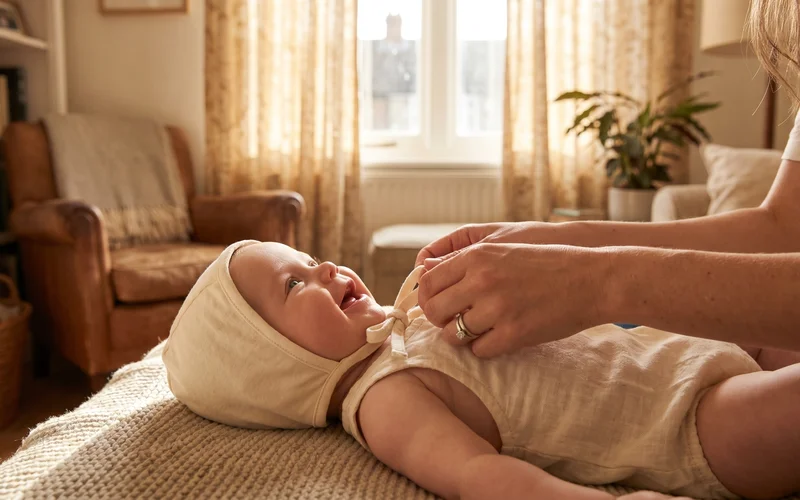
- Tie the bow under the chin, not under the jaw. Under the chin keeps it secure; under the jaw lets the bonnet slide back.
- Two-finger rule. You should be able to fit two fingers between the tie and baby's chin — any tighter and it'll be uncomfortable, any looser and it'll come off.
Baby Bonnet Materials: What's Soft Enough for Newborn Skin
Not all bonnet fabrics are equal. For direct skin contact on a newborn, the materials worth looking for are:
- 100% organic cotton — the safe default. Soft, breathable, machine-washable, hypoallergenic. Look for GOTS-certified for sensitive skin.
- Bamboo — softer than cotton, naturally temperature-regulating and antibacterial. Excellent for summer and for babies prone to eczema.
- Merino wool — superfine merino is soft enough for most babies and brilliantly warm. Avoid coarse wool — it'll itch.
- Baby alpaca — naturally lanolin-free, hypoallergenic and warmer than wool. The premium choice; covered in detail in our baby alpaca guide.
- Linen — beautiful for spring/summer, breathable, gets softer with each wash. A bit creased-looking, which is part of the charm.
Avoid pure polyester or acrylic for direct skin contact — they trap heat and can irritate sensitive skin. Cheap fancy-dress style bonnets are usually one of these, fine for a 20-minute photo session but not for daily wear.
Personalised Baby Bonnets and Why They Make Lovely Gifts
A personalised baby bonnet with the baby's name embroidered on the side is one of those gifts that genuinely gets kept. It's relatively affordable (£15–£35 in the UK), beautifully presented, and ends up in every newborn photo. Etsy is full of small UK makers offering them; Amazon also has a growing selection of personalised options. You can browse personalised baby bonnets here.
If you're buying for a friend or relative, pair the bonnet with a matching set of mittens or a personalised cardigan for a complete keepsake gift. Our full personalised baby gifts guide covers what to consider for sizing, colours and lead times — most personalised pieces add 3–7 days, so order in advance of any baby shower or due date.
How to Wash and Care for a Baby Bonnet
Cotton and bamboo bonnets are machine-washable on a 30°C cycle with a non-bio detergent. Knitted bonnets — especially merino, wool or baby alpaca — are usually hand-wash or wool-cycle only. Always check the label first.
- Wash before first wear. All baby clothing, including bonnets, can have manufacturing residues that irritate newborn skin.
- Use non-bio detergent. NHS-recommended for sensitive baby skin, and gentler on natural fibres.
- Skip fabric softener on knitted bonnets — it coats the fibres and reduces breathability.
- Air dry flat for knits to keep their shape; cottons can go in a low tumble dry.
- Store with cedar or lavender if you're keeping a wool or alpaca bonnet long-term — moths love natural fibres.
Where to Buy Baby Bonnets in the UK
The UK has loads of good options at every budget. John Lewis and M&S do reliable cotton everyday bonnets. Etsy is the place for handmade knitted and personalised ones — search by UK seller to keep delivery quick. Mamas & Papas, Mori and The Little White Company sit at the slightly more premium end. And Amazon UK covers the lot with fast Prime delivery — particularly good for sun bonnets and multi-packs. You can browse baby bonnets on Amazon UK here.
For full coverage of UK baby clothing buying — sizes, fabrics, what's worth ordering before the birth and what to wait on — head back to our pillar baby clothing guide. If you want decorative head accessories rather than full coverage, our baby headbands guide covers bow, knotted and turban styles.
Verdict: Is a Baby Bonnet Worth Buying in 2026?
Yes — and we'd recommend three. One cotton bonnet for everyday spring/autumn wear, one knitted bonnet for winter and photos, and one sun bonnet with UPF 50+ for summer pram walks. That'll cost £30–£70 in total in the UK, and between them they'll cover almost every weather scenario from newborn through to the first birthday.
If you've got the budget for one premium piece, make it a baby alpaca or hand-knitted bonnet — it'll outlast everything else in the wardrobe and end up in every photo album you ever make. And if you're buying as a gift, a personalised cotton bonnet is one of the most thoughtful UK new-baby presents going. Whichever way you go, the bonnet is one of those small, sensible buys that earns its place in every UK baby's wardrobe.