
About the Authors

We're Tom (33) and Sophie (31) — a Bath couple who launched BabyMade after becoming first-time parents to Freddie. Sophie's midwifery background and our shared obsession with finding genuinely good baby products turned into this blog. We write everything we wish we'd had when Freddie arrived.
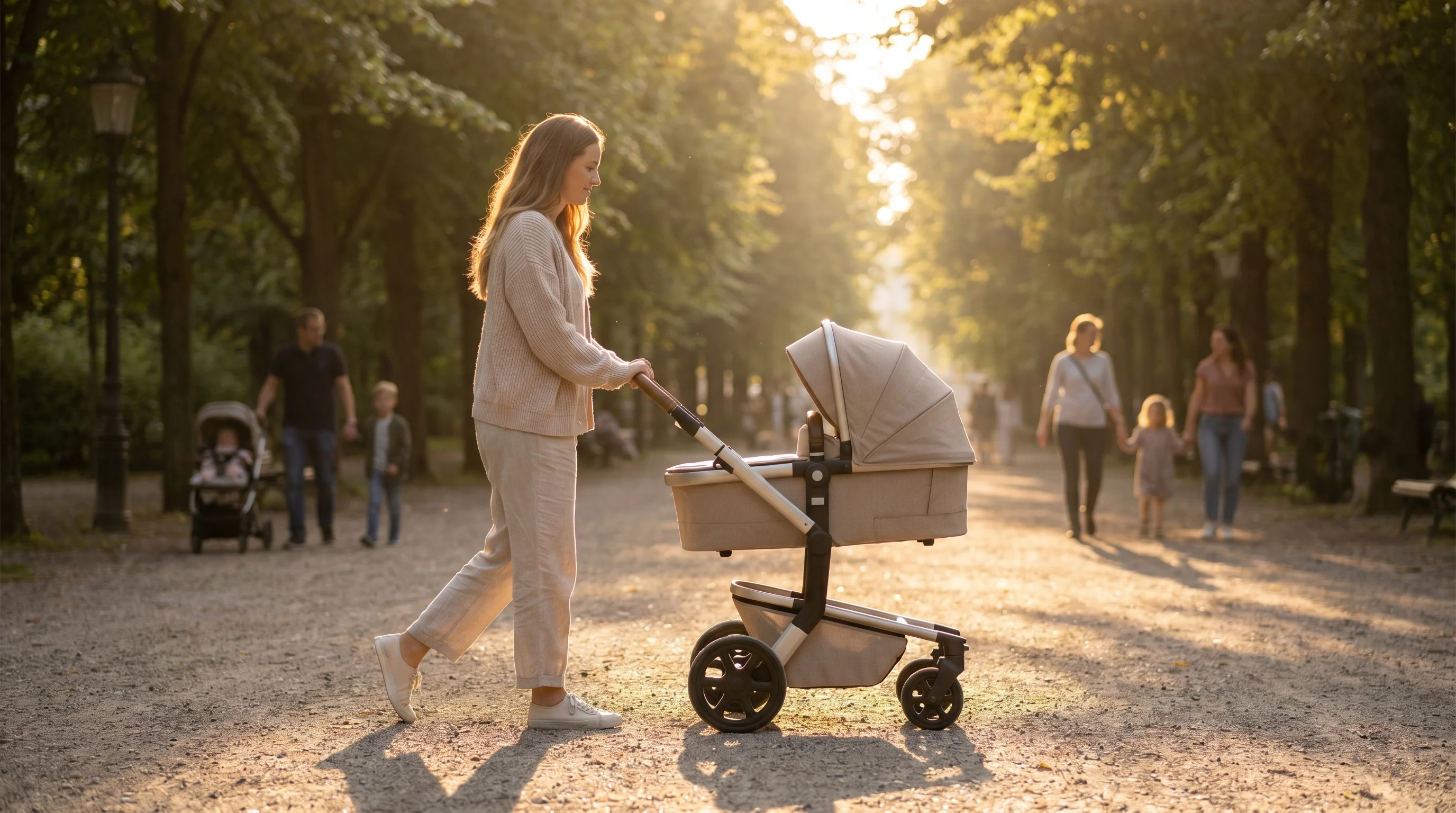
Choosing a pram is one of those decisions that feels completely overwhelming before the baby arrives, and then immediately obvious once you're actually using it. The trouble is you have to decide before you know what your life actually looks like — whether you'll be navigating narrow shop doors, bouncing across muddy park paths, cramming it into a small car boot, or doing all three on the same Tuesday.
And that's before you even get to the carrier question. Should you babywear? Is a stretchy wrap better than a structured carrier? What's a ring sling and will you actually use it? When can they face forward? When do you need to stop?
This guide covers everything — from stretchy wraps for newborns to double prams for baby and toddler, ISOFIX car seats and everything in between. Think of it as the guide written by a parent who made several expensive mistakes so you don't have to.
Before you buy anything: Try before you buy if at all possible. Many UK towns have sling libraries where you can borrow different carriers for a week. For prams, visit a proper baby store and push several — on carpet, over thresholds, one-handed. You'll know within 30 seconds what works for you.
Babywearing — Why It Works and Who It's For
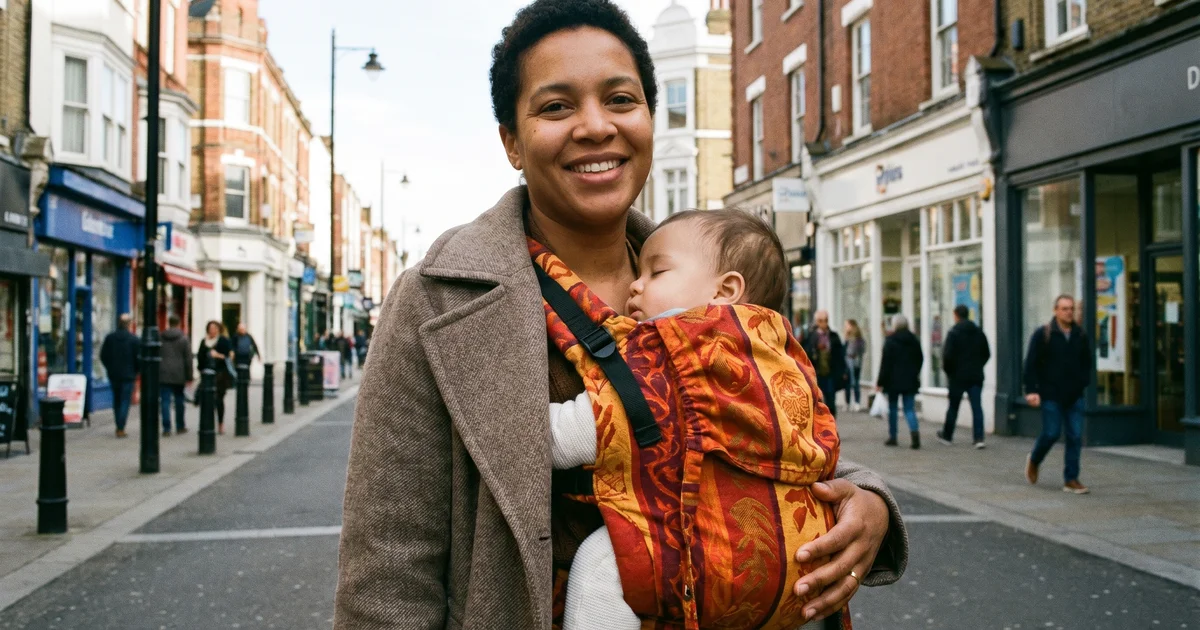
Babywearing — carrying your baby in a carrier, wrap or sling rather than pushing them in a pram — has been practiced across every culture in human history. It's only in relatively recent Western history that prams became the default. And while prams are brilliant and we'll cover them thoroughly in this guide, carriers deserve equal attention because the benefits are genuinely significant.
Carried babies tend to cry less. Research consistently shows that babies who are held more cry significantly less — not because you're spoiling them, but because being close to a caregiver's body regulates their temperature, heartbeat and breathing in ways that a pram simply can't. For premature babies especially, skin-to-skin carrying (kangaroo care) has remarkable documented health benefits.
Babywearing also keeps your hands free — which sounds obvious but in practice is transformative. You can do the school run, go round the supermarket, make a cup of tea, chase a toddler, or simply sit and eat lunch with both hands while your baby sleeps peacefully against your chest.
It's not for every family or every moment. Some babies hate being carried from the start; some parents find it uncomfortable regardless of what they try; some situations just need a pram. But if you haven't tried it, it's worth trying — especially in the fourth trimester when babies want nothing more than to be held.
Stretchy Wraps — The Newborn Carrier
A stretchy baby wrap is a long piece of jersey fabric — usually 4–5 metres — that you tie around your body to create a secure carrying position for your baby. It sounds complicated. It isn't, once you've practised it a few times.
Stretchy wraps are ideal for newborns because the soft, enveloping fabric holds them in a very natural position — knees higher than bottom, facing in, head supported against your chest. The fabric distributes their weight evenly across your whole torso rather than concentrating it on your shoulders, which makes a big difference to how long you can comfortably carry them.
The advantages of a stretchy wrap
- Excellent for newborns — the soft stretch is gentle and very womb-like
- Pre-tied method means you can pop baby in and out without re-tying each time
- Very close contact, great for skin-to-skin and breastfeeding while carrying
- Relatively inexpensive compared to structured carriers
- Works for most body types and adjusts easily
The limitations
- They do get hot in summer — a lightweight cotton or bamboo blend helps
- Most stretchy wraps have a weight limit of around 15kg, and the stretch becomes less supportive as babies get heavier — typically from around 5–6 months you'll want to transition to something more structured
- The initial learning curve puts some people off — though most people crack it within a few attempts
Popular UK brands include Izmi, Hana Baby, Joy and Joe, and the Star Wrap. All are good. The main differences are fabric weight, stretch, and how they wear in different weather. A medium-weight cotton wrap is a safe starting choice.
Structured Baby Carriers — From 3 Months Onwards
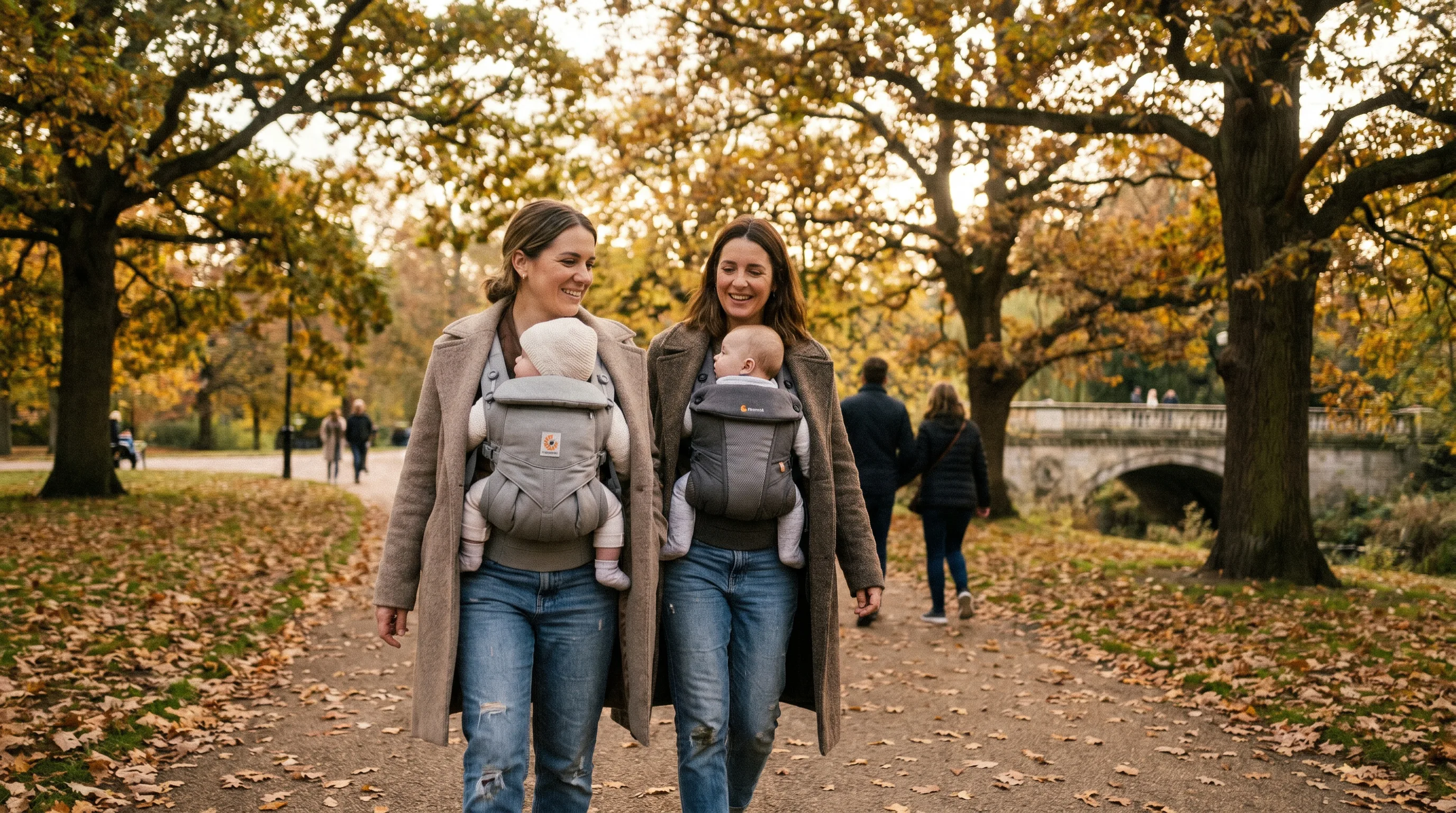
Structured carriers — sometimes called soft structured carriers or SSCs — are the step up from stretchy wraps. They have buckles, straps and a rigid or semi-rigid waist belt that transfers your baby's weight onto your hips rather than your shoulders and back. Once you try a good structured carrier, you'll understand immediately why babywearers love them.
Most structured carriers are suitable from around 3.5kg with a newborn insert included, or from around 3–4 months without one. They carry much higher weight limits than stretchy wraps — typically up to 20kg — so they grow with your baby well into toddlerhood.
What makes a carrier ergonomic?
The term "ergonomic baby carrier" gets used a lot in marketing, but it has a specific meaning: a carrier that holds your baby in the M-position — knees higher than bottom, thighs fully supported to the back of the knee, creating a natural squat-like position. This is the hip-healthy position recommended by the International Hip Dysplasia Institute. Narrow-based carriers that allow baby's legs to dangle straight down are not ergonomic and can put unnecessary stress on developing hips.
Always check that the seat panel of any carrier you buy is wide enough to support your baby from knee to knee — not just the nappy area.
Front carry vs back carry
Most structured carriers can be worn with baby on the front (facing in towards you), on your back, or on your hip. Front-facing-in is the standard position for most carries and works from newborn onwards. Back carrying is brilliant once your baby has good head control (usually from around 6 months) and gives you much more freedom of movement. Hip carrying is useful for quick in-and-out carries with a older baby.
Brands worth knowing
- Tula — extremely popular in the UK, beautiful fabrics, very comfortable for long carries. The Free-to-Grow version adjusts to fit from newborn without an insert. See our full Tula baby carrier review for the complete breakdown.
- Ergobaby Omni 360 — one of the most versatile carriers available, with all carry positions including front-facing-out. The 360 name refers to the four carry positions. Good waist support and well-padded straps.
- BabyBjörn Harmony — premium price point but exceptionally easy to put on, very well-padded, and one of the most comfortable structured carriers for the wearer. Popular with parents who want simplicity over versatility.
- Connecta and Integra — UK-made carriers, beautifully constructed, strong community of users. The Integra is particularly good for back carrying.
- LittleLife — excellent for hiking and outdoor carries with older babies and toddlers, with a proper frame and storage.
Ring Slings — Quick, Versatile and Brilliant
A ring sling baby carrier is a length of fabric threaded through two rings, worn over one shoulder. It adjusts via the rings rather than buckles, which makes it one of the quickest carriers to get on and off — and one of the most useful for situations where you're constantly popping baby in and out.
Ring slings are particularly brilliant for:
- Cluster feeding evenings — you can breastfeed hands-free in a ring sling with a bit of practice, which is a complete game-changer
- Quick trips — in and out of the car, round the shops, at an appointment
- Hip carries with an older baby — one of the most natural and comfortable positions for a baby who wants to see the world
- Newborns who want to be held but you need your hands
The one-shoulder design means ring slings are less comfortable for very long carries than a well-padded structured carrier — the weight is distributed differently and can feel uneven after an hour or more. But for carries of up to 45–60 minutes, they're brilliant.
When Can Baby Face Forward in a Carrier?
This comes up constantly and the answer is more nuanced than a simple age.
Most babywearing specialists and ergonomic carrier manufacturers recommend waiting until your baby has good head and neck control AND can sit independently with minimal support — which is usually around 4–6 months. Before this, their neck muscles aren't strong enough to hold their head against the overstimulation of facing outwards for extended periods.
There's also a developmental argument for facing in for longer: a baby facing their caregiver can regulate their emotional state more easily, whereas a baby facing out has no escape from visual stimulation and can become overtired very quickly. Many babywearing educators recommend skipping the forward-facing position entirely and going to back carry instead — which gives the same view of the world but with the support of your back behind them.
If you do want to face out, use a carrier specifically designed for it (like the Ergobaby 360 or BabyBjörn), keep sessions short — 20–30 minutes maximum — and watch for signs of overstimulation (glazed eyes, turning head away, fussing).
Prams and Travel Systems — What You Actually Need to Know
The pram market in the UK is enormous, the price range is vast, and the terminology is genuinely confusing. Let's start with some definitions:
| Term | What it actually means |
|---|---|
| Pram | Traditionally a flat-lying carrycot on a chassis. Newborn-only position. Often the carrycot part of a travel system. |
| Pushchair | A seat-based buggy where baby sits upright or reclined. Usually suitable from 6 months or when baby can support their head. |
| Travel system | A modular system — usually carrycot + pushchair seat + car seat — that clips onto one chassis. The most common choice for first-time parents. |
| Buggy | Informal term — usually means a lightweight, compact stroller-style pushchair. |
| 3-in-1 | A travel system including a carrycot, pushchair seat and infant car seat all in one package. Good value but heavier than buying components separately. |
What most first-time parents actually need
For a first baby, a 3-in-1 travel system covers all the bases: the carrycot for the first 6 months when baby needs to lie flat, the pushchair seat for 6 months onwards, and the infant car seat that clips straight onto the chassis without disturbing a sleeping baby. It's the setup most families end up with, and buying it as a bundle is usually better value than buying components separately.
The questions that actually matter when choosing a pram
- What's your car boot like? Measure it before you buy. The nicest pram in the world is useless if it doesn't fit your car.
- Do you do a lot of off-road walking? Air-filled tyres and a suspension system matter enormously on gravel paths and mud. Foam-filled or plastic wheels are fine for pavements but hopeless off-road.
- How narrow are your local shops and your front door? Many beautiful prams are too wide for standard UK doorways when the chassis is fully extended. Check the folded width and internal door widths before buying.
- Will you use public transport? Folding speed and folded size matter enormously if you're regularly getting on buses or the Tube with it.
- How heavy is it? Every pram feels fine in a showroom. After six months of lifting it in and out of the car boot single-handed, every extra kilogram will be felt.
- Does it face parent or world? Some chassis only face one way; others are reversible. Most experts recommend parent-facing for newborns so they can see your face and you can monitor them easily.
Lightweight Buggies and Strollers
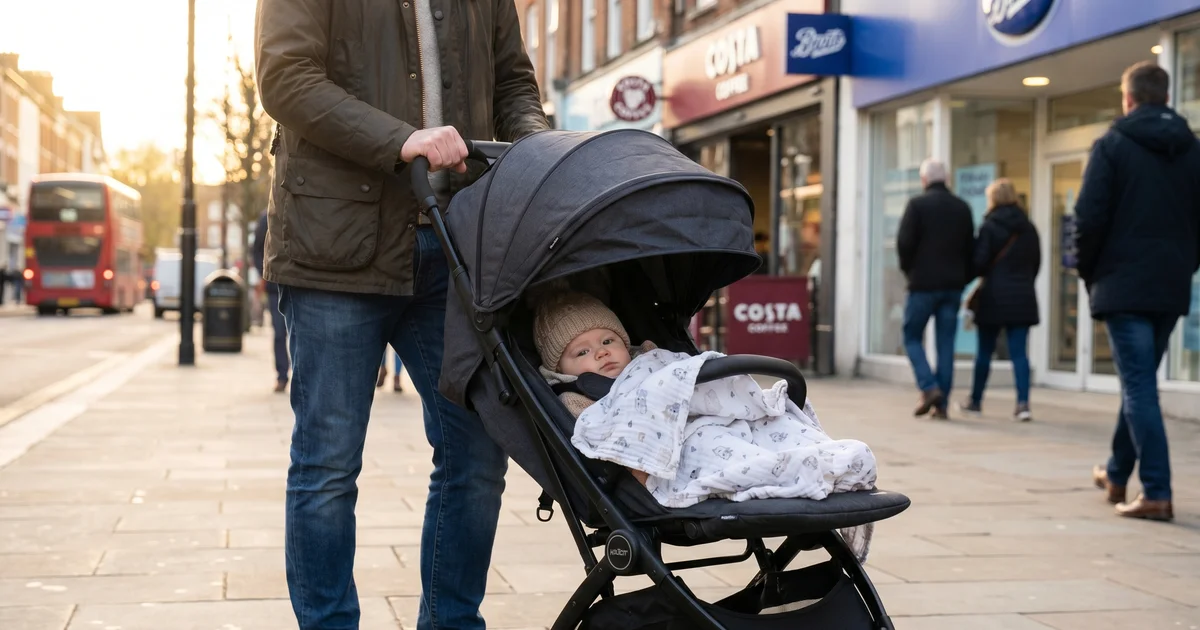
A lightweight buggy is the second pram that almost every family ends up buying, and the one that often sees more daily use than the full travel system once the baby is past 6 months. This is the one you grab for quick trips, holidays, and the school run. It lives in the car rather than the hallway.
What to look for in a lightweight pushchair:
- Weight — under 7kg is genuinely lightweight. 5–6kg is excellent. Some travel strollers get down to 4–5kg which is remarkable.
- Fold type — the one-hand fold is as useful as it sounds. A buggy that requires two hands and three separate steps to fold will be used grudgingly. A one-hand fold that produces a compact package will be loved.
- Recline — for naps on the go, a decent recline is important. Many lightweight buggies don't recline flat, which is fine for children who can sit up, but limiting for younger babies.
- Sun canopy — a decent canopy that extends over a wide arc makes a significant difference in summer.
- Shopping basket — lightweight buggies often sacrifice basket size. Check the basket is accessible when the seat is reclined, and large enough to hold more than a small bag.
The Babyzen YOYO is possibly the most famous lightweight buggy in the UK — compact enough to go in an overhead locker on a plane, good recline, very easy fold. It's expensive but holds its resale value remarkably well. The Joie, Graco and Cosatto ranges all offer very good lightweight options at lower price points.
One of the most consistently recommended compact pushchairs in the UK is the Baby Jogger City Mini — praised for its genuinely usable one-hand fold, excellent canopy and solid build quality. For a full breakdown covering the fold mechanism, newborn use, the Mini 2 vs GT2 difference and what UK parents actually think after 12+ months of daily use, see our dedicated Baby Jogger City Mini review.
Double Prams for Baby and Toddler
If you're expecting a second baby while your first is still in the pushchair phase, the double pram question is one of the most important decisions you'll make. The good news is there are genuinely good options. The bad news is they're all a compromise in some direction.
Tandem pushchairs
One seat in front of the other. The advantage is a narrower width — most tandems will fit through a standard door that a side-by-side won't. The disadvantage is length — they're significantly longer than a single pushchair and can be difficult to manoeuvre in tight spaces. Double prams for baby and toddler in tandem configuration usually have one seat that can lie flat for the baby and one upright seat for the toddler.
Side-by-side double buggies
Both children sit next to each other. Easier to access both children, they can interact with each other, and the pushchair is less unwieldy in terms of length. The width is the issue — many side-by-sides are too wide for a standard 80cm doorway. Check your local shops and your front door width before buying.
The buggy board option
A buggy board is a small platform that attaches to the back of a single pushchair for a toddler to stand on. It's not ideal for long journeys where the toddler gets tired, but for shorter trips it saves buying a whole double buggy. Many parents use a buggy board as a bridge solution until the toddler is old enough to walk most trips reliably.
Baby Car Seats — ISOFIX, Rear-Facing and the Rules
Car seat safety is one area where it genuinely pays to do the research, because the stakes are high and the rules have changed significantly in recent years. UK law requires all children to use an appropriate car seat until they're 12 years old or 135cm tall, whichever comes first.
The new R129 (i-Size) standard
Since 2017, new car seats sold in the UK should comply with the R129 regulation (also called i-Size). The key changes from the old regulations:
- Rear-facing travel is mandatory until at least 15 months (compared to 9kg under the old rules)
- Side impact protection is required on all seats
- ISOFIX is mandatory on i-Size seats
- Seats are classified by height rather than weight
Rear-facing — why it matters
Rear-facing car seats are significantly safer for young children in a frontal collision — the most common type of serious accident. In a rear-facing seat, the force of a crash is spread across the child's back, head and neck rather than concentrated on the harness straps. Sweden has been using rear-facing car seats until age 4+ for decades and has an extraordinary child road safety record.
Current UK guidance strongly recommends keeping children rear-facing for as long as possible — ideally beyond 15 months and well into toddlerhood if your seat allows it.
ISOFIX — what it is and why it matters
ISOFIX is a system of rigid anchor points built into the car that the car seat clips directly into, rather than being held in place by the seatbelt. A baby car seat with ISOFIX is less likely to be incorrectly installed (which is the cause of most car seat failures in accidents), more stable during normal driving, and generally faster to install and remove. If your car has ISOFIX points, use them.
Getting a car seat checked
Before buying a car seat, check it fits your specific car. Not all seats fit all cars — the fit guide on the manufacturer's website or the In-Car Safety Centre checker will tell you which seats are compatible. Many major retailers offer free car seat fitting checks. Use them. An incorrectly installed car seat is almost as dangerous as no car seat at all.
Carrier and Pram Accessories Worth Having
Once you've got your carrier and pram sorted, a few accessories make everything work better in the UK — which, as we all know, has weather that changes every 20 minutes.
Baby carrier accessories
- Carrier rain cover — an essential piece of kit for the UK. A good carrier rain cover fits over both you and the baby when they're in the carrier, keeping them dry without removing them. Much more practical than an umbrella with a baby strapped to you.
- Carrier coat or hoodie — an extension panel that zips into your existing coat to cover both you and the baby. The more elegant alternative to a rain cover for lighter rain or colder weather.
- Drool pads — clip onto the carrier straps where babies chew. Saves the carrier straps from constant soaking and means you're not staring at chewed, soggy fabric all day.
- Hip seat — a waist belt with a rigid padded seat that takes the baby's weight without a full carrier. Brilliant for the "I want up, I want down" toddler phase when you need to carry them for five minutes at a time but a full carrier feels like overkill.
Pram accessories
- Rain cover — not optional in the UK. Check it's designed for your specific pram model as generic ones often don't fit well and let in water at the sides.
- Footmuff — much better than blankets in a pram, which fall off constantly. A good footmuff zips around the baby and keeps them genuinely warm without needing constant readjustment.
- Parasol or sun shade — the sun canopy on most prams is inadequate on a genuinely sunny day. A parasol or mesh sun shade clips onto the pram and gives proper protection. Particularly important for newborns who can't wear sunscreen.
- Pram organiser — clips onto the handlebar and holds your phone, keys, coffee cup and change bag essentials. Life-changing if you're regularly out and about alone with the baby.
- Car seat mirror — if you have a rear-facing car seat, a mirror clipped to the headrest lets you see your baby's face in your rear-view mirror while driving. Worth it for the peace of mind alone.
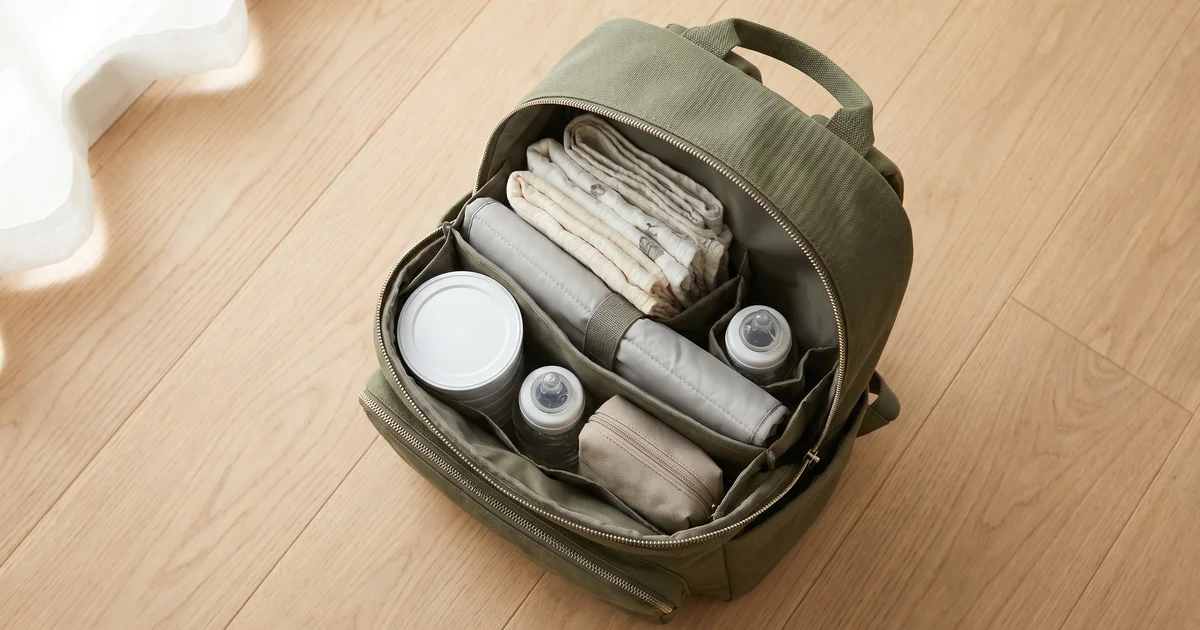
The other thing every parent needs from day one is a decent baby changing bag. It sounds obvious, but it's worth getting right — the wrong bag makes every trip out harder. Our baby changing bags UK guide covers backpacks, totes and crossbody styles, what features actually matter, and which ones work best clipped to a pram.
Related guides: For keeping your baby comfortable on the go, see our baby clothing guide — including what to wear in a carrier in different temperatures — and our baby sleep guide for nap-on-the-go tips and safe sleep in prams.