

About the Authors

We're Tom (33) and Sophie (31) — a Bath couple who launched BabyMade after becoming first-time parents to Freddie. Sophie's midwifery background and our shared obsession with finding genuinely good baby products turned into this blog. We write everything we wish we'd had when Freddie arrived.
Before my first was born, I genuinely thought that babies just... slept. You put them down, they closed their eyes, job done. I had read the books. I had the bassinet. I had the swaddle blankets folded neatly in a drawer. I was, I told myself, prepared.
And then the baby arrived and we were up every 45 minutes for six weeks and I genuinely forgot what it felt like to be a conscious adult functioning on more than three hours of sleep. My husband and I had full conversations that neither of us could remember in the morning. I once put the TV remote in the fridge and spent twenty minutes looking for it.
So this guide is written by someone who has been through it — the false starts, the 4-month sleep regression that nobody properly warned me about, the absolute misery of a baby who will only sleep on you, and eventually, eventually, the gradual shift towards something approaching normal. We cover everything: baby nests, sleeping bags, swaddling, safe sleep, white noise, sleep routines, and the bits the books gloss over.
Important: Safe sleep advice in this guide is based on current Lullaby Trust and NHS guidelines. If anything conflicts with advice from your health visitor or midwife, follow theirs. Guidelines do update — always check the latest.
Safe Sleep — The Fundamentals
Before everything else: safe sleep. This is the non-negotiable stuff, and it's worth knowing properly rather than just hoping for the best. The UK has made enormous progress on reducing SIDS (sudden infant death syndrome) over the past few decades, and a lot of that is down to parents following the safe sleep guidance. It genuinely saves lives.
The current Lullaby Trust guidance in summary:
- Back to sleep, always. Place your baby on their back for every sleep — day and night — until they're 12 months old. Once they can roll themselves over, you don't need to keep repositioning them, but always start them on their back.
- Firm, flat mattress. No soft surfaces, no pillows, no sleep positioners (yes, including the fancy ones marketed as "safe sleeping aids"). The mattress should be firm, flat and covered with a fitted sheet only.
- Room temperature 16–20°C. This is the range recommended for safe baby sleep. Too warm is a risk factor for SIDS. Use a room thermometer — don't guess.
- Smoke-free environment. No smoking around baby, and ideally not in the house at all. Parental smoking significantly increases SIDS risk.
- In the same room for the first 6 months. The NHS and Lullaby Trust recommend baby sleeps in your room (in their own sleep space) for at least the first 6 months, day and night. This significantly reduces SIDS risk.
- No loose bedding, bumpers, or soft toys. Nothing in the sleep space that could cover baby's face. No cot bumpers — they're not safe even though they're widely sold.
Cot bumpers: Despite being widely sold, the Lullaby Trust advises against using cot bumpers. They create a suffocation risk and offer no proven benefit. If you've been gifted one as part of a bedding set, it can stay in the box.
Where Should a Newborn Sleep?
The options for where your newborn actually sleeps are wider than you might think — and what works brilliantly for one family is a complete disaster for another.
Moses baskets
The classic newborn option. A moses basket is a lightweight woven basket with a mattress inside — small enough to sit next to your bed, portable enough to carry from room to room during the day. They're lovely, they look beautiful in newborn photos, and most babies sleep well in them in the first weeks.
The downside: babies grow out of them fast. Most moses baskets are suitable up to about 3–4 months (or until the baby can push up on their arms, which is the safety cut-off). If you're buying one, it might be worth borrowing rather than buying if budget is tight, since the usable period is short. If you do buy: always buy a new mattress even if the basket is second-hand — mattresses should always be new for a new baby.
Moses baskets with stands are the most popular option — the stand brings the basket to a comfortable height so you're not bending down to a floor-level basket every time. Rocking stands are also available, which can help settle a fussy baby.
Can a baby sleep in a moses basket overnight? Yes — as long as the basket has a firm, flat mattress, no loose bedding, and is in the parents' room. It's a perfectly safe overnight sleep option for newborns up to the weight and size limit stated by the manufacturer.
Bedside cribs & co-sleepers
A bedside crib — sometimes called a co-sleeper crib — attaches to the side of your bed at the same height, so baby is right next to you but in their own separate sleep space. For parents doing night feeds (especially breastfeeding parents), this is genuinely life-changing. You don't have to fully get up, baby is right there, and everyone gets back to sleep faster. They tend to last a bit longer than moses baskets — up to around 6 months depending on the model.
Full-size cots
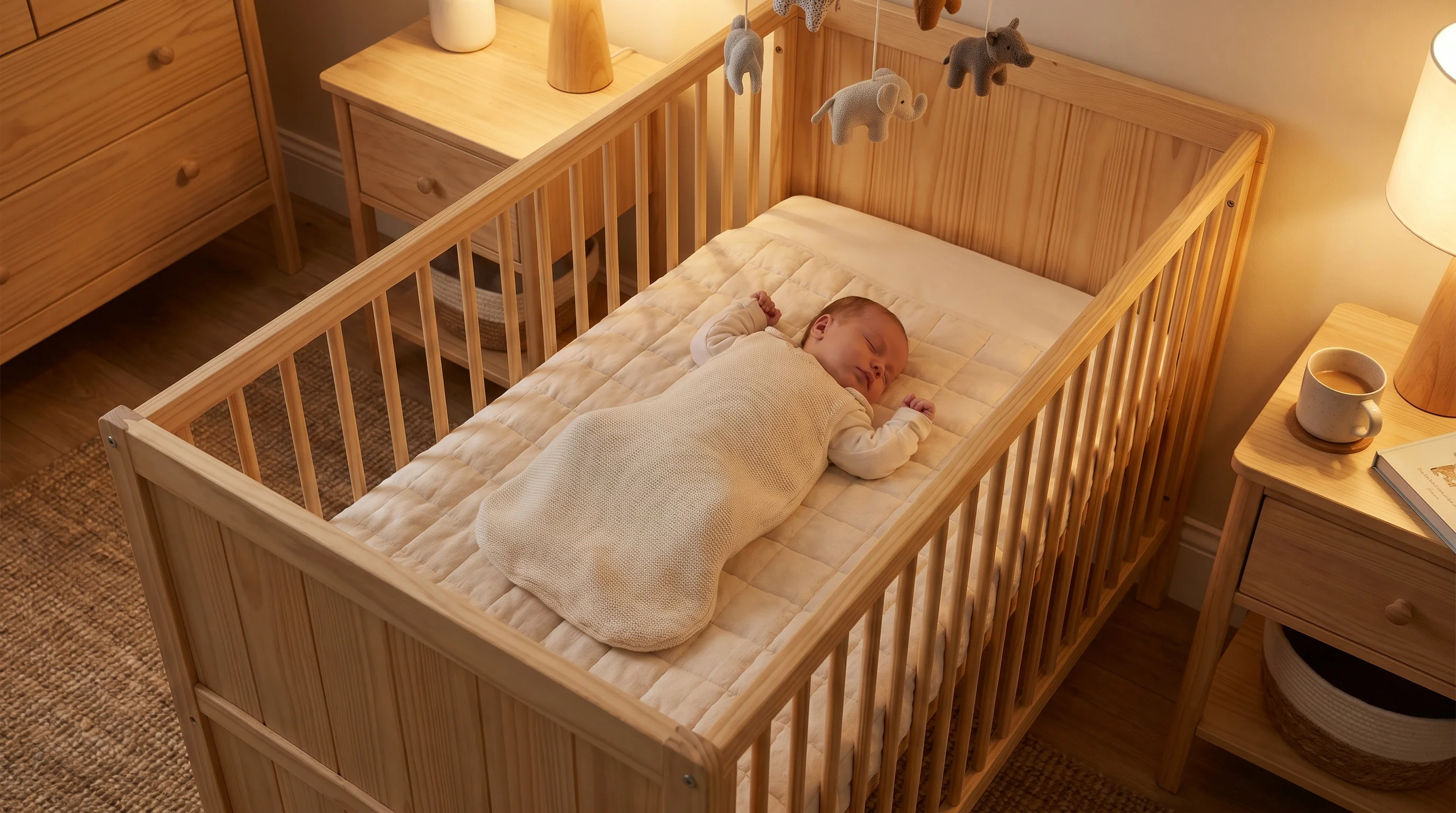
A standard baby cot is the long-term solution — most last from birth to around 2–3 years (some convert to toddler beds). The challenge with using one from day one is that a cot is quite large for a tiny newborn, which some babies find unsettling. A rolled blanket placed outside the fitted sheet (never inside, never touching baby) can help, or you can use a baby nest inside the cot for the early weeks (more on those below).
Baby Nests & Sleep Pods
Right, let's talk about baby nests — because they are, by a significant margin, the most searched baby sleep product in the UK, and they're also one of the most misunderstood.
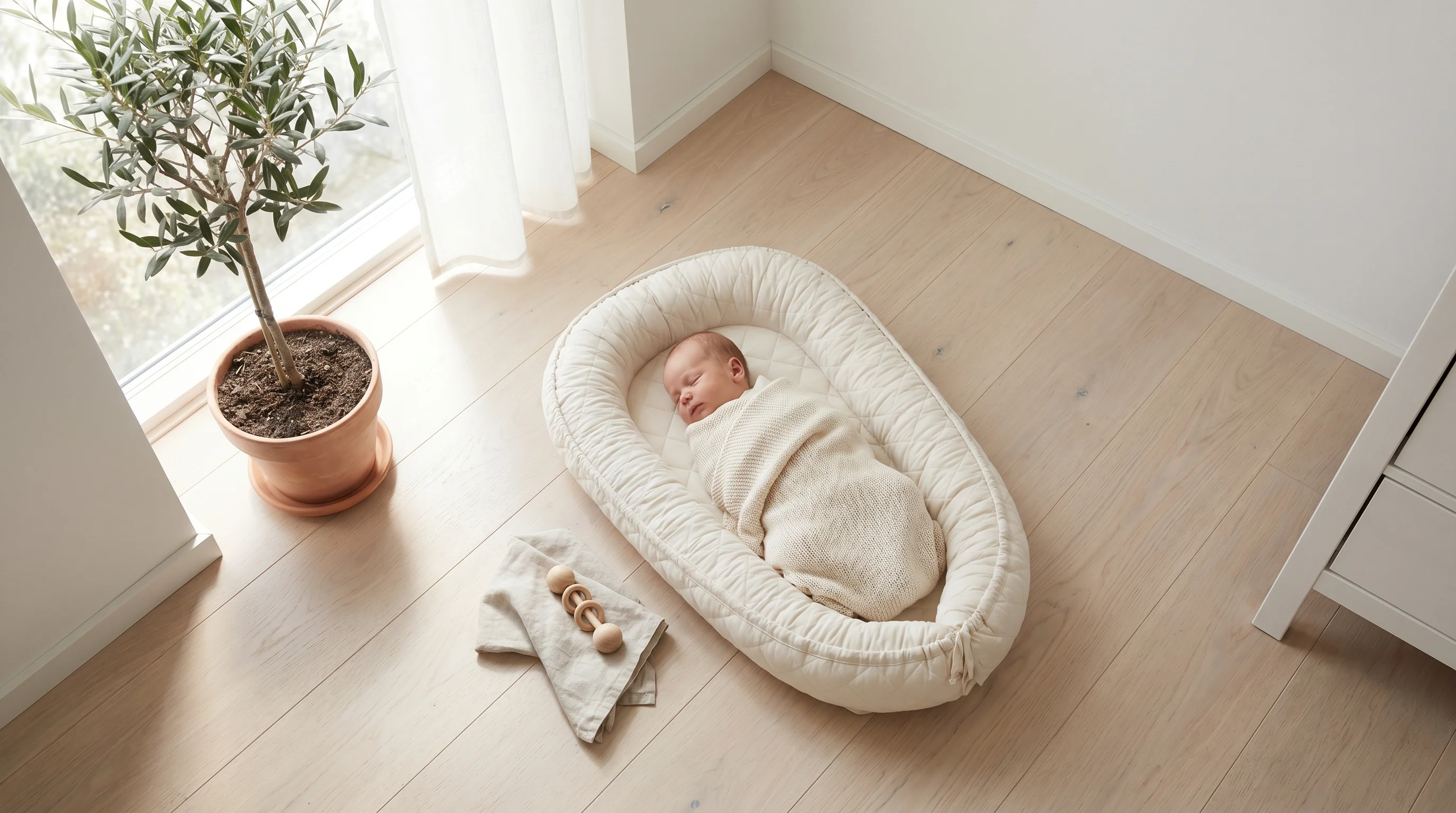
A baby nest for newborn use is essentially a padded, enclosed sleeping space that mimics the snug feeling of the womb. They have raised, padded sides that create a cosy border around the baby — the idea being that the baby feels contained and secure rather than floating in a big open space. They look wonderful, they photograph brilliantly, and parents love them. And they genuinely do help some babies settle.
The important safety caveat
Here's the thing: baby nests and baby sleep pods are not recommended by the Lullaby Trust for overnight or unsupervised sleep. The official guidance is that babies should sleep on a firm, flat surface — and most nests have soft, padded sides that don't meet that standard for unsupervised sleep. This doesn't mean they're dangerous — it means they should be used for supervised napping and lounging, not for putting baby down and going to sleep yourself.
In practice, many parents use them for supervised daytime naps, for a safe place to pop the baby during the day when they need both hands, or as a familiar, comforting environment during the early weeks. Used in this way — supervised, during the day, on a firm flat surface — they're perfectly practical products. The problem is when they're used as an overnight sleep solution on a sofa or a soft surface, which some marketing imagery implies.
If you're specifically researching which baby nest to buy — safety certifications, top UK picks, what the NHS and Lullaby Trust actually say — we've covered it all in our dedicated baby nest UK guide.
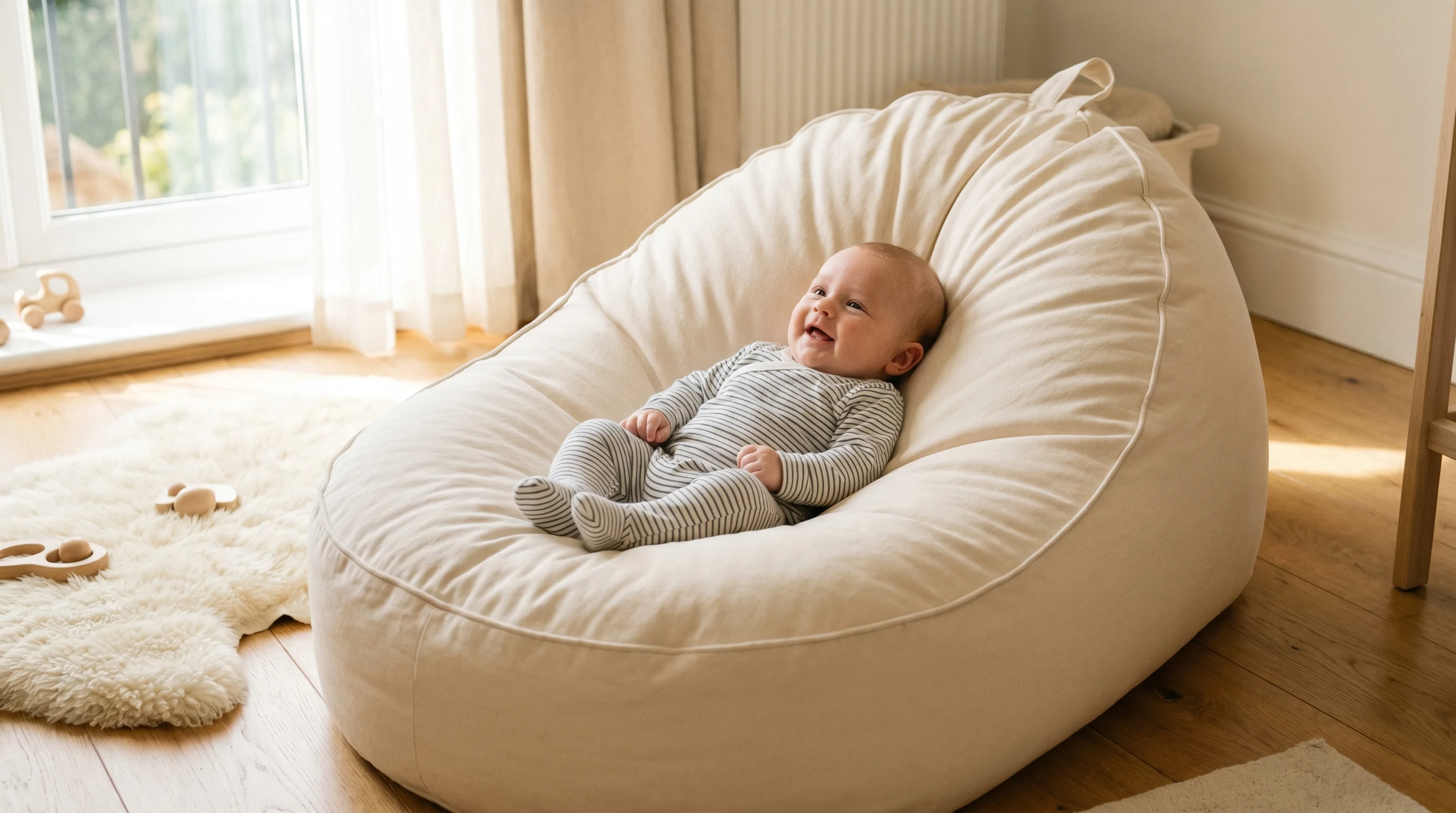
For daytime lounging and settling, some parents also find a baby bean bag helpful — see our dedicated guide for what to look for and the Lullaby Trust's guidance on supervised use.
Baby nest pod options
Baby nest pods tend to be slightly more structured than standard nests — often with a firmer base and breathable sides. The Purflo baby nest is one of the best-known UK options — it has a breathable mesh base and sides, which makes it safer than fully padded alternatives. The EAQ baby nest pod is another popular choice on Amazon UK.
What to look for:
- Breathable materials — mesh or cotton, not thick padding on all sides
- A relatively firm base — baby shouldn't sink into it
- Washable covers — absolutely essential. Things will need washing.
- Portability — one of the best features of nests is being able to carry baby room to room. Lighter is better.
Baby Sleeping Bags & the TOG Guide
A baby sleeping bag — the wearable kind, not the camping kind — is one of the most genuinely useful things you can buy for baby sleep. They replace the need for loose blankets (which are a suffocation risk), they stop babies kicking off their covers and waking cold at 3am, and they create a consistent sleep environment that babies start to associate with sleep time. In terms of simple things that help: sleeping bags are up there.
What does TOG mean?
TOG is a measure of thermal resistance — basically, how warm something is. Higher TOG = warmer. For baby sleeping bags, the most common options are:
| TOG Rating | Room Temp | Season | What baby wears underneath |
|---|---|---|---|
| 0.5 tog | 24–27°C | Hot summer nights | Short-sleeved vest only |
| 1.0 tog | 21–24°C | Summer / warm rooms | Short-sleeved vest or light babygrow |
| 2.5 tog | 16–20°C | Autumn / winter / most of UK spring | Long-sleeved babygrow |
| 3.5 tog | Below 16°C | Very cold rooms / no central heating | Long-sleeved babygrow + vest underneath |
For most UK homes in most of the year, a 2.5 tog baby sleeping bag is the workhorse — it covers autumn, winter and most of spring. A 1 tog baby sleeping bag covers the warmer months. Many parents buy one of each rather than trying to manage layers of blankets.
Baby sleeping bags with sleeves
Baby sleeping bags with sleeves are a slightly different product — they cover the arms as well, which is useful for very cold rooms or babies who tend to pull their arms out. Standard sleeping bags leave the arms free, which is fine for most babies and keeps them from overheating. For newborns especially, sleeveless is generally recommended — their temperature regulation is still developing and overheating is a risk.
Sizing: sleeping bags come in age/weight ranges rather than exact sizes — typically 0–6 months, 6–18 months, 18–36 months. Check the weight range on the specific bag rather than just the age range, since babies vary enormously. A large baby might need the next size up well before the age suggests.
Swaddling — How, When and When to Stop
Swaddling is the practice of wrapping a newborn snugly in a blanket — arms contained, legs free to move. It mimics the feeling of being in the womb and can be genuinely brilliant for settling a baby who startles easily (the Moro reflex — that sudden arm-flinging jump that wakes them up just as they're dropping off — is a significant cause of disrupted newborn sleep, and swaddling dampens it).
Done correctly, swaddling is safe. Done incorrectly, it carries risks — particularly for hip development and for overheating. Here's how to do it right:
Safe swaddling technique
- Hips loose. The legs should be able to bend up and out freely — like a frog. Never swaddle with the legs straight and together, as this can cause hip dysplasia. The International Hip Dysplasia Institute has a good diagram of correct swaddling position.
- Not too tight across the chest. You should be able to slip two fingers between the blanket and baby's chest.
- Don't overheat. Use a lightweight muslin swaddle or a thin stretchy swaddle blanket rather than thick fabric. Remove a layer of clothing underneath if using a swaddle.
- Always on their back. A swaddled baby must always be placed on their back. Never on their front or side.
When to stop swaddling
Stop swaddling as soon as your baby shows any signs of trying to roll over — typically around 2–4 months. A swaddled baby who rolls onto their front cannot push themselves back and is at significantly higher risk of suffocation. This is the hard cut-off. Transitional swaddles that allow one or both arms free are useful in the weeks before fully stopping — they help babies gradually adjust without going cold turkey overnight.
Baby Sleep Temperature Guide
The baby sleep temperature question is one of the most-googled things by new parents at 2am — so here it is, properly laid out.
The recommended room temperature for baby sleep is 16–20°C. This feels quite cool, especially to new parents who want their baby to be warm and comfortable. But overheating is a genuine SIDS risk factor, and the ideal temperature is cooler than most adults keep their own bedrooms.
How to check if your baby is the right temperature: feel the back of their neck or their chest — not their hands or feet, which are normally cool even when the rest of the baby is perfectly warm. If the back of their neck is sweaty or their chest feels hot, they're too warm. Remove a layer.
| Room Temp | What to use |
|---|---|
| 27°C+ | Just a nappy — skip the sleeping bag |
| 24–27°C | Short-sleeved vest + 0.5 tog bag |
| 21–24°C | Short-sleeved vest or babygrow + 1 tog bag |
| 18–21°C | Long-sleeved babygrow + 1 tog bag |
| 16–18°C | Long-sleeved babygrow + 2.5 tog bag |
| Below 16°C | Vest + long-sleeved babygrow + 2.5 tog bag |
A digital room thermometer is worth keeping in the nursery — you can glance at it at any point without waking the baby or standing there trying to guess. Most good baby monitors display the room temperature too, which is very convenient for 3am checks from bed.
If you want a detailed breakdown of exactly what to dress your baby in at night for each temperature — TOG by season, newborn vs. toddler layers, and what to do in a summer heatwave — we've written a dedicated guide: what to dress baby in at night.
White Noise Machines
If you haven't tried white noise yet and your baby is struggling to settle, try it tonight. Seriously — the number of parents who describe a white noise machine as "the thing that saved us" is not small. It's one of those products where the reviews consistently read like love letters.
White noise works because it mimics the constant whooshing sound babies heard in the womb — a sound that's actually quite loud in there, around 70–80 decibels. The silence of a bedroom can be startling by comparison. White noise masks household sounds (the TV from downstairs, the neighbour's car, the dog, your older child), creates a consistent audio environment, and signals to the baby that it's sleep time.
What to look for in the best baby white noise machine
- Multiple sound options. White noise, pink noise, brown noise, womb sounds, rain, shushing, heartbeat — different babies respond to different sounds. Having options means you can find what works.
- Volume control. The NHS recommends keeping it below 50 decibels at the baby's ear position. Most machines have multiple volume levels — start low and adjust.
- Timer or continuous play. Some babies need it playing all night; others just need it to fall asleep. A timer option (30 minutes, 60 minutes) is useful if you want it to switch off after they've dropped off.
- Night light. Many white noise machines double as a soft night light, which is useful during night feeds when you don't want to turn on the main light.
- Portability. A machine with a battery option or USB charging is useful for travel, grandparents' houses, and naps in the car.
You don't actually need a dedicated machine — a white noise app on a phone, or a smart speaker on low, does the same job. But a dedicated machine tends to be more reliable (no notifications coming through, no risk of a call waking the baby), and some have features that apps don't. If it's within budget, it's worth it.
Baby Monitors
A baby monitor is one of those purchases where the range is genuinely enormous — from a basic audio-only model for £20 to a full camera and sensor pad setup for £300. What you actually need depends on how anxious you are, how big your house is, and whether you're likely to use the video feature or just forget it's there.
Audio monitors
The most basic option. You hear everything in the baby's room. Simple, reliable, affordable. Works well for parents who aren't going to obsessively watch a video feed at 11pm (which, to be honest, is not great for your own sleep). The downside is that you can't see what's happening — which matters more once the baby starts moving around.
Video monitors
The current standard for most parents. A camera in the baby's room sends a live feed to a handheld parent unit (or an app on your phone). Night vision is standard on any decent model — you'll want to see clearly in a darkened room. Look for:
- Clear night vision (IR cameras vary a lot in quality — check reviews specifically on this)
- Two-way audio so you can talk to or shush the baby from the parent unit
- Temperature display in the nursery
- A decent battery life on the parent unit — one that needs to be plugged in constantly isn't much use
Baby monitors with sensor pads
A baby monitor with sensor pad sits under the mattress and alerts you if it detects no movement for a set period. These are popular with parents of newborns who are anxious about SIDS — they provide an extra layer of reassurance. Worth noting: they are not medical devices and are not a substitute for following safe sleep guidelines. They also have a reputation for triggering false alarms (usually when the baby moves off the sensor pad), which can be nerve-wracking. Whether the extra peace of mind outweighs the occasional 3am false alarm panic is a very personal call.
Baby Sleep Routines
At some point — usually around 6–8 weeks, sometimes later — you'll start thinking about introducing some kind of sleep routine. This is completely normal and not at all a sign that you're trying to crush your baby's spirit. A predictable bedtime routine helps babies understand that sleep is coming, which makes settling easier for everyone.
What a simple bedtime routine looks like
There's no single right approach, but the most consistently successful routines share a few features: they're consistent (same order, same time), they're calming (wind down rather than ramping up), and they're short enough that parents can actually maintain them through exhaustion. Something like:
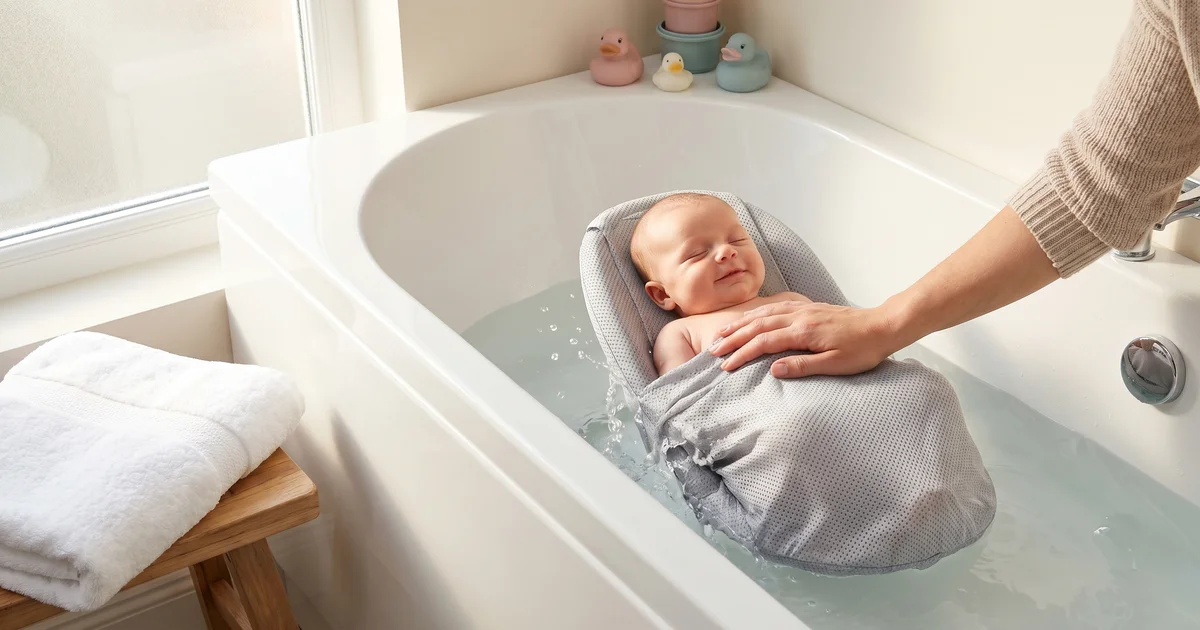
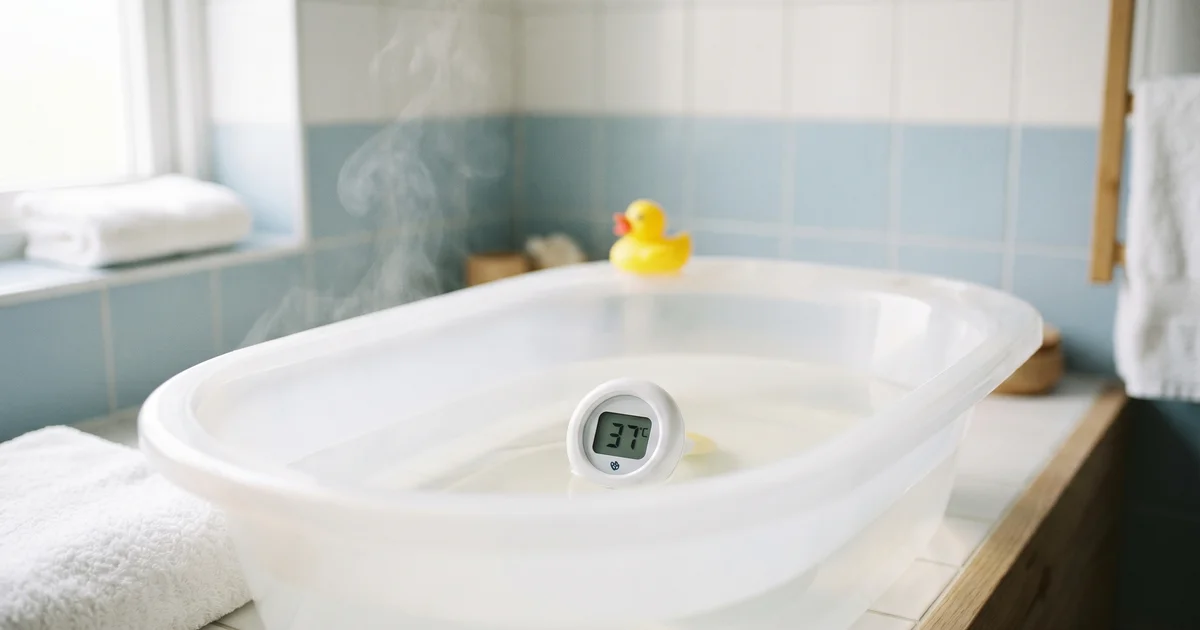
- Bath — warm water (check with a baby bath thermometer — 37–38₀C is the NHS target), gentle baby wash, 10 minutes. Some babies love it; some absolutely hate it. If yours hates it, a gentle top-and-tail wash works just as well — the routine signal matters, not the bath itself. For sensitive or newborn skin, we use Cetaphil baby wash — it's one of the mildest options available in the UK. To keep your hands free during the bath, the Angelcare baby bath support is the one we'd recommend — soft mesh, fits any UK tub, makes one-person bathing genuinely easy.
- Massage — a few minutes of gentle massage with baby lotion. This is lovely for bonding and genuinely helps some babies wind down. For the face specifically, we use Sebamed baby facial cream — pH 5.5, fragrance-free and gentle enough for daily newborn use.
- Clean nappy and sleepsuit
- Feed — a full, calm feed in dim light. If breastfeeding, this might take a while. That's fine.
- Into the sleep space — white noise on, sleeping bag on, lights out or very dim. Same sequence every night.
The magic isn't any single element of the routine — it's the consistency. After a few weeks of the same sequence, babies start to recognise the cues and their body begins to prepare for sleep accordingly.
When to start a routine
The honest answer: whenever feels right for you. The fourth trimester (the first three months) is often too chaotic to maintain anything consistent, and that's genuinely fine — surviving is the goal. Most sleep consultants and health visitors suggest somewhere between 6–12 weeks as a good time to start gently introducing a bedtime routine, without expecting immediate results.
Sleep Regressions
Right. Here's the section I really needed when my first was four months old and I was convinced something had gone catastrophically wrong.
Sleep regressions are periods where a baby who was previously sleeping relatively well suddenly starts waking more frequently, taking shorter naps, or refusing to settle. They're caused by developmental leaps — the baby's brain is doing something significant and it disrupts sleep in the process. They're normal, they're temporary, and knowing they're coming genuinely helps.
The 4-month sleep regression
The big one. The one that everyone needs to know about before it happens. Around 3.5–5 months, babies' sleep architecture permanently changes — they start cycling through light and deep sleep in a more adult-like pattern. This means they now wake between sleep cycles (every 45 minutes to 2 hours) where before they slept more continuously. If they've learned to fall asleep with a prop (feeding, rocking, being held), they'll now wake at the end of every cycle needing that same prop to get back to sleep.
This is why the 4-month regression often feels like a massive step backwards — because in a sense, it is. The only way through it is to gently help your baby learn to fall back to sleep independently, or accept the frequent waking until they're developmentally ready to extend sleep again. Both are valid. There is no magic fix.
Other common sleep regressions
- 8–10 month regression — often coincides with separation anxiety developing and new physical milestones (pulling to stand, crawling). Babies this age often want to practise their new skills at night rather than sleep.
- 12 month regression — frequently coincides with the transition from two naps to one. Overtiredness makes night sleep worse, not better — which is confusing but very real.
- 18 month regression — another language and development leap. Vocabulary is exploding, the world is getting bigger, and some of that comes out as night waking and early mornings.
The most useful thing to know about sleep regressions: they pass. Every single one of them. Usually within 2–6 weeks. Keep the routine going, keep the environment consistent, and try to get whatever sleep you can in the meantime.
Dummies & Sleep
Few baby topics generate more opinions than dummies. Here are the actual facts, stripped of the judgment:
- Evidence suggests dummies can reduce SIDS risk when offered at the start of every sleep — the mechanism isn't fully understood but the association is well-established in the research. The Lullaby Trust notes this as a positive association.
- You don't need to put it back in every time it falls out. If baby falls asleep with a dummy and it falls out during the night, that's fine. You don't need to run in and replace it.
- Breastfeeding parents are advised to wait until feeding is established — usually around 3–4 weeks — before introducing a dummy, to avoid nipple confusion in the early weeks.
- Dummy clips — those elasticated clips that attach the dummy to baby's clothing — are useful for keeping the dummy accessible. Make sure any baby dummy clips you use are BS EN 12586 compliant, and never attach a clip to clothing near the baby's neck or leave it anywhere it could wrap around the baby.
- If baby doesn't want one, that's completely fine. Not all babies take to dummies. Some try them and spit them straight out. Don't stress about it.
Things Nobody Actually Tells You About Baby Sleep
To finish: a collection of things I genuinely wish someone had told me before I had my first:
- The phrase "sleeping like a baby" was invented by someone who had never actually had a baby. Babies wake up. A lot. Especially in the early weeks. This is normal, it's biologically appropriate, and it has nothing to do with what you're doing wrong.
- Contact naps are not a habit you need to break immediately. If your baby sleeps on you for the first few weeks and it's the only way anyone gets any rest, that's okay. You can work on independent settling later when everyone is a bit more stable.
- Overtiredness makes sleep worse, not better. It's counterintuitive but true — a baby who's been awake too long is harder to settle, not easier. Watch the wake windows (the amount of time they can comfortably be awake between sleeps) rather than trying to tire them out.
- Sleep training is a personal choice, not a moral imperative. If you want to try it, research the methods properly (there are several, with varying degrees of parental presence). If you don't want to do it, don't. Both approaches result in babies who eventually sleep — the timeline just differs.
- Get a room thermometer. Seriously. A £5 digital thermometer from Amazon tells you instantly whether the room is the right temperature. Stop guessing.
- It gets better. Even when it feels like it absolutely will not get better and this is just your life now forever — it gets better. Every parent on the other side of the newborn phase says the same thing. Hold on.
Related guides: See our baby blankets guide for the best cot blankets and cellular weave options, and our clothing guide for what to dress your baby in by temperature.