
About the Authors

We're Tom (33) and Sophie (31) — a Bath couple who launched BabyMade after becoming first-time parents to Freddie. Sophie's midwifery background and our shared obsession with finding genuinely good baby products turned into this blog. We write everything we wish we'd had when Freddie arrived.
Some links in this article are affiliate links. If you buy through them we earn a small commission at no extra cost to you. We only recommend products we genuinely rate.
The first night home from the hospital, I stood over the Moses basket at about 11pm in a panic. My daughter was in a sleepsuit. Should I add a blanket? Was the room too cold? Too warm? I had genuinely no idea what to dress her in at night and I'd spent nine months reading about birth and zero minutes reading about this.
I'm pretty sure most new parents have some version of this moment. The temperature question feels so basic that nobody warns you how confusing it actually is — especially when a UK house in April can be 22°C during the day and drop to 16°C at 3am, and your newborn can't tell you if they're uncomfortable.
This is the guide I needed that night. What to dress your baby in at night across every season, how the TOG system actually works in practice, and what to look for when you're standing in the nursery wondering if you've got this wrong. We've covered safe sleep more broadly in our baby sleep guide — this one goes deep on the dressing and temperature side specifically.
The key rule: Get a room thermometer. Everything else follows from knowing the actual temperature — not what you think it is, what it actually is. Most parents who use one are surprised the first time they check it.
Room Temperature — The Starting Point for What to Dress Baby in at Night
Before you even think about layers, you need to know what temperature your baby's room is. Not the house — the room. The hallway might be 19°C when the nursery is 22°C because it gets more sun during the day. The baby's room in January might be 15°C by 4am even if it felt fine at bedtime.
The NHS recommends keeping a baby's sleep environment between 16°C and 20°C, with 18°C often cited as the ideal. This is cooler than most adults would find comfortable, which is why parents frequently overdress babies — you're dressing them for how you'd feel, not for what's actually safe.
Overheating is a known risk factor for SIDS (Sudden Infant Death Syndrome). This isn't something to be alarmed about, but it is something to take seriously — a baby who is sweaty and flushed at night needs fewer layers, not more.
TOG Ratings Explained — What They Actually Mean
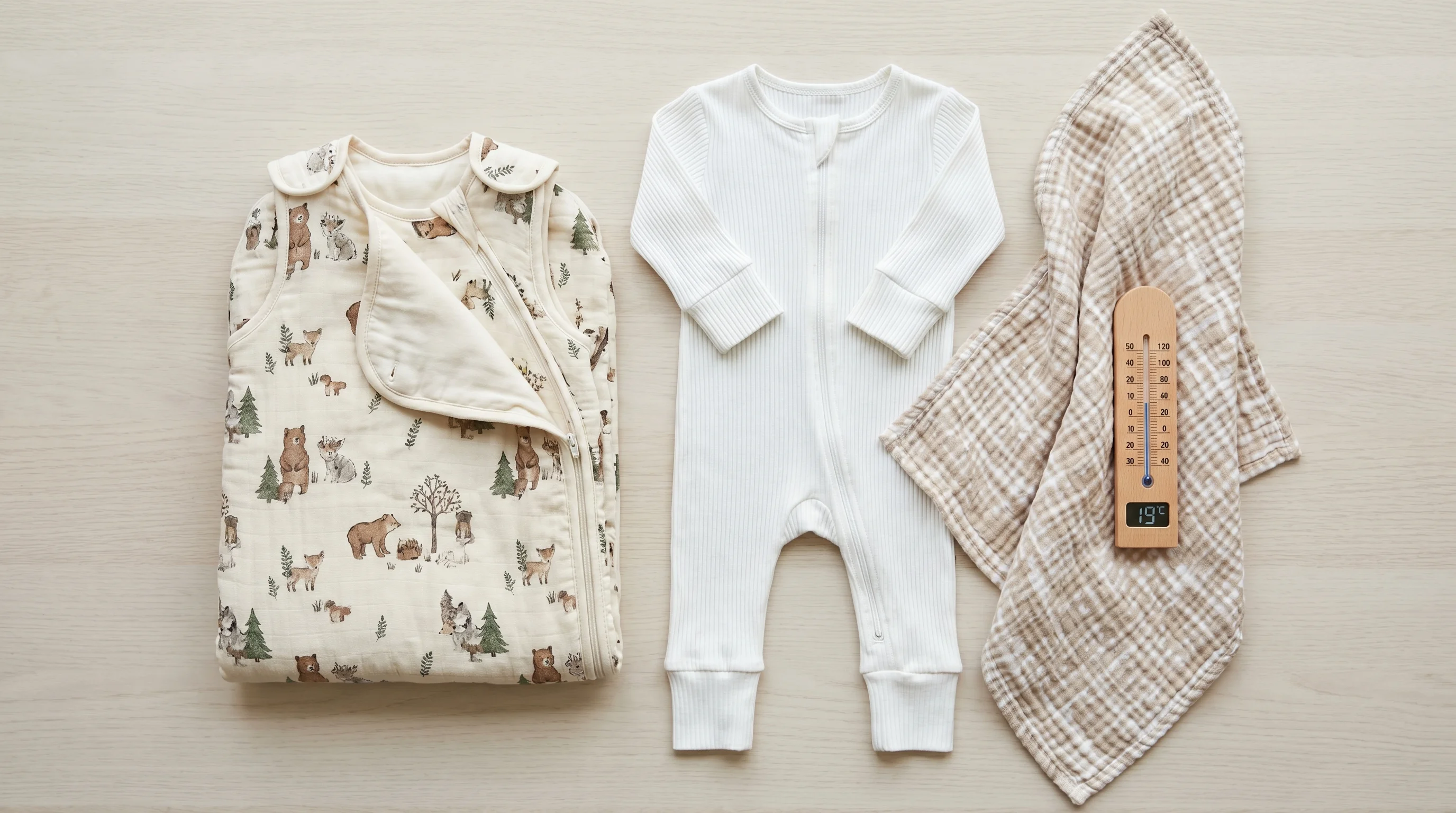
TOG stands for Thermal Overall Grade. It's a measure of thermal resistance — essentially, how well a fabric retains warmth. The higher the number, the warmer the item.
For baby sleeping bags, you'll typically see four TOG ratings:
- 0.5 TOG — very lightweight, for warm summer nights above 24°C
- 1.0 TOG — light, for rooms around 22–24°C
- 2.5 TOG — the standard choice for UK winters, rooms 16–20°C
- 3.5 TOG — very warm, for cold rooms below 16°C or particularly cold houses in winter
TOG rating is only one half of the equation. The layers baby wears inside the sleeping bag matter just as much. A 2.5 TOG bag over a vest and sleepsuit is much warmer than a 2.5 TOG bag over just a vest — same bag, completely different total warmth. This is why the temperature guide below specifies both the bag and the clothing underneath.
What to Dress Baby in at Night — Complete UK Temperature Guide
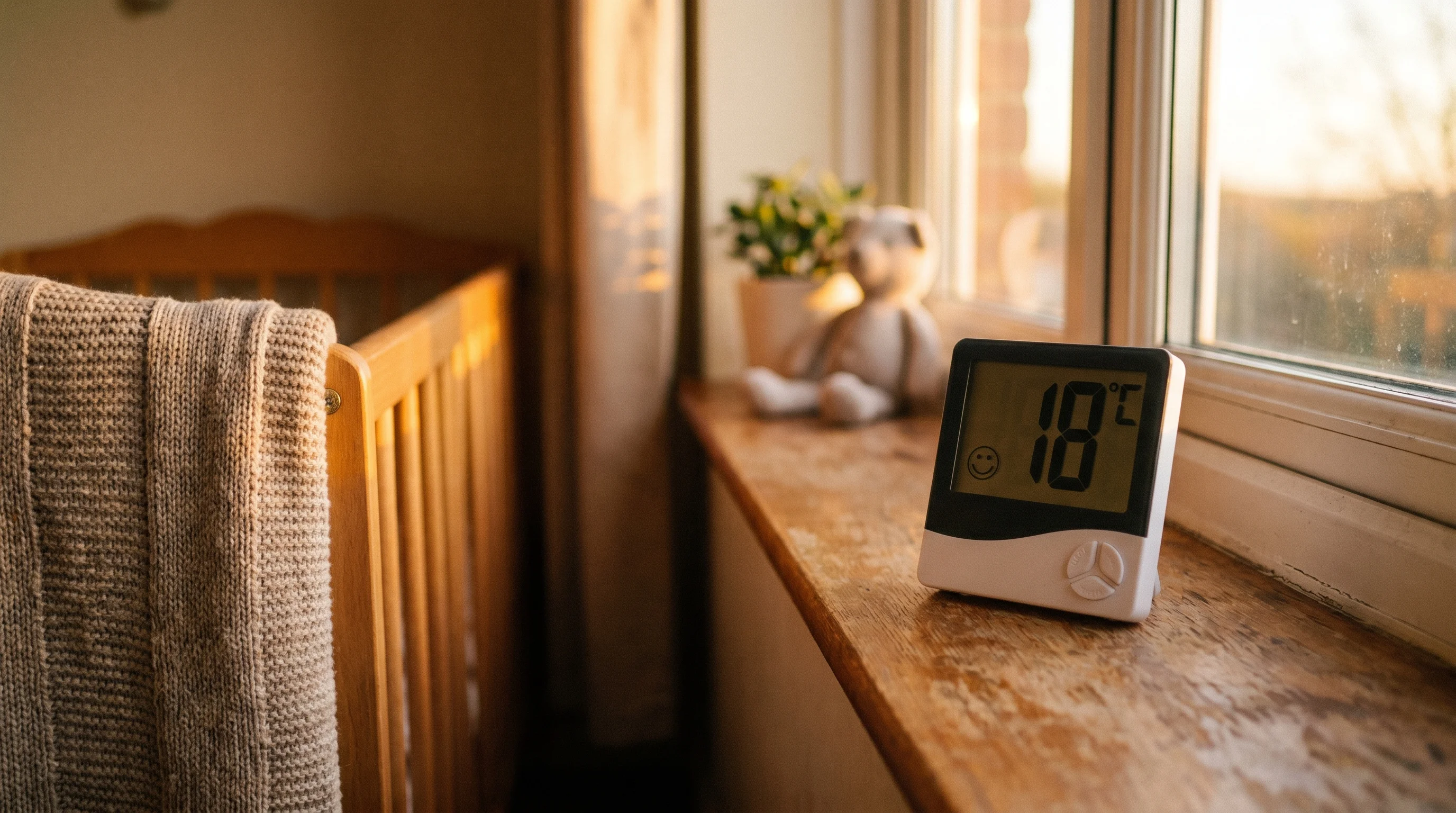
Use this as your quick-reference guide. Check the room thermometer, find your temperature, and dress accordingly.
These are guidelines, not rules. Every baby runs at a slightly different temperature. Use the check in the signs section below to verify you've got it right — if baby's neck is sweaty, they're too warm; if their chest feels cool, they might need a layer.
What to Dress a Newborn in at Night (0–3 Months)
Newborns can't regulate their own temperature at all. They lose heat rapidly through their heads, which is why they're sometimes given those little hats in hospital — though the NHS advises against hats during sleep once you're home, because that's actually how babies release excess heat when they're too warm.
The layers approach works exactly the same for newborns as for older babies — the temperature guide above applies from birth. What's different is the type of sleeping bag. Standard sleeping bags are too big for very small newborns and the armholes will be too large. Look specifically for:
- Newborn swaddle bags — these wrap around the baby and fasten with velcro or poppers, keeping arms contained (which many newborns find calming) while maintaining a safe sleep environment. They're designed for the first 8–12 weeks.
- Sleeping bags with a weight minimum of 3kg — most standard sleeping bags start from 3–4kg. If your baby is smaller (common with premature babies), check the weight guide carefully.
- Sleepsuits with built-in mittens — newborn hands are constantly going in mouths and they can scratch their own faces. A sleepsuit with the fold-over mitten cuff is genuinely useful in those first weeks.
For newborns in a room at 18–20°C: a short-sleeve or long-sleeve vest under a sleepsuit inside a 2.5 TOG swaddle bag. That's it. You don't need more.
If you're also researching sleep positions and safe environments for your newborn — whether a Moses basket, crib or baby nest is the right choice — our dedicated baby nest UK guide covers safety certifications, what the NHS actually says, and which ones are worth buying.
What to Dress Baby in at Night in Summer UK
Summer in the UK is unpredictable — we all know that. But when it does get hot (and the last few summers have genuinely been hot), nursery temperatures can easily hit 24–28°C at night, especially upstairs rooms facing south or west. Overheating in summer is when the risk is highest, because parents instinctively want to add layers when they feel cool themselves but the room is warm.
Keeping the room cool
Before thinking about what to dress baby in, focus on the environment first. Blackout blinds prevent the room heating up during the day. A fan in the room — pointed at the wall, not directly at baby — creates airflow without chilling them directly. Keep windows open if safe to do so. A room at 21°C needs no special adjustments to what you're already doing; a room at 27°C is a different situation entirely.
Summer night dressing guide
- 22–24°C: Just a nappy under a 1.0 TOG sleeping bag, or a short-sleeve vest in a 0.5 TOG bag
- 24–26°C: Short-sleeve vest in a 0.5 TOG bag, or nappy only with a very light muslin over them (supervised only)
- Above 26°C: Nappy only, no sleeping bag — just lay them down and check frequently. This is the one situation where a loose muslin is acceptable, because the sleeping bag itself becomes a heat risk
Sleeping Bags vs Loose Blankets — What's Safer
The Lullaby Trust recommends sleeping bags over loose blankets for babies under 12 months. The reason is simple: sleeping bags stay in place. A blanket doesn't — it can migrate over a baby's face during the night, or they can wriggle out and get cold without waking.
If you're using a cellular blanket (the waffle-weave cotton one that hospitals use), it needs to be tucked firmly under the mattress at shoulder height, so baby can't pull it over their head. The NHS guidance is clear: no duvets, quilts, or pillows for babies under 12 months — and while cellular blankets are permitted when used correctly, a well-fitted sleeping bag is significantly safer in practice.
The reason cellular blankets still exist is largely tradition — they're what was used before sleeping bags became mainstream in the 1990s. They're perfectly safe when used as instructed. But if you're starting from scratch, a sleeping bag is easier, safer and warmer in a more consistent way. Our baby blankets guide covers both options in detail, including which cellular blankets are worth buying and the difference between muslin, cellular and swaddle blankets.
Signs Your Baby Is Too Hot or Too Cold at Night
Hands and feet are not reliable temperature indicators — they're almost always cooler than the rest of the body, which is normal. Check the back of the neck or the chest instead.
Signs your baby is too hot
- Skin feels warm or hot and damp to the touch on the chest or neck
- Hair is damp or sweaty
- Flushed or red cheeks
- Breathing that seems faster or more laboured than usual
- Baby seems unsettled or restless despite not being hungry
If baby seems too hot, remove a layer immediately. You don't need to wake them to do this — gently unzip the sleeping bag, remove a layer, and zip it back up. Check again in 20 minutes. Overheating is the more serious risk, so if in doubt, go cooler.
Signs your baby is too cold
- Chest or back of neck feels noticeably cool to the touch
- Baby wakes more frequently than usual without an obvious cause
- Skin looks pale or mottled
Cold babies are less comfortable but the cold itself is rarely a danger in a normal UK home — overheating is the risk to manage more carefully. If the room drops below 16°C, add a layer inside the sleeping bag rather than adding a blanket on top.
For the broader picture on safe sleep — positions, environments, when to introduce a pillow, white noise and sleep training approaches — our complete baby sleep guide covers all of it. And if you're buying baby clothing more generally, our baby clothing guide covers sleepsuits, sizing and what to buy in each stage from newborn to toddler.