
About the Authors

We're Tom (33) and Sophie (31) — a Bath couple who launched BabyMade after becoming first-time parents to Freddie. Sophie's midwifery background and our shared obsession with finding genuinely good baby products turned into this blog. We write everything we wish we'd had when Freddie arrived.
Disclosure: This article contains affiliate links. If you buy through them we may earn a small commission at no extra cost to you. We only recommend products we genuinely rate.
There's a stage — somewhere around five or six months — when babygrows stop being the whole story. Freddie started sitting up, pulling at things and doing that proud little bounce that babies do when they're pleased with themselves, and suddenly we wanted him in something a bit more, well, dressed. Not occasion wear. Just a soft cotton baby tee and some leggings, looking like an actual small person instead of a wrapped parcel.
The problem is that baby tees are one of those deceptively simple things where the range is enormous and the quality varies wildly. A cheap cotton t-shirt that feels fine in the packet can come out of the first wash looking like a dishcloth. Necklines that looked generous in the product photo can be tight enough that you're wrestling it over a screaming baby's head every morning. And some fabrics that claim to be soft really aren't.
This guide is the honest version. We've been through enough baby t-shirts UK to have views — on fabrics, fits, sizes, organic vs. standard, and what's genuinely worth the money. For the broader picture of dressing a baby through every stage, our baby clothing UK guide covers everything from newborn essentials to sizing and temperature dressing.
Quick tip: If you're buying baby tees for the first time, always go a size up. Babies grow faster than you'll believe, cotton shrinks a little in the wash, and a slightly-too-big tee is not a problem — a tight neckline is.
What Are Baby Tees? When Does Your Baby Start Wearing Them?
A baby tee is exactly what it sounds like — a t-shirt sized for a baby or toddler, typically in soft cotton or bamboo, available in short and long-sleeve versions, and ranging from plain basics to printed designs. They're distinct from babygrows (which cover the legs) and vests (which have a snap-bottom to keep them tucked in), though there's some overlap with bodysuit-style tees that have the snap-bottom but a traditional t-shirt shape on top.
The honest answer on timing: most parents find baby tees become genuinely useful from around 3–6 months. Before that, babygrows and all-in-ones make nappy changes far easier — everything is one piece and you're not dealing with separate tops and bottoms at 3am. Once your baby is sitting, rolling and becoming more active, separates make much more practical sense and baby tees come into their own.
In summer, a soft cotton baby tee over a nappy is the most comfortable outfit for a warm baby from around 3 months onwards. In cooler weather, a long-sleeve baby tee under a babygrow adds a warm layer without bulk. The t-shirt really is one of those wardrobe basics that earns its place at every age from 3 months through toddlerhood.
Types of Baby Tees — Which Style at Which Stage?
Not all baby tees are the same. Knowing which format works at which age saves you buying the wrong thing and then wondering why your baby is uncomfortable.
Short-sleeve cotton tees
The summer staple. A simple short-sleeve baby tee in soft cotton is the most versatile piece in a baby's warm-weather wardrobe. Look for an envelope neckline (the slightly overlapping neckline that stretches wide to go over a baby's head without pulling) — it makes a genuine difference, especially in the newborn and early months stage when babies still have that slightly floppy, delicate quality to getting dressed. Avoid tight crew necks. They look cute in photos and are a nightmare in real life.
Long-sleeve baby tees
The year-round workhorse. A long-sleeve baby tee in cotton or bamboo works as a base layer under a babygrow in winter, as a standalone top in mild weather, and as a sun-protective layer when you need to cover arms without overheating. The breton stripe long-sleeve is a perennial favourite — it looks good on basically every baby and ages well from 0–3 months right through to toddlerhood without looking babyish.
Bodysuit-style tees with snap-bottom
The most practical format for the first year. A baby bodysuit tee has the traditional t-shirt shape — round neck, short or long sleeves — but with a snap-bottom like a vest that keeps everything tucked in. No riding up during nappy changes, no untucking during active play, no cold strip of skin appearing at the waist when your baby reaches up. Once you've used these, it's hard to go back to regular pull-on tees for a baby who isn't standing yet.
Printed and slogan baby tees
The fun bit. A printed or slogan baby tee is genuinely joyful — there's a whole industry of funny, sweet and stylish prints for babies and toddlers. For practical daily use, look for prints that are applied rather than screen-printed; applied prints (where the design is heat-transferred or embroidered) last much better through repeated washing than screen printing, which can crack and peel. The main thing to check is that the print is non-toxic — it should say so on the listing or packaging.
Best Baby Tees UK 2026 — Our Top Picks
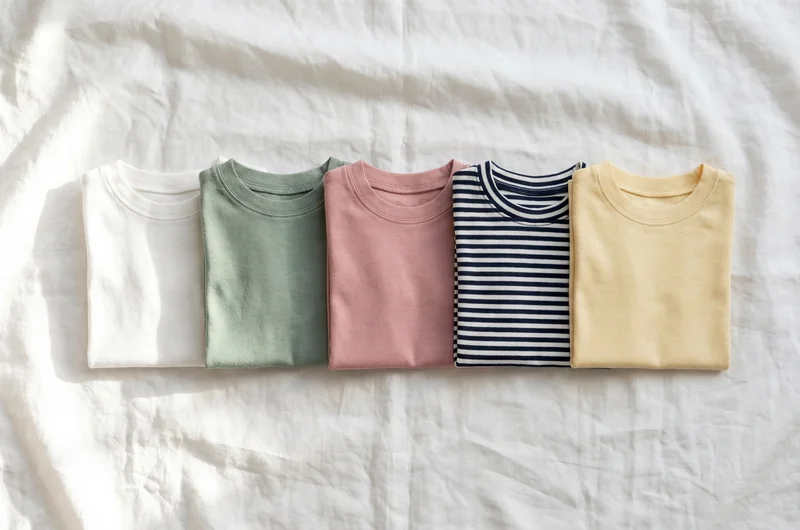
These are the baby tees UK parents are consistently returning to — based on what actually survives the wash, what genuinely stays soft, and what babies seem comfortable in rather than what looks best in a product photo.
What Fabric Should Baby Tees Be Made From?
This matters more than most people realise. A baby wears their baby tee directly against skin all day — it goes through spit, weaning mess, nappy leaks and whatever other indignities the day produces, then gets washed at 40°C and dried and put back on again. The fabric has to survive all of that while still being soft enough not to irritate.
100% cotton is the most common and most reliable choice. It breathes well, washes easily and softens with repeated washing. The main variable is the quality of the cotton — a dense, good-quality cotton weave will hold its shape and softness through dozens of washes; a thin, cheap cotton will pill, fade and distort quickly. Ring-spun cotton (which you'll see called out in some product descriptions) is softer and more durable than standard cotton.
Organic cotton (GOTS certified) is grown and processed without synthetic chemicals — it's genuinely different from standard cotton, not just a marketing label. For babies with sensitive or eczema-prone skin it can make a real difference. Expect to pay around 20–40% more, which is worth it for tees your baby will wear close to skin every day.
Bamboo-cotton blends are the premium option: noticeably softer than cotton, naturally temperature-regulating (stays cool in summer, warm in winter) and kind to sensitive skin. The trade-off is cost and the fact that some bamboo blends require more care in washing.
What to avoid: polyester-heavy blends in warm weather (they trap heat), fabrics with stiff prints directly on the chest (uncomfortable against skin), and anything labelled "crease resistant" or "easy iron" without checking the composition — these coatings are often formaldehyde-based and not ideal for direct skin contact.
Organic Baby Tees — Is It Worth the Extra Cost?
The short answer: yes, for daily-wear baby tees that are in direct contact with skin. The longer answer involves understanding what "organic" actually means in baby clothing — because it's not always what you'd expect.
GOTS certification (Global Organic Textile Standard) is the one to look for. It covers the entire production chain — the cotton farming, dyeing, finishing and manufacturing — and bans a specific list of harmful chemicals. A GOTS-certified organic baby tee is a genuinely different product from an uncertified one that uses the word "organic" on its label without third-party verification.
For babies who don't have sensitive skin, the difference in day-to-day comfort between a good-quality standard cotton tee and an organic one is small. Where organic tees earn their keep is with babies who react to certain fabrics or dyes, babies who spend a lot of time in just a tee (i.e. during warm-weather weaning), and parents who want to minimise their environmental footprint.
A practical approach: go organic for the essentials your baby wears closest to skin every day — the basic cotton baby tees and vests. Save the budget for standard cotton on outerwear and occasion pieces. For more on sustainable baby clothing options, our baby clothing guide covers bamboo, organic cotton and other sustainable fabric choices in more depth.
How to Get Baby Tee Sizes Right
Sizing is the thing that catches nearly every first-time parent out. UK baby clothing is typically labelled by age (0–3m, 3–6m, 6–9m, 9–12m, 12–18m, 18–24m) but this is a rough guide, not a guarantee. Babies vary enormously in size, and a 6-month-old can comfortably wear anything from a 3–6m to a 9–12m depending on how quickly they've grown.
A few things to know:
- Always check the weight and height range on the label, not just the age. A 3–6m tee typically fits babies of 5.5–7kg and 56–67cm — those numbers are more useful than the age.
- Go a size up when in doubt. A slightly large baby tee is not a problem. A tight neckline is actively uncomfortable and makes dressing a battle every morning.
- Account for cotton shrinkage. Most cotton tees shrink a little in the first few washes — particularly if you dry them in a tumble dryer. Size up slightly and wash before first wear to pre-shrink.
- Different brands size differently. Scandi brands (Polarn O. Pyret, Mini Rodini) tend to run generous. Some budget multipacks run small. Read reviews specifically for sizing comments rather than trusting the label.
One thing that doesn't get said enough: babies spend time in the same size for wildly different durations. Freddie wore 6–9 month clothes for about three weeks before he'd grown out of them. Some babies stay in a size for four months. Don't buy too many of any single size — a few tees in each size, rotated through the wash, is a more sensible approach than stocking up heavily on sizes your baby may skip past in a fortnight.
Personalised Baby Tees — Brilliant for Gifts
A personalised baby tee with the baby's name printed on the front is one of those gifts that reliably lands well. It's practical — babies genuinely need t-shirts — and personal in a way that a generic present isn't. New parents love it because it results in a brilliant photo opportunity, and because it's a piece of clothing they'll actually use rather than a gift that goes straight in the keepsake box.
The best personalised baby tees have the name applied cleanly on a soft, well-made base tee — not a novelty print on a scratchy cheap fabric. Look for sellers who specify the fabric composition (it should be 100% cotton or organic) and who have reviews mentioning that the print holds up in the wash. Heat-transfer prints that peel after three washes are not uncommon on the cheaper end of the personalised clothing market.
Personalised baby t-shirts are a particularly good gift for weaning-age babies (6–12 months) because that's when babies spend most of their time in just a tee during mealtimes, and the photos you get of them covered in sweet potato in a "Hello, I'm Freddie" tee are genuinely wonderful. For more personalised gift ideas at every age, see our full guide to personalised baby gifts — and our dedicated personalised baby grows guide for the newborn equivalent.
Baby Tees for Every Season
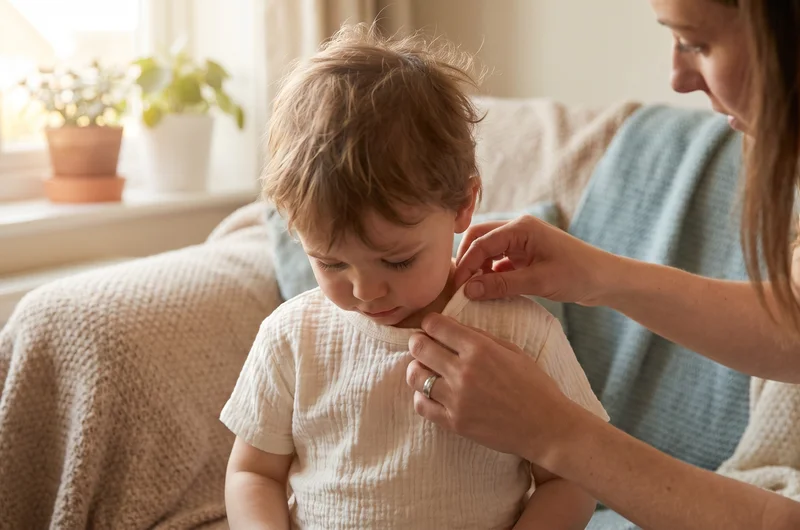
Baby tees are genuinely useful all year round — the key is choosing the right weight and style for the season.
Summer: A thin, short-sleeve cotton baby tee is the most comfortable thing a baby can wear in hot weather. Pair with a nappy or thin leggings depending on the temperature. For days with strong sun, a UPF 50+ long-sleeve baby tee gives proper UV protection on arms without the heat of additional layers — far more practical than trying to keep sun cream on wriggling baby arms. Pair with baby sunglasses with proper UV400 protection for full sun coverage.
Autumn and Spring: The layering season. A long-sleeve cotton baby tee under a light knit or baby romper gives you flexibility to add and remove layers as the day changes temperature. The long-sleeve tee is the layer that makes the most difference to warmth without adding bulk.
Winter: A thin cotton-modal thermal baby tee worn under a babygrow is one of the most effective ways to add warmth without restricting movement. It adds a meaningful layer of insulation while remaining thin enough not to make getting dressed feel like wrestling. Look for a flat-seam design so there's nothing to irritate sensitive skin when it's being worn against the body all day.
How to Wash Baby Tees Without Ruining Them
Baby clothing gets washed more than almost any other textile in your house. A baby tee might go through the wash every other day — more during weaning when every mealtime becomes a full-body event. How you wash them matters for how long they last and how soft they stay.
- Wash before first wear. New clothing often contains finishing chemicals and sizing agents. A wash at 30–40°C removes these and pre-shrinks the fabric so you know what size you're actually working with.
- 30–40°C is enough for most laundry. Unless there's a genuine hygiene reason for a hot wash, 30°C or 40°C cleans baby tees effectively and causes much less fabric damage than 60°C. Hot washing is what causes fibres to break down quickly and prints to crack.
- Use a gentle or non-bio detergent. Biological detergents contain enzymes that are very effective at cleaning but can irritate sensitive baby skin. A non-bio or baby-specific detergent is the safer default for the first year.
- Air dry when you can. Tumble drying is the main cause of cotton shrinkage and print degradation. If you're using a dryer, a low-heat or gentle cycle and removing while still slightly damp (then reshaping and air-drying the rest of the way) extends clothing life significantly.
- Treat stains immediately. Weaning-age babies produce incredible stains. Rinse with cold water immediately (hot water sets protein stains like milk) and apply a small amount of gentle stain remover before washing. Leaving stains to dry and then washing makes them significantly harder to shift.
Baby Tees as a New Baby or Birthday Gift
A small bundle of soft baby tees is one of the most thoughtful and genuinely useful new baby gifts you can give. New parents always need more clothing than they think — particularly for the 3–9 month stage when babies go through multiple outfit changes a day and the washing machine is running constantly. A gift of several soft cotton baby t-shirts in a size-up (say, 6–9 months given as a newborn gift) will be used and genuinely appreciated months down the line, when the initial pile of tiny newborn gifts has long since been outgrown.
The best gift options are either a personalised tee with the baby's name, a beautiful bamboo or organic tee set in a gift box, or a small bundle of great-quality basics in a neutral palette that works for any gender. Avoid buying in newborn size for a gift — babies arrive in and leave newborn clothing faster than most parents expect. A 3–6 month gift is already more useful; 6–9 months or 9–12 months is genuinely inspired.
For more ideas in this territory, see our guides to personalised baby gifts, baby shower gifts and new baby congratulations gifts — all of which include clothing options at every budget.