
About the Authors

We're Tom (33) and Sophie (31) — a Bath couple who launched BabyMade after becoming first-time parents to Freddie. Sophie's midwifery background and our shared obsession with finding genuinely good baby products turned into this blog. We write everything we wish we'd had when Freddie arrived.
Disclosure: This article contains affiliate links. If you buy through them we may earn a small commission at no extra cost to you. We only recommend products we genuinely rate.
When a baby arrives early, there is a lot happening at once. The last thing you want to be doing is standing in the baby aisle realising that every sleepsuit you packed is twice the size of your child. Preemie baby clothes are a category most first-time parents know nothing about until they suddenly, urgently need them — and the sizing system is just different enough from standard baby clothing to cause real confusion.
This guide covers everything you need: what the size labels actually mean, which features to prioritise when your baby is in the NICU, the UK brands worth buying from, and a practical list of what to actually get. Everything here sits within our broader baby clothing guide, which covers the full picture from newborn onwards — but if your baby has arrived early, start here.
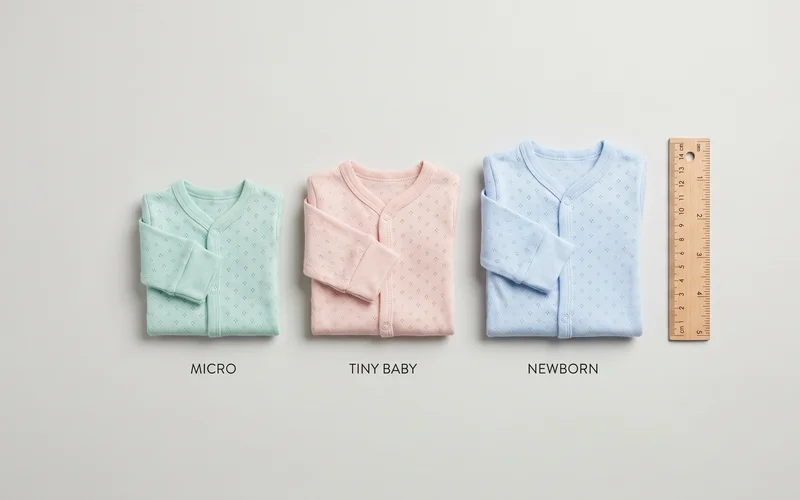
What "Preemie" Sizes Actually Mean — Micro, Tiny Baby and Early Baby Explained
UK clothing brands use different terminology, which makes shopping harder than it needs to be. Here is what the common labels typically refer to:
- Micro / Micro Preemie — for babies weighing under 2lb (under 1kg), typically born before 28 weeks. Very few mainstream brands offer this. You usually need specialist suppliers.
- Tiny Baby — typically covers 2–5lb (roughly 1–2.5kg). This is the most common preemie size and where most of the mainstream options sit. Suitable for babies born between around 28 and 34 weeks.
- Early Baby — typically covers 5–7.5lb (roughly 2.5–3.4kg). This overlaps with the smallest end of newborn sizing and is often where late preterm babies (34–37 weeks) start.
- Newborn / 0–3 months — most brands design this for babies from around 7.5lb (3.4kg) upwards. Too big for the majority of premature babies at birth.
Always go by weight on the label rather than the size name. A "tiny baby" from one brand may be cut differently to a "tiny baby" from another. When in doubt, size down — a sleepsuit that's too loose can be dangerous around a premature baby's airway and monitoring leads.
Why Standard Newborn Clothes Don't Work for Premature Babies
Standard newborn sizing assumes a baby born around or after 40 weeks, weighing at least 7–8lb. A baby born at 30 weeks typically weighs between 1.5–2.5kg — well below the threshold where newborn clothing fits safely.
The practical problems with oversized clothing on a premature baby are real:
- Excess fabric can bunch around the face and restrict breathing
- Loose necklines slip and can cover monitoring sensors on the chest
- Oversized arms and legs get in the way of IV lines and lead placements
- Temperature regulation is harder — ill-fitting clothing doesn't trap warmth the way correctly sized clothing does
- Nappy tabs can't fasten properly on tiny legs, causing leaks
Beyond the safety issues, it simply matters emotionally. Parents in the NICU consistently say that dressing their baby — in clothes that actually fit — is one of the first moments of normality in an overwhelming situation. Having the right size makes that possible.
What to Look For: NICU-Friendly Features That Make a Real Difference
Not all preemie clothing is designed with the NICU in mind. If your baby is still in hospital, these are the features that matter:
- Envelope or wrap neckline — allows you to dress the baby without lifting the head, which matters when there are tubes and lines attached. An envelope neck can be pulled down over the shoulders instead of lifted over the head.
- Open-front or side-snap design — allows nursing staff and parents to access the chest for monitoring leads without fully undressing the baby.
- Inner-leg poppers — essential for nappy changes without removing the whole outfit. Look for poppers that run from crotch to ankle on at least one leg.
- No raised seams on the inside — premature babies have extremely delicate skin that bruises and marks easily. Flat-lock or inside-out seam construction is worth prioritising.
- No strings, bows or loose trims — anything decorative that could wrap around fingers, toes or leads is a hazard.
- Soft, breathable fabric — cotton or bamboo. Avoid synthetic fabrics that don't breathe, especially against fragile premature skin.
Many NICUs have their own guidelines about what clothing is permitted. Always ask your nurse or the unit's family liaison before introducing new items.
The Best UK Brands for Preemie Baby Clothes
The mainstream high street does stock some tiny baby sizing, but the best options for genuinely premature babies tend to come from specialist and independent brands:
- Mothercare / George at Asda — both offer tiny baby sizing (from 5lb) at accessible price points. Good for basics like vests and sleepsuits in quantities.
- Next — stocks early baby sizing but rarely goes below 5lb. Better for the later NICU stages and going-home outfits.
- Little Clothing Co — UK specialist in premature baby clothing. Offers micro, tiny baby and NICU-specific designs. Well regarded by NICU parents and nursing teams.
- Snugabye — Canadian brand with strong UK availability. Known for soft fabrics and NICU-aware designs including side-snap openings.
- Primark — inexpensive tiny baby range. Good for stocking up on vests when you need multiples quickly. Quality is functional rather than premium.
- Bliss charity shop — the premature baby charity sells and signposts NICU-appropriate clothing. Worth checking their resources if you're navigating an unexpected early arrival.
What to Buy First — The Essential Starter List
If you are shopping in a hurry, or trying to put together a hospital bag for a baby who arrived earlier than expected, here is what to focus on:
- 5–7 vests (short-sleeved, bodysuit style) — the workhorse of the preemie wardrobe. Worn under or instead of sleepsuits. Look for envelope necklines and inner-leg poppers.
- 4–5 sleepsuits — all-in-one with feet. Prioritise NICU-friendly features if your baby is still in hospital.
- 3–4 hats — premature babies lose heat rapidly through their heads. The hospital will often provide these, but having your own soft cotton or bamboo hats is useful.
- 2–3 cardigans or zip-up tops — for layering in the incubator or when doing skin-to-skin. Zip or snap fastenings are much easier than buttons on tiny babies.
- Scratch mitts — premature babies often have long fingernails and little motor control. Integrated cuff mitts or separate mitts help prevent scratching.
Don't over-buy at any one size. Premature babies can move through sizes quickly once they start gaining weight — buying 20 items in tiny baby and then having your baby outgrow them in a fortnight is a common mistake. Buy a week's worth, then reassess.
Open-Front and Wrap-Style Designs: Why They Matter in the NICU
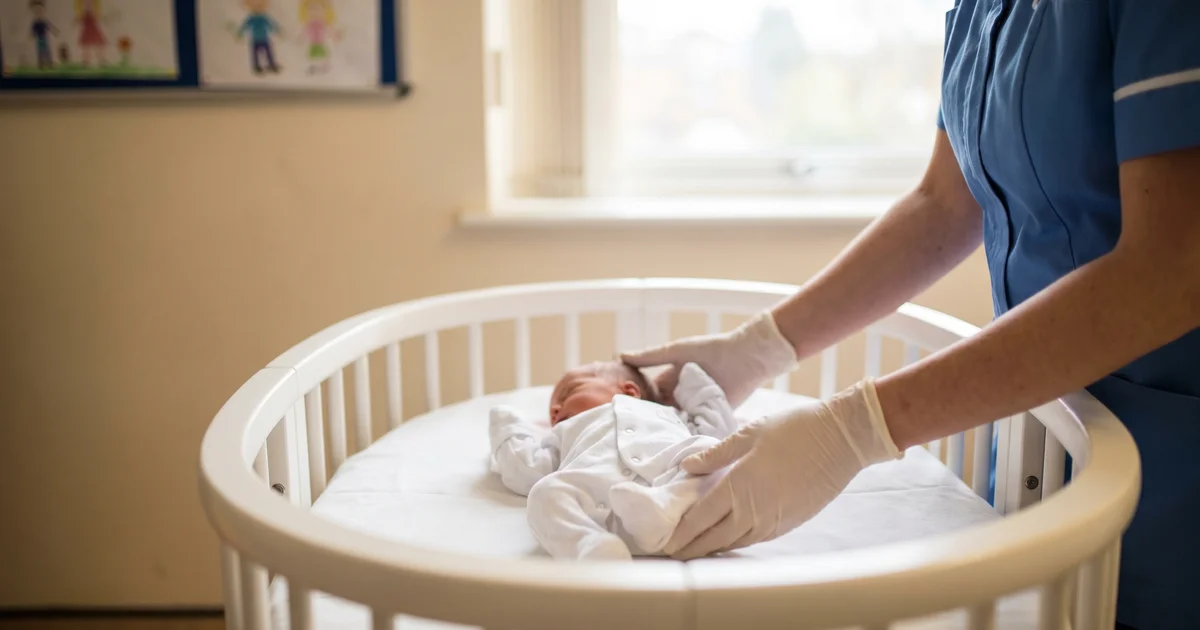
Standard baby clothes are designed to be pulled over the head or stepped into from the bottom. Both of these approaches are difficult — and sometimes not possible — when a baby has chest leads, oxygen monitors, IV lines or feeding tubes attached.
Open-front and wrap-style designs solve this by allowing the garment to be placed underneath the baby and wrapped or snapped closed around them, without any lifting or threading of limbs through tight openings. The nursing team can then open the garment quickly for observations without waking or disturbing the baby.
These designs are also significantly easier for parents during kangaroo care (skin-to-skin contact). Being able to open and close the clothing with one hand while holding your baby against your chest makes the whole process less stressful and allows for longer, more comfortable contact time — which has well-documented benefits for premature baby development.
If you can only prioritise one feature when buying preemie clothing for a baby who is still in the NICU, make it this one.
Fabric Guide: Cotton, Bamboo and What to Avoid
Premature skin is more porous, more sensitive and more prone to breakdown than full-term baby skin. Fabric choice matters more here than at any other stage.
- 100% organic cotton — the standard choice. Breathable, washable, soft and widely available. Look for GOTS-certified organic if skin sensitivity is a concern.
- Bamboo — increasingly popular for preemie clothing. Softer than cotton, naturally temperature-regulating and gentle on sensitive skin. Tends to be more expensive but worth it for direct-skin items like vests.
- Merino wool — excellent for temperature regulation, but some parents find it scratchy on very sensitive preemie skin. If you try it, go for superfine merino specifically marketed as soft.
- Baby alpaca — naturally hypoallergenic, lanolin-free and softer than merino, which makes it one of the gentlest fibres for preemie skin once your baby is home. Our baby alpaca guide covers cardigans, hats and blankets in newborn sizes.
- Polyester / synthetic blends — avoid for direct skin contact. Synthetics don't breathe, trap moisture and can cause skin irritation. Fine for outer layers or purely decorative items worn briefly.
- Fleece — useful for outerwear but not for layers worn directly against the skin. Premature babies can overheat in fleece and their temperature regulation is already compromised.
Wash all new clothing before use — even items labelled as 100% cotton can have residual finishing chemicals. Use a non-bio detergent for the first few months, especially while your baby is in the NICU or has particularly sensitive skin.
How Many Outfits Do You Actually Need?
Less than you think, and at first, possibly none — depending on what your NICU allows.
In the very early days, many NICUs keep extremely premature babies unclothed under radiant warmers so that temperature and skin condition can be monitored closely. Once your baby is stable enough to be dressed, the nursing team will let you know.
A practical quantity once dressing is permitted:
- 5–7 vests — allows for daily changes with a couple of spares for leaks
- 4–5 sleepsuits — you'll typically change once a day unless there's a nappy or feed incident
- 3 hats — enough rotation for frequent washing
- 2 cardigans — one on, one clean
The NICU will usually do laundry for you, or you can take a small bag home each day. Don't invest in a huge wardrobe at one preemie size — your baby's growth rate on NICU nutrition can surprise you.
Buying Preemie Clothes Before the Birth — Is It Worth It?
This is a question with no clean answer. The practical reality is that most parents don't buy preemie clothing before the birth because most pregnancies don't result in premature delivery. The NHS says roughly 1 in 13 babies born in the UK arrives prematurely (before 37 weeks), but for most of those, the gap is small — late preterm babies (34–37 weeks) are often large enough for early baby or even newborn sizing.
However, if you have a known risk of early delivery — a history of premature birth, a multiple pregnancy, a short cervix, or a condition like pre-eclampsia — it is genuinely worth packing a small selection of tiny baby vests and sleepsuits in your hospital bag. You may not need them. But having them already washed and packed means one less thing to sort out in an already stressful situation.
A few tiny baby vests and sleepsuits don't cost much. The peace of mind of being prepared is worth more than the cost of items you might not use.
Washing and Caring for Tiny Clothes
Preemie clothing is small, which means it gets washed frequently and can wear out faster than full-sized baby clothes. A few things to keep in mind:
- Always wash before first use — remove any manufacturing residues before clothing touches your baby's skin
- Use non-bio detergent — biological detergents contain enzymes that can irritate sensitive newborn skin, especially premature skin
- Avoid fabric softener — it can reduce the absorbency of cotton and may irritate delicate skin
- Wash at 40°C — enough to sanitise effectively without damaging the fabric
- Tumble dry on low or air dry — high heat can shrink cotton, and preemie clothes are already small enough
- Check seams and fastenings before each use — tiny poppers can work loose; any sharp edges need to be caught before they touch your baby
When to Move Up to Newborn Size
The move from preemie to newborn sizing happens when your baby's weight catches up with the newborn threshold — typically around 7–8lb (3.2–3.6kg), though this varies by brand. Don't use corrected age as the guide; use weight and fit.
Signs that your baby is ready to move up:
- The feet are straining against the end of the sleepsuit
- The poppers at the crotch are pulling or won't fasten comfortably
- The vest is riding up the torso
- There's visible pulling across the shoulders or chest
Don't rush it. A clothing change that's too early means going back to the smaller size anyway, and there's no developmental benefit to wearing newborn sizing before your baby is ready. Some parents find their preemie stays in tiny baby sizing for longer than they expected — especially babies who were very early or who had a difficult start. That's completely normal.
Once you do move up, the full baby clothing guide covers everything from newborn sizing through to the first year. If you want to mark the milestone with something lasting, our guide to personalised baby gifts has options that work beautifully for premature babies arriving home from the NICU.
Where to Buy Preemie Baby Clothes in the UK
A quick reference for where to look, depending on what you need:
- Urgently, in person — Asda George, Primark and Mothercare (where still open) all stock tiny baby sizing and can be found on most retail parks. The range is limited but the basics are usually there.
- Online, mainstream — Next, John Lewis and M&S all have online tiny baby and early baby ranges. Delivery is typically 2–3 days, or next day for premium options.
- Specialist online — Little Clothing Co, Snugabye and Nicu Baby are the names that come up most consistently among NICU parents. Wider size range, NICU-specific designs, and staff who understand the context.
- Amazon — mixed quality but wide selection. Filter carefully by weight range rather than size label, and read reviews for comments on actual sizing and fabric quality.
- NICU family support groups — many hospitals have parent liaison groups that have second-hand preemie clothing banks. Worth asking the nursing team about this, especially for micro sizing which is expensive to buy new.
The charity Bliss provides a comprehensive resource on premature baby care including clothing guidance. If your baby is still in the NICU, their helpline is also available for parents who need support beyond the practicalities.