About the Authors
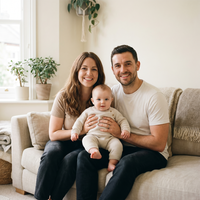
We're Tom (33) and Sophie (31) — a Bath couple who launched BabyMade after becoming first-time parents to Freddie. Sophie's midwifery background and our shared obsession with finding genuinely good baby products turned into this blog. We write everything we wish we'd had when Freddie arrived.
Right, so. You've just found out you're pregnant, or maybe the baby is already here and you're staring at a wardrobe full of clothes you bought in a panic thinking "surely a newborn needs this many outfits?" — only to discover they've grown out of half of them before they've even been worn.
We've all been there. Baby clothing is one of those things nobody properly prepares you for. The sizing is all over the place, the temperature stuff is genuinely confusing, and once you start seeing all the adorable personalised baby grows, the tiny dungarees and the matching mum and baby outfits — your bank account starts crying.
This guide is everything I wish someone had handed me before my first was born. Practical, honest, and yes — with plenty of links to the things actually worth buying.
Quick tip: Don't overbuy newborn size. Babies grow shockingly fast — many skip it altogether. Buy more 0–3 month and 3–6 month pieces instead.
Baby Clothing Sizes Explained
This trips up every new parent. Baby clothes sizes in the UK aren't standardised — a "0–3 months" from one brand fits completely differently to a "0–3 months" from another. Here's a rough guide, but always check the individual brand's weight and height chart:
| Label | Approx Age | Weight | Height |
|---|---|---|---|
| Tiny Baby / Premature | Up to 2kg | Under 4.4lb | Up to 44cm |
| Newborn | 0–1 month | Up to 4.5kg | Up to 56cm |
| 0–3 Months | 1–3 months | 4.5–6.5kg | 56–62cm |
| 3–6 Months | 3–6 months | 6.5–8kg | 62–68cm |
| 6–9 Months | 6–9 months | 8–9.5kg | 68–74cm |
| 9–12 Months | 9–12 months | 9.5–11kg | 74–80cm |
| 12–18 Months | 12–18 months | 11–13kg | 80–86cm |
One thing worth knowing: if your baby is particularly long or chunky, always size up. A baby in the 91st centile for length will be in the next size up well before the age on the label suggests. Go by measurements, not months.
What to Dress Your Baby In — Temperature Guide
The baby clothing temperature chart is something every new parent googles at 2am. Here's the honest version — the one that actually makes sense for UK weather:
The general rule is: dress your baby in one more layer than you're wearing. So if you're comfortable in a t-shirt, your baby needs a vest and a babygrow. If you're in a jumper, add a cardigan on top. But that's a bit vague, so here's a breakdown by room temperature:
| Room Temp | What to Wear |
|---|---|
| 27°C+ | Just a nappy or thin vest |
| 24–27°C | Vest or light babygrow, no blanket |
| 21–24°C | Vest + babygrow, light blanket or 0.5 tog sleeping bag |
| 18–21°C | Vest + babygrow + 1 tog sleeping bag |
| 16–18°C | Vest + babygrow + 2.5 tog sleeping bag or extra layer |
| Under 16°C | Vest + babygrow + cardigan + 2.5 tog sleeping bag |
To check if your baby is too hot or cold, feel the back of their neck or their chest — not their hands or feet, which are often cool even when the rest of them is perfectly warm. If they're sweaty at the back of the neck, strip a layer off.
Safe sleep reminder: Overheating is a risk factor for SIDS. The Lullaby Trust recommends keeping the room between 16–20°C for sleep. No hats indoors when sleeping.
The Newborn Clothing Essentials — What You Actually Need
Every baby list online tells you to buy everything. Here's what you genuinely need for the first few weeks, and what can wait:
The essentials (buy before baby arrives):
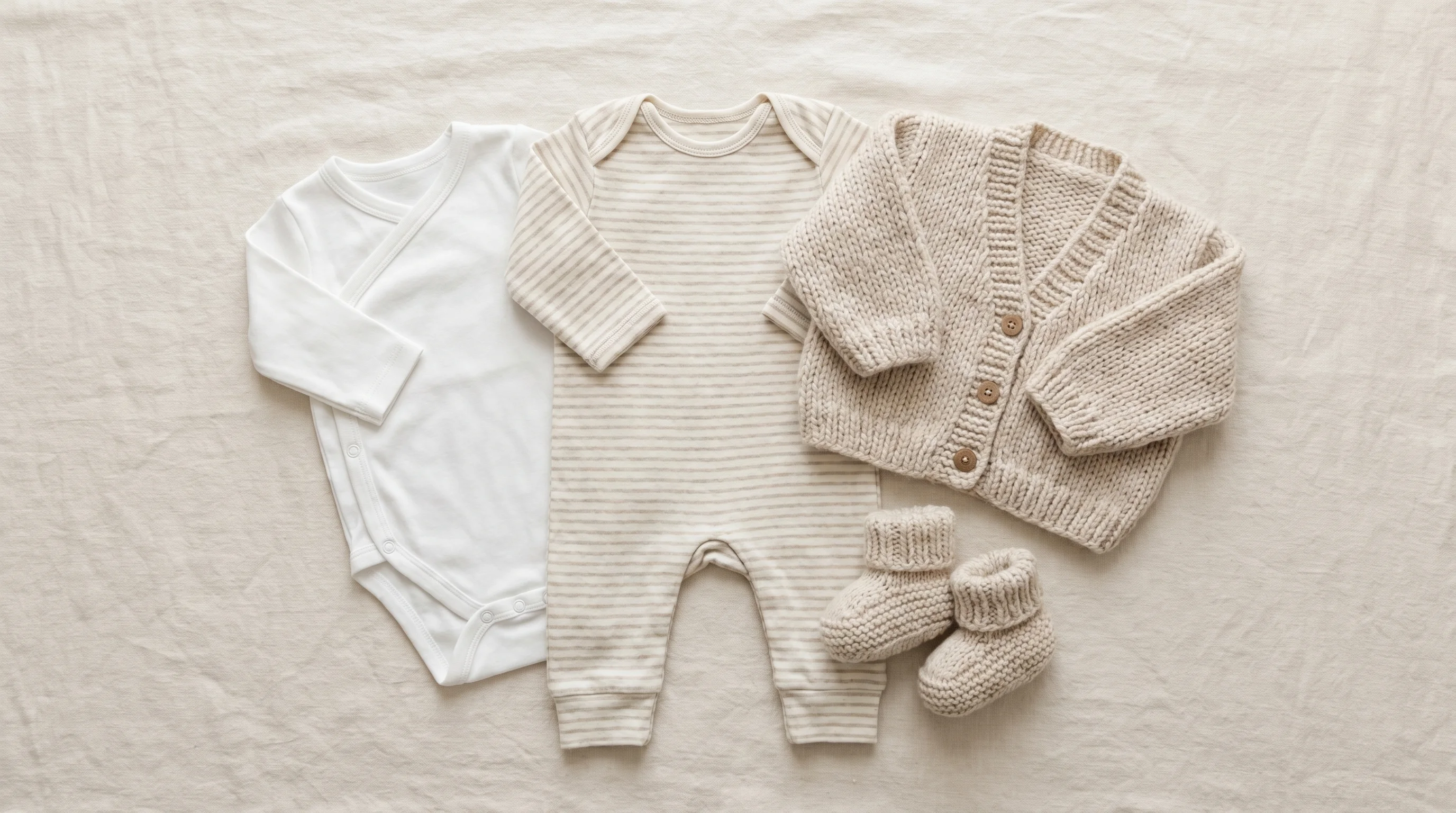
- 6–8 sleepsuits / babygrows — these are the workhorse of newborn dressing. Buy half in newborn, half in 0–3 months. Multi-packs on Amazon are great value.
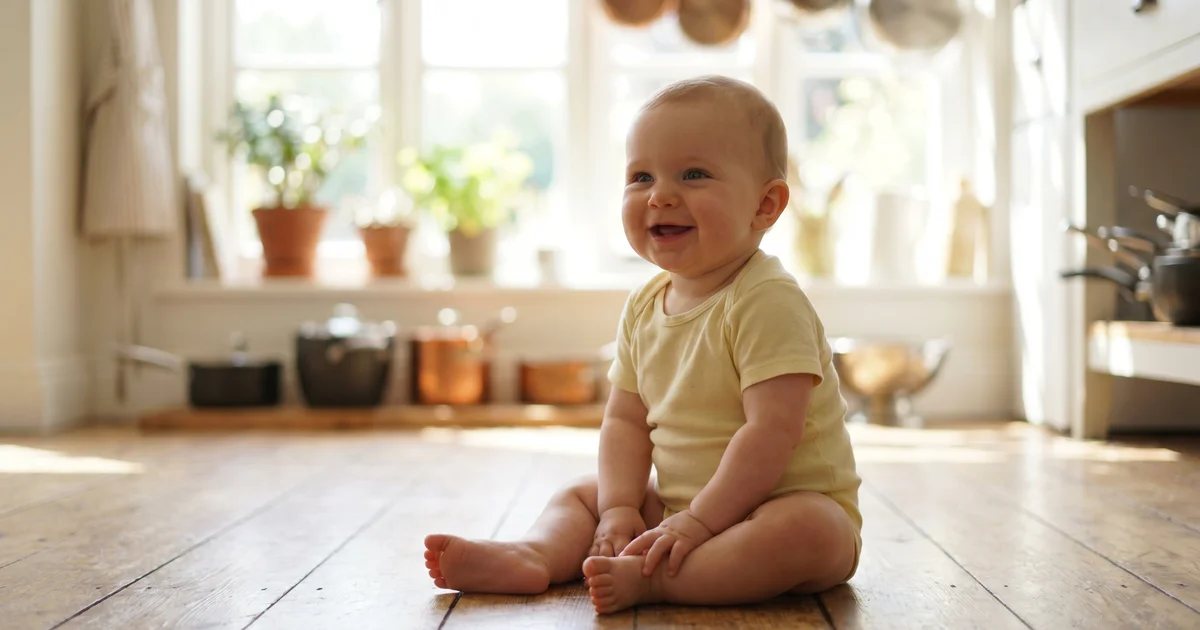
- 6–8 vests (bodysuit style) — the ones with poppers under the crotch. These go under everything. From around 3–6 months when sitting starts, baby tees become a practical everyday alternative to all-in-ones — especially in summer.
- 2–3 cardigans or pramsuits for going out.
- 2–3 hats — hospitals are often warm, but you'll need one for going home. Personalised baby hats make lovely keepsakes.
- A snowsuit or pramsuit if you're a winter baby. Note: don't use these in car seats — they compress in a crash. Use a footmuff instead.
Can wait until after baby arrives:
- Shoes (they can't walk, they don't need them yet)
- Jeans or stiff fabrics (uncomfortable for tiny babies)
- Lots of "outfit" style clothes — cute but impractical in the early weeks
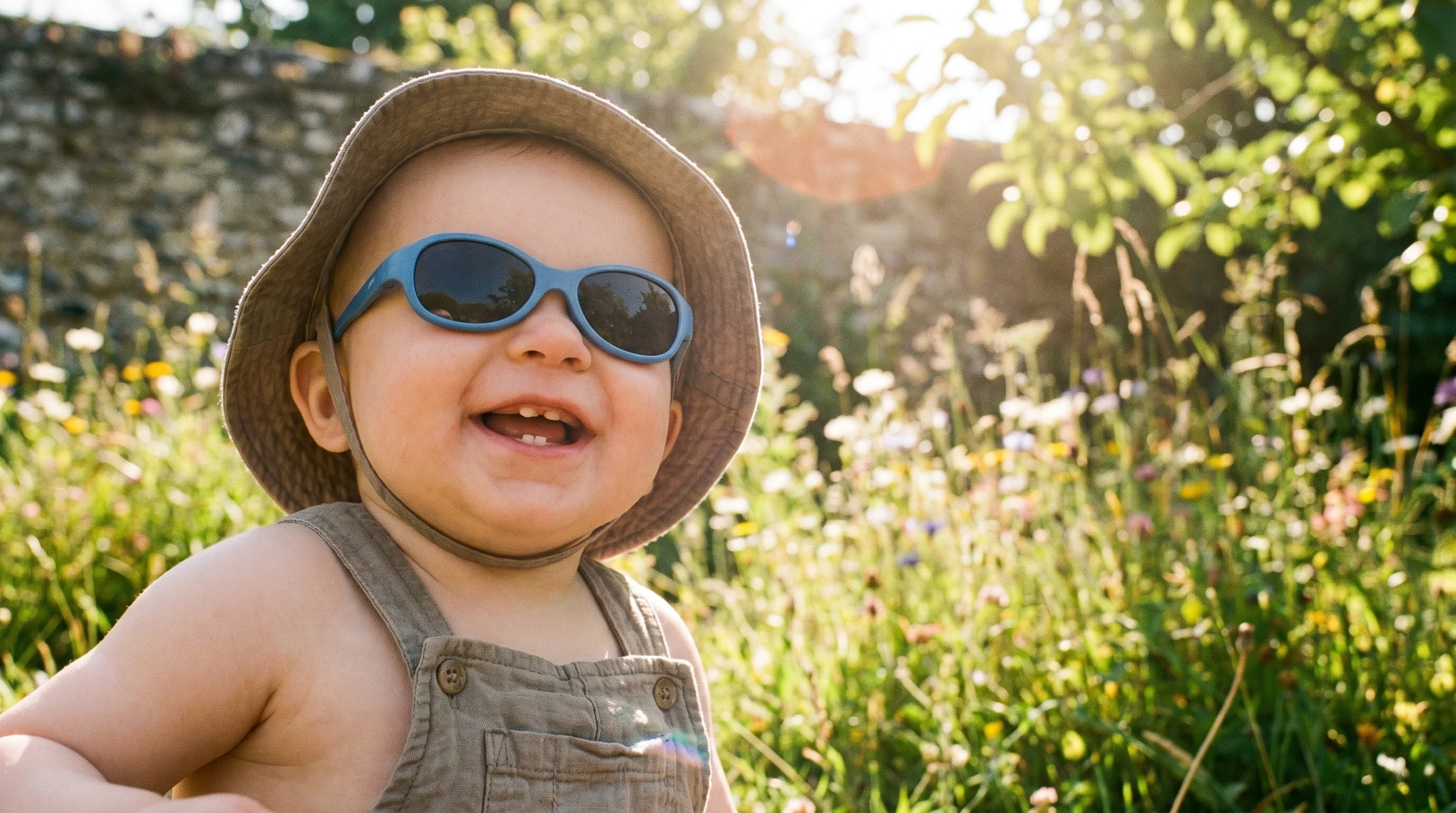
One thing that does matter from around 3 months onwards, especially in summer: baby sunglasses with proper UV400 protection. Babies' eyes are more vulnerable to UV than adults' — our dedicated guide covers what to look for, which age-appropriate styles actually stay on, and the difference between CE-marked and uncertified pairs.
Babygrows, Sleepsuits & Personalised Baby Grows
The humble babygrow is the backbone of baby dressing. There's a reason they exist in basically every size from premature to 18 months — they're warm, practical, easy to change, and genuinely comfortable for babies. But not all babygrows are equal.
What to look for in a babygrow
- Poppers, not buttons — at 3am when you're half asleep doing a nappy change, you do not want buttons. Trust me.
- Fold-over scratch mitts — newborns scratch themselves constantly. Built-in mitts are a lifesaver in the early weeks.
- Envelope neck — the neckline that opens wider sideways. Essential for pulling over a very round head, and even more essential if there's a nappy explosion.
- Soft cotton or bamboo fabric — avoid anything scratchy or with rough seams inside.
Personalised baby grows — worth it?
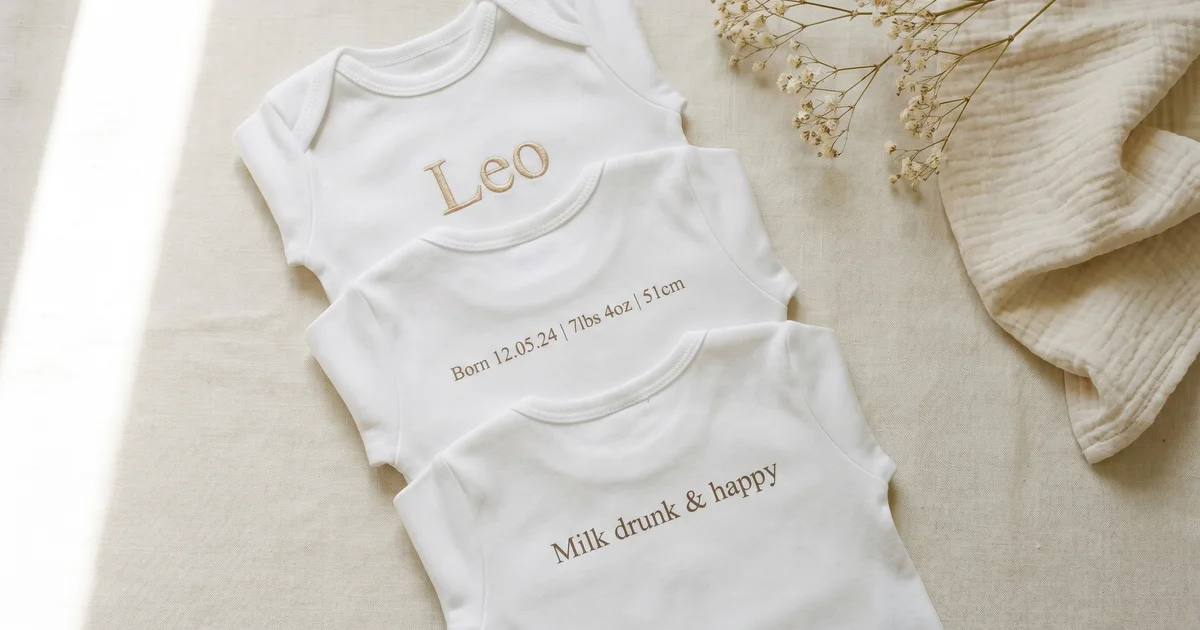
Absolutely, yes. A personalised baby grow with the baby's name on it makes a brilliant gift — for a baby shower, a birth announcement, or just because. They photograph beautifully, and when the baby grows out of them, they become a keepsake rather than just going in the charity bag.
Popular options include embroidered personalised grows (more durable and premium), printed ones (cheaper, more variety of designs), and custom baby grows where you can upload your own design or photo. Funny ones are always a hit — "Dad's Little Tax Return" will never not be funny.
Seasonal ones are also worth looking at: Christmas baby grows for a first Christmas, Father's Day baby grows, and Mother's Day versions are all brilliant photo opportunities. Easter, Halloween, Valentine's — there's a personalised grow for every occasion.
Baby Cardigans & Knitwear
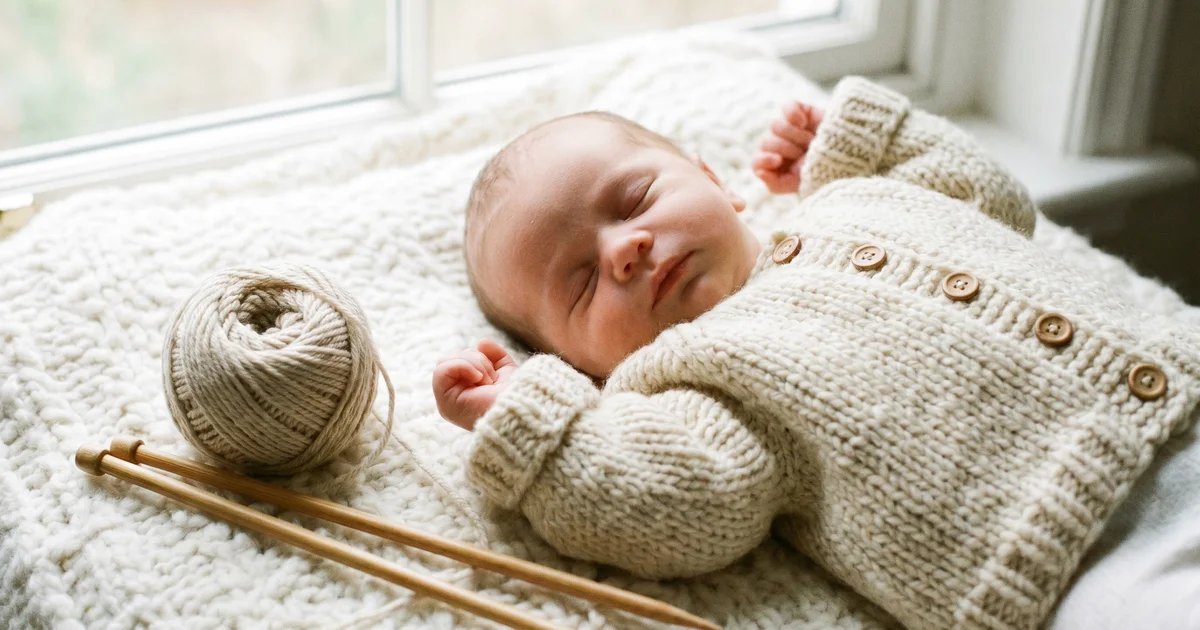
There's something about a tiny cardigan that just gets you. Maybe it's the miniature buttons. Maybe it's imagining the photos. Whatever it is, baby cardigans are genuinely useful — they add warmth without the faff of taking everything off for a nappy change, and they layer really easily.
Hand knitted vs. shop bought
If you've got a grandparent who knits, you're in luck — hand knitted baby cardigans are in a completely different league to mass-produced ones. They tend to be softer, more unique, and honestly feel more special. They also become heirlooms in a way that a Primark cardigan doesn't.
If you're buying rather than being gifted one, look for soft merino wool or cotton blends. Avoid anything scratchy — baby skin is way more sensitive than you might think, and anything uncomfortable will result in a very grumpy baby.
The other fibre worth knowing about — and most parents haven't heard of it until they hold one — is baby alpaca. It's softer than merino, warmer than wool without the bulk, and naturally hypoallergenic, so it's a brilliant choice for sensitive newborn skin. Our baby alpaca guide covers cardigans, jumpers and blankets, and whether the price is actually worth paying.
For gifting, a personalised baby cardigan with the baby's name embroidered on it is a genuinely lovely present — the kind of thing parents keep for years. Prices start around £20–£25 on Amazon for decent quality.
Knitting your own — beginner patterns
If you fancy having a go, baby cardigan knitting pattern books are a good starting point. There are also loads of free patterns online — search "easy baby cardigan knitting pattern free" and you'll find dozens. The buttons for baby cardigans are worth paying attention to — make sure they're firmly attached and large enough not to be a choking hazard.
Baby Shoes — When to Buy and What to Look For
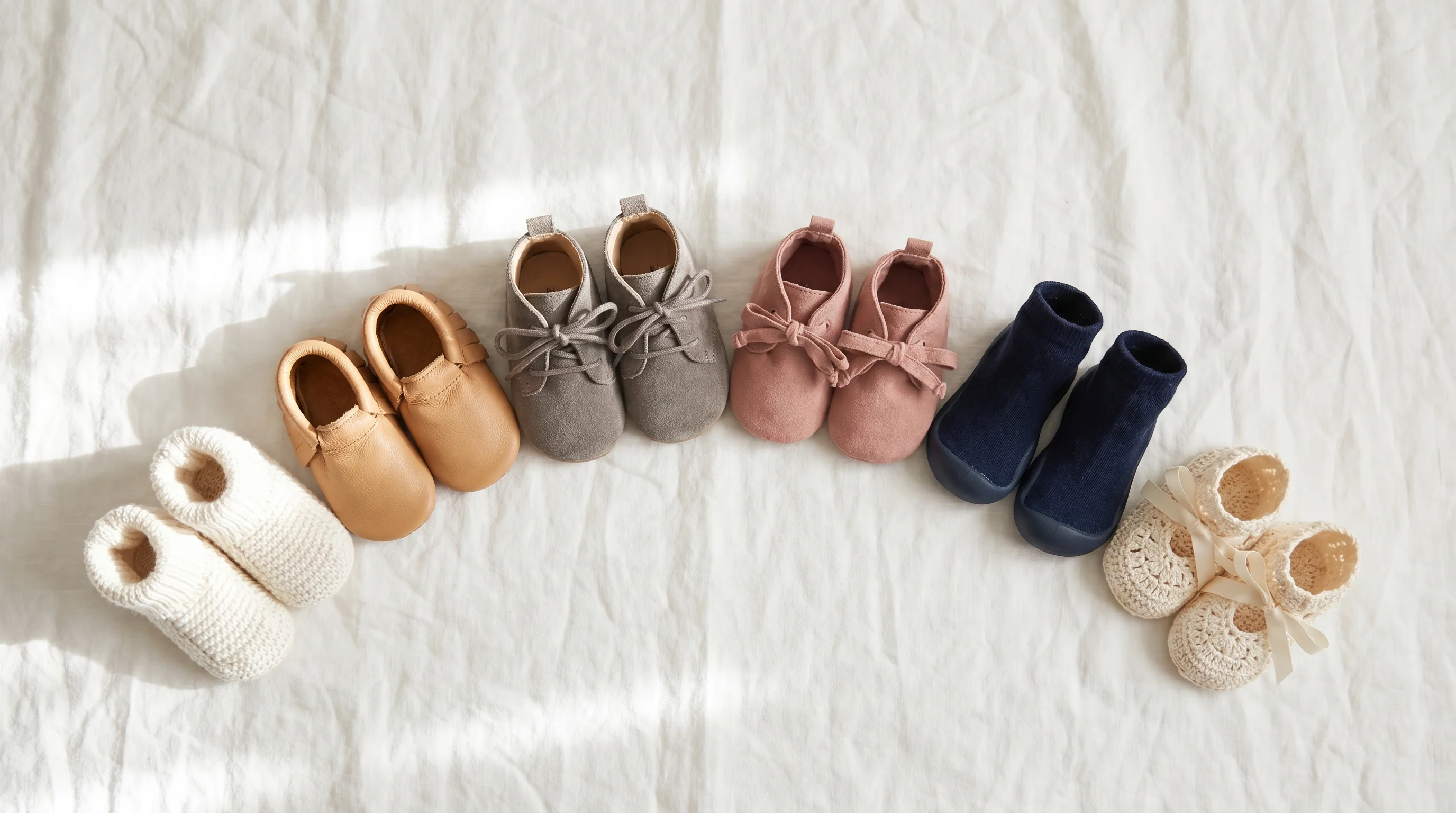
For a dedicated look at the world of baby booties — from newborn knit styles through to soft leather pre-walkers — our full baby booties UK guide covers what podiatrists actually say, soft sole vs hard sole, and the styles that have a fighting chance of staying on.
Here's the honest truth about baby shoes: before your baby is walking, they don't need them. Socks are fine. Bare feet are actually better for foot development — it lets the muscles, tendons and arches develop properly. So save your money for when it actually matters.
That said, nobody is going to stop you buying adorable little shoes for photos and occasions. Just don't stress about them for everyday use before walking age.
Pre-walker shoes (cruising stage)
Once your baby starts pulling up and cruising along furniture — usually around 9–12 months — pre-walker baby shoes are a good idea for outdoors. Look for very flexible soles (you should be able to bend the shoe easily), a wide toe box, and secure fastenings. Soft leather baby shoes are the gold standard here — they mould to the foot shape and don't restrict movement.
Wide fit baby shoes
Some babies just have wider feet — it's completely normal and often runs in families. If you're struggling to get standard shoes on without squishing the toes, look specifically for wide fit baby shoes. A shoe that's too narrow can affect how a baby walks and causes discomfort — worth getting right from the start.
First shoes — getting measured
When your baby takes their proper first steps, it's worth getting their feet measured professionally — Clarks, Start-Rite and many independent children's shoe shops offer this for free. That said, newborn baby shoes for the very early months can just be bought to approximate size — they're not walking in them anyway.
Bamboo & Sustainable Baby Clothes
If your baby has eczema, sensitive skin, or you just want to make more eco-conscious choices, bamboo baby clothes are genuinely worth the slightly higher price tag.
Bamboo fabric is:
- Incredibly soft — softer than cotton, actually. Like putting your baby in a cloud.
- Thermoregulating — it helps keep babies at a steady temperature, which is great for sleep and for the UK's erratic weather.
- Naturally antibacterial — less smell, fewer washes needed (which they will definitely need fewer of once you've experienced a proper blowout).
- Hypoallergenic — great for eczema-prone or sensitive skin.
- More sustainable — bamboo grows incredibly fast without pesticides or much water.
The tradeoff is price — bamboo baby clothes cost more than standard cotton. But if your baby has skin issues, or you're buying for sensitive skin, it's often worth it. Bamboo sleepsuits in particular are popular because babies spend so much time in them. If you're managing sensitive skin, what you wash your baby with matters just as much as what they wear — our Cetaphil baby wash review covers the gentlest bath-time option for reactive and eczema-prone skin.
Alternative options for eco-conscious parents include organic cotton baby clothes — GOTS-certified means no harmful chemicals were used in production.
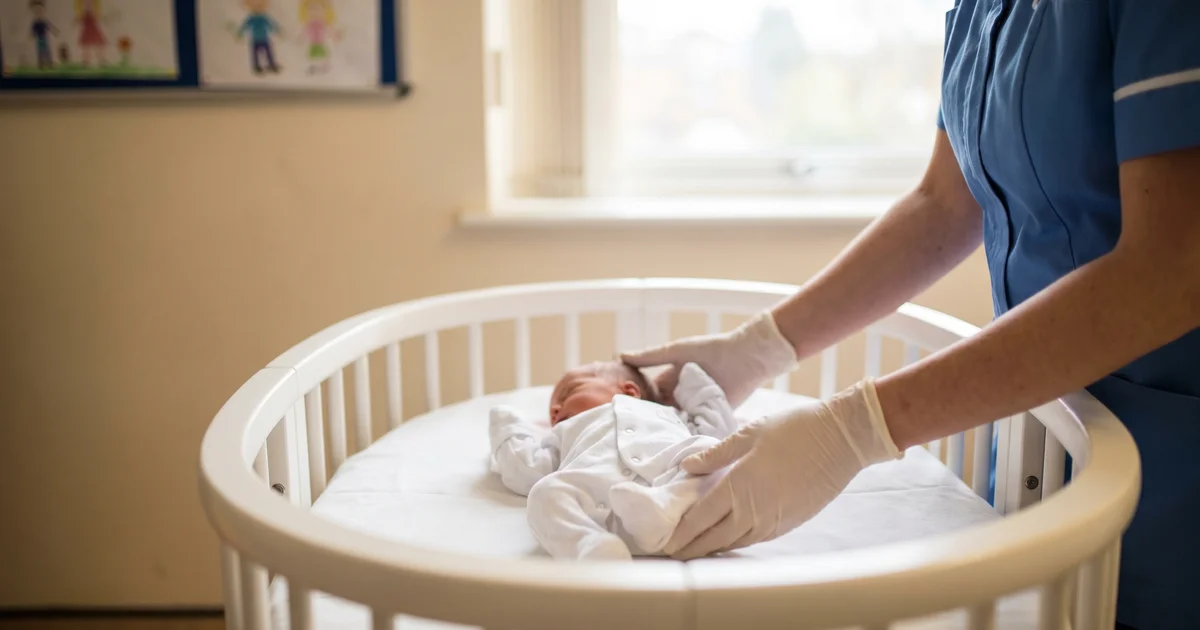
Premature Baby Clothing
If your baby has arrived early, first — well done, you're doing an incredible job in what is an incredibly hard situation. Clothing a premature baby has its own challenges because standard newborn clothes are still too big, and preemie clothes can be harder to find in shops.
What to look for in premature baby clothes:
- Tagless — prem baby skin is extremely delicate. Tags cause irritation and discomfort.
- Flat seams — same reason. Raised seams press against skin that's particularly sensitive.
- Open front or side fastenings — makes it easier to dress a baby who has lines and monitors attached.
- Soft, natural fabrics — cotton or bamboo. Nothing synthetic.
For the full breakdown — what micro, tiny baby and early baby sizes actually mean, which UK brands to buy from, and how to navigate the NICU — see our dedicated preemie baby clothes guide.
Premature baby hats are particularly important — tiny babies lose heat very quickly through their heads. Many NICUs ask you to bring in soft hats from home. Premature baby vests and premature baby sleepsuits are the staples — buy a few sets as they'll need changing often.
Occasion Wear & Special Baby Outfits
Look, we all know the practical stuff is what you actually need day-to-day. But the cute occasion outfits? They're for us. And that's completely fine.
For a deep dive into one of the most versatile pieces in the baby wardrobe, see our dedicated baby rompers UK guide — covering the difference from babygrows, best fabrics, summer picks, knit occasion styles and how to get the sizing right. If you're specifically looking for dresses — from everyday cotton to christening gowns and first birthday outfits — our baby dress UK guide covers the full range with sizing advice and occasion-specific picks. And if you'd rather make something by hand, our baby knitting patterns guide covers free beginner-friendly cardigans, blankets and bootie patterns with yarn advice for UK knitters.
Christmas baby outfits
A baby's first Christmas is a massive deal. Christmas baby outfits range from simple festive babygrows to full-on Santa costumes and elf sets. For photos, a personalised Christmas baby grow with the baby's name and "First Christmas" is always gorgeous. Order early — personalised items take a few days to make.
Easter baby clothes
Easter baby clothes — chick prints, bunny ears, pastel yellows and mint greens — are one of those things that seem unnecessary until you see the photos and realise it was absolutely worth it.
Matching mum and baby outfits
The matching mum and baby outfits trend has been going strong for a few years now and honestly, it's one we're fully on board with. Coordinating florals for a baby shower, matching Christmas pyjamas, or a simple striped tee-and-shorts combo — there are loads of options that don't look cheesy (well, some do, but that's sort of the point).
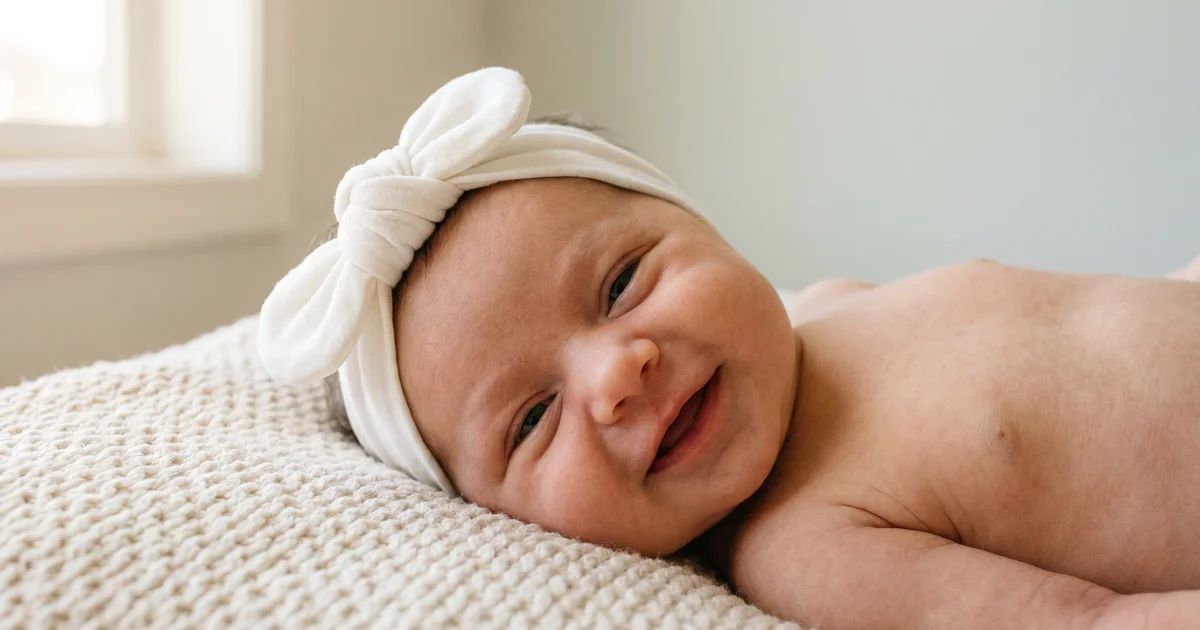
Baby headbands and hair accessories
A well-chosen baby headband can complete an occasion outfit in seconds — from a soft knotted style for newborn photos to a white lace bow for a christening. Nylon and jersey cotton are the safest materials, and they work on boys as well as girls in neutral tones. Our full baby headbands guide covers every style, how to get sizing right and the picks that actually stay on.
Baby bonnets and head coverage
Where a headband is decorative, a baby bonnet does the practical heavy lifting — keeping ears warm, blocking UV on summer pram walks and looking ridiculously sweet in every photo. UK parents tend to end up with three: a knit for winter, a cotton for everyday, and a UPF 50+ sun bonnet for summer. Our full baby bonnet UK guide covers sizing, materials and the safest picks for newborns.
Personalised occasion outfits
For gifting, a personalised baby outfit — perhaps with the baby's name and birth date embroidered — is a beautiful keepsake gift. Personalised baby rompers and personalised baby vests are a particularly nice touch for a first birthday or a baby shower gift.
Baby Clothing Brands Worth Knowing
You don't need to spend a fortune on baby clothes — they grow out of them in weeks. But some brands are genuinely better quality than others, and for certain things (like sleepsuits or shoes) it's worth spending a bit more.
- Dandelion Baby — gorgeous organic cotton pieces, UK-based, great for sensitive skin.
- Kite Clothing — GOTS-certified organic, ethically made, lovely designs. One of the better sustainable UK baby brands.
- Mayoral — Spanish brand, brilliant quality, great for special occasion outfits. Often on Amazon.
- Pex — a staple UK brand, affordable multipacks of vests and babygrows. No frills but reliable.
- Ted Baker Baby — for a gift or a special occasion. Lovely gift sets.
- Beatrix Potter — Peter Rabbit is an absolute classic and still sells like mad. Perfect for grandparents who want something "proper."
- Miffy — sweet, simple, iconic. The grey and white palette fits with most nursery aesthetics.
For designer bits (when you want to treat someone, or yourself): Moschino Baby, DKNY Baby and Guess Baby all have Amazon UK presence.
A Few Things Nobody Tells You
To wrap up, here are a few genuinely useful things I learned the hard way:
- Buy multipacks for the basics. You don't need five different vests — you need eight of the same vest because you'll go through them in a day when the blowouts start.
- Wash everything before use. New baby clothes often contain finishing chemicals. A wash at 30°C sorts this out.
- Learn to fold baby grows properly. The drawer organiser method (standing them upright so you can see everything) is a genuine game-changer for a chaotic nursery wardrobe.
- Accept all the hand-me-downs. Seriously. Baby clothes in the early months get such little wear — a bag of 0–3 month clothes from a friend is worth its weight in gold.
- Don't panic about keeping up. Some babies are still in 0–3 month clothes at 5 months. Some are in 3–6 at 8 weeks. Ignore the labels, go by fit.
Looking for a baby clothing gift? Check out our guide to personalised baby gifts — including personalised vests, grows and outfits that make brilliant shower presents.