
About the Authors

We're Tom (33) and Sophie (31) — a Bath couple who launched BabyMade after becoming first-time parents to Freddie. Sophie's midwifery background and our shared obsession with finding genuinely good baby products turned into this blog. We write everything we wish we'd had when Freddie arrived.
Disclosure: This article contains affiliate links. If you buy through them we may earn a small commission at no extra cost to you. We only recommend products we genuinely rate.
The first time Sophie's mum gave Freddie a hand-knitted baby alpaca cardigan, we honestly didn't get it. It was £85, looked like any other cream cardigan, and we'd already been given about fourteen knits between us. Then Freddie wore it on a chilly morning in Bath and we got it. It's softer than anything we'd touched. It kept him warmer than a thicker wool jumper. He didn't itch. He didn't overheat. Two years later, our second baby is wearing it and it still looks new.
This guide is everything we've learned about baby alpaca since — what the fibre actually is (it's not what most people think), why UK parents end up so obsessed with it, the difference between a £25 and a £95 piece, and whether it's actually worth the money. If you want the wider context on what to dress your baby in, our full baby clothing guide covers fabrics from cotton to merino.
What Is Baby Alpaca?
Right — let's clear up the most common misunderstanding straight away. Baby alpaca is not from baby alpacas. Nobody is harming young animals to make your child's cardigan. The "baby" in baby alpaca refers to the fineness of the fibre, not the age of the animal. It's the very softest fibres taken from the alpaca's first shearing, when the fleece is at its finest — typically 22 microns or thinner.
For comparison, regular alpaca fibre is around 25–30 microns, sheep's wool is around 35 microns, and human hair is around 70 microns. The thinner the fibre, the softer it feels against skin. That's why a baby alpaca cardigan feels almost like cashmere, while a regular wool jumper might feel scratchy on baby skin.
Baby Alpaca vs Regular Alpaca: What's the Difference?
If you see a cheaper alpaca jumper labelled just "100% alpaca" rather than "100% baby alpaca," it's not a scam — it's just made from the regular grade. The difference is real and you can feel it instantly. Regular alpaca is still warmer and softer than wool, but baby alpaca is in another league. Here's roughly how the grading works in the UK:
- Royal alpaca: The absolute finest grade, under 19 microns. Rare and very expensive. Mostly used in luxury adult knitwear.
- Baby alpaca: 19–22 microns. The standard for premium baby clothing — soft, hypoallergenic, gorgeous.
- Superfine alpaca: 22–25 microns. Soft but slightly less so than baby alpaca.
- Regular alpaca: 25–30 microns. Lovely for adult jumpers and outerwear, sometimes too coarse for newborn skin.
For babies specifically, you want baby alpaca or finer. Our take: if you're buying for a newborn, don't compromise on the grade. The whole point of choosing alpaca is the softness against the skin.
Why UK Parents Love Baby Alpaca for Babies
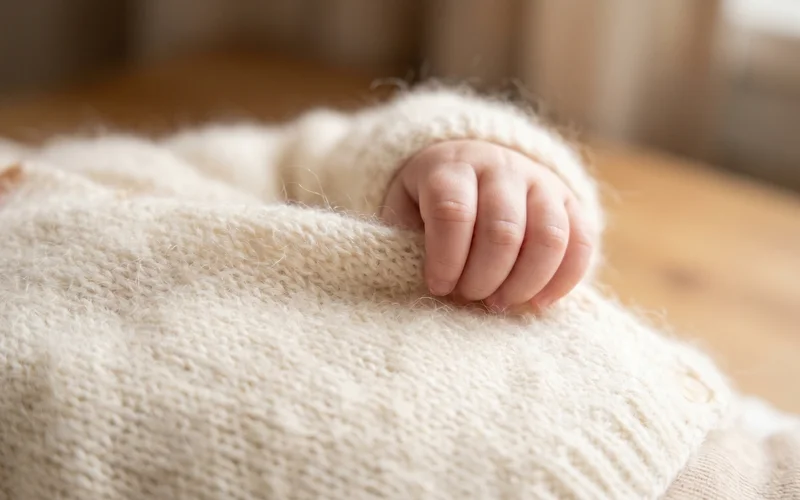
Talk to any UK parent who's had a baby alpaca cardigan and they'll tell you the same things. It's softer than wool. It's warmer. It doesn't itch. It doesn't pill the way cheap acrylic does. It survives wash after wash. And — this is the bit that surprises people — it actually keeps babies cooler in spring and autumn, because the natural fibres breathe in a way synthetic blends just don't.
The other thing UK parents love is the heirloom factor. A good baby alpaca cardigan or blanket lasts long enough to be passed between siblings — even between cousins. Our friend Ellie's daughter is wearing the same cardigan her older brother wore when he was 6 months old, and you genuinely can't tell. That's part of why baby alpaca is one of the most popular options in our personalised baby gifts guide — the keepsake angle is real.
Is Baby Alpaca Hypoallergenic?
Yes — and this is one of the biggest reasons UK parents pick it over wool. Sheep's wool contains lanolin, which is the waxy substance that gives wool its waterproof quality. It's also what most "wool allergies" actually react to. Baby alpaca contains no lanolin. The fibre is naturally hypoallergenic, which means babies with sensitive skin or eczema can wear it without the irritation that wool sometimes triggers.
For preemies, NICU graduates and babies with the kind of delicate skin that reacts to absolutely everything (we know parents whose babies couldn't even tolerate organic cotton) baby alpaca is one of the few natural fibres that consistently gets a thumbs-up. If your baby arrived early, our preemie baby clothes guide covers the fabrics that work best for tiny, sensitive skin.
Baby Alpaca Cardigans, Jumpers and Hats
The classic baby alpaca buy is a cardigan. Cream, oatmeal, soft grey or natural beige — these are the colours that suit every baby and survive years of photos without dating. We'd recommend going one size up from your baby's actual age. Baby alpaca is fitted-knitted rather than stretchy, and you want room to layer underneath.
Hats and mitten sets are the second-most popular buy. A baby alpaca hat is small enough to be relatively affordable (£15–£25 in the UK) and the warmth-to-weight ratio means baby's head doesn't sweat the way it does in a synthetic hat. For autumn and winter walks, paired with a cotton vest underneath, a baby alpaca cardigan and hat combination is hard to beat. If you're knitting your own, take a look at our baby knitting patterns guide — baby alpaca yarn is what most of those patterns are designed for.
If you'd rather have full ear coverage and a chin tie that actually keeps the hat on — particularly useful for wriggly four- to six-month-olds — look at a knitted alpaca baby bonnet instead. Our baby bonnet UK guide covers knit, cotton and sun bonnet picks across price points.
Baby Alpaca Blankets and Throws
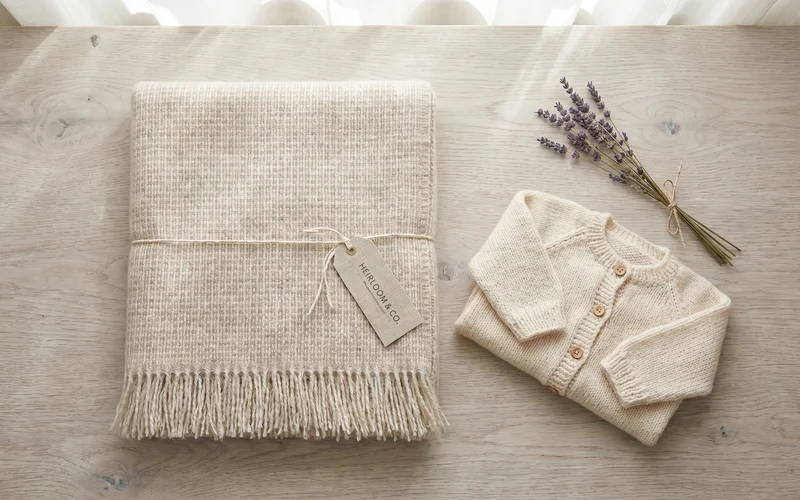
If you're going to spend money on one premium baby item, an heirloom baby alpaca blanket is hard to beat. They feel almost like cashmere, they're warm without being heavy (which matters for safe sleep), and they age beautifully — get softer rather than rougher over time. Most UK options are around 80×100cm, which is the perfect pram or Moses basket size, and they double as a buggy blanket through toddler years.
For full safe-sleep guidance always defer to your baby blanket usage guide — UK NHS advice is to keep blankets out of the cot under 12 months. Where the alpaca blanket really comes into its own is in the pram, on the play mat, or as a snuggle blanket from 12 months onwards.
How Warm Is Baby Alpaca, Really?
Genuinely warmer than wool by weight — and that's not marketing, that's structural. Baby alpaca fibres are hollow, which traps warm air and creates natural insulation. A thin baby alpaca cardigan keeps a baby as warm as a much thicker wool jumper, which means less bulk for them to wriggle around in.
For UK winters specifically, a baby alpaca cardigan layered over a long-sleeve cotton vest is comfortable down to around 5°C outdoors. Below that, you'd want a coat or pram suit on top. Indoors at typical UK home temperatures (18–22°C), a thin baby alpaca cardigan on its own is usually enough. For the temperature-and-TOG details, we'd point you back to our broader baby clothing guide.
Caring for Baby Alpaca: Washing and Storage
Baby alpaca is tougher than its reputation suggests, but it does need a bit of care. Here's the routine that's worked for us through two babies:
- Hand wash in cool water (under 30°C) with a wool-safe detergent or a mild baby wash. Some pieces are labelled as machine-washable on a wool cycle — always check the label first.
- Don't wring or twist. Squeeze gently, then roll in a clean towel to remove excess water.
- Lay flat to dry on a fresh towel, away from direct heat or sunlight. Hanging stretches the shape.
- Store with cedar or lavender. Moths love alpaca — and a single moth-hole can ruin a piece. Cedar balls or lavender sachets in the drawer are non-negotiable.
- Steam, don't iron. If a piece looks creased, hang it in the bathroom while you shower or use a steamer on low.
Done that way, a quality baby alpaca piece will outlast pretty much everything else in your baby's wardrobe. Ours are still going strong after two years and a sibling.
Baby Alpaca vs Cashmere vs Merino
The three premium fibres for baby clothing are baby alpaca, cashmere and merino wool. Each has its place:
- Baby alpaca: Warmer than cashmere, more durable than cashmere, hypoallergenic. The best all-rounder for UK baby clothing.
- Cashmere: Softer than baby alpaca, but pills more easily, less durable, more expensive. A lovely treat-piece, less practical day-to-day.
- Merino wool: Soft, breathable, machine-washable (in many cases), great for base layers and sleepwear. Slightly less soft than baby alpaca but more practical for daily wash cycles.
For most UK families, the right answer is a mix: merino base layers for daily wear, baby alpaca cardigans and blankets for outerwear and special occasions. Cashmere sits as the ultra-luxury option for one or two pieces.
Where to Buy Baby Alpaca in the UK
The best baby alpaca pieces in the UK come from small Peruvian-import brands — PachaMama, From Babies With Love, and a handful of independents at John Lewis. Amazon UK has a growing selection of authentic Peruvian baby alpaca, particularly for blankets and cardigans. You can browse baby alpaca options here.
Watch out for one thing: products labelled as "alpaca blend" or "alpaca-touch." Blends are usually 30–50% alpaca with acrylic or wool, which negates a lot of the softness benefit and the hypoallergenic property. For a baby, you want 100% baby alpaca where possible. The label will say so explicitly.
Is Baby Alpaca Worth the Price?
Honest answer? For one or two pieces, yes — easily. For an entire wardrobe, no. The price points in the UK look something like this in 2026:
- Baby alpaca cardigan: £45–£100
- Baby alpaca jumper: £35–£80
- Baby alpaca hat & mittens set: £20–£40
- Baby alpaca blanket (small/cot): £55–£140
- Baby alpaca booties: £15–£30
Where baby alpaca makes sense is the pieces that get worn most or photographed most — a cardigan for outings, a blanket for the pram. Where it's overkill is everyday vests and sleepsuits, where cotton or merino does the job for a fraction of the price. We'd never recommend going head-to-toe in baby alpaca, even if the budget allowed.
For premium gifting, baby alpaca sits alongside the keepsake category — see our baby keepsakes guide for the broader heirloom buying picture.
Verdict: Is Baby Alpaca Worth It in 2026?
Yes — for the right pieces, baby alpaca is genuinely worth the money. We'd recommend two pieces as your starter kit: one cardigan in cream or oatmeal that goes with everything, and one blanket for the pram or Moses basket. That'll cost you around £100–£200 in the UK, and both pieces will outlast every other knitted item in your baby's wardrobe and survive into a second baby.
If you're buying as a gift, baby alpaca is one of the most thoughtful options going — soft, beautiful, warm, hypoallergenic, and lasting enough to become a keepsake. It's the rare baby buy that genuinely earns the price tag. For more on what to dress your little one in alongside their alpaca pieces, our complete baby clothing guide walks through everything from base layers to outerwear, and our baby tees guide covers the everyday cotton basics that work brilliantly under a baby alpaca cardigan.