
About the Authors

We're Tom (33) and Sophie (31) — a Bath couple who launched BabyMade after becoming first-time parents to Freddie. Sophie's midwifery background and our shared obsession with finding genuinely good baby products turned into this blog. We write everything we wish we'd had when Freddie arrived.
Before I had a baby, I genuinely thought choosing toys would be fun. A bit of browsing, a few cute purchases, done. What I didn't expect was the guilt spiral of wondering whether I was buying the right things, whether my baby was developing on track, whether the toy I'd just spent £40 on was going to be ignored in favour of a wooden spoon and an empty wipes packet — which, for the record, it absolutely was.
The toy market for babies is enormous and largely built on parental anxiety. Packaging promises to boost brain development, improve motor skills, prepare your baby for Oxford by age two. Mostly, what babies actually need is simpler and cheaper than that. But there are some genuinely brilliant toys at every stage, and knowing what to look for saves you a lot of money and a lot of clutter.
This guide goes through what babies actually benefit from at each stage — from a newborn who can barely see past their own nose, to a 12-month-old who's pulling up on everything and needs a wooden push along walker to practise those first steps.
The golden rule: The best toy for any age is one that's slightly beyond what your baby can already do — enough challenge to be interesting, not so much that it's frustrating. And you, talking and singing and making faces at them, is always the best developmental tool of all.
Newborn Toys — 0 to 3 Months
Here's the honest truth about newborns and toys: they can barely see further than about 20–30cm. They're spending most of their time sleeping, feeding, and adjusting to being outside a womb. The idea of buying a complicated toy for a newborn is mostly marketing.
What actually works at this stage is remarkably simple:
High-contrast black and white toys
A newborn's vision is still developing. They can see bold, high-contrast patterns long before they can make out colour or detail — which is why black and white baby toys and cards are so popular for the first weeks. A simple set of black and white sensory cards propped up during awake time, or a high-contrast mobile hung above the changing mat, genuinely holds a newborn's attention in a way that pastel-coloured toys simply don't yet.
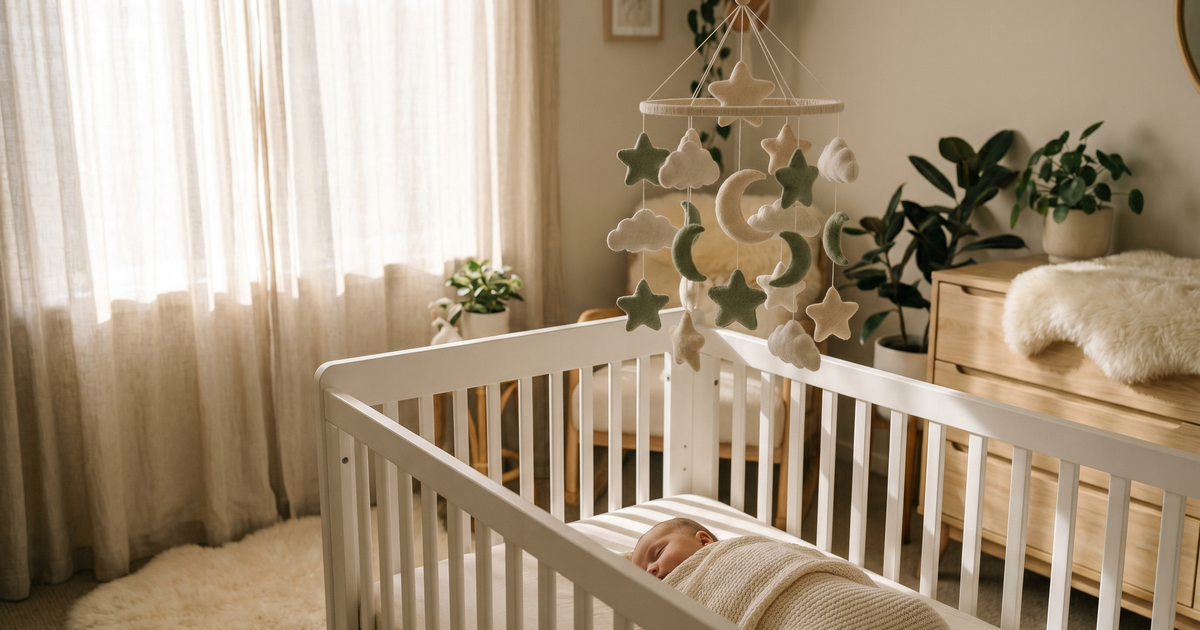
Baby cot mobiles
A musical cot mobile is one of the few genuinely useful newborn purchases. It gives your baby something to look at and track visually during awake time in the cot, the gentle rotation helps develop visual tracking, and the music can be soothing at sleep time too. Look for one with a remote or timer — you do not want to have to lean over the cot every time it stops. Once babies can push up on their arms (usually around 4–5 months), the mobile needs to come off the cot for safety. For a full breakdown of every type — high contrast vs musical vs wooden, and exactly when it needs to come down — see our dedicated baby mobile UK guide.
Soft rattles and crinkle toys
A lightweight baby rattle that fits in a tiny fist is perfect once your baby starts batting at things — usually around 6–8 weeks. Crinkle toys (soft toys with a crinkle material inside) are brilliant because the sound they make when squeezed genuinely fascinates young babies. The wrist rattle versions are particularly good — you attach them to your baby's wrist and they discover cause and effect entirely by accident, then spend 20 minutes looking at their own hand in amazement. It never gets old.
3 to 6 Months — Play Mats, Rattles and Baby Pram Toys
This is when babies genuinely start getting interesting — and when toys actually start getting some proper use. By three months, most babies are smiling, making sounds, following movement with their eyes, and starting to swipe at things. By five or six months, they're rolling, reaching, grabbing, and shoving absolutely everything in their mouths.
Baby play mat gym
The single most used piece of baby kit we owned. A baby play mat gym — the padded mat with an arch above it and hanging toys — is where babies spend a huge amount of awake time from about 3 months to 6 months. Look for one with:
- A variety of hanging toys — different textures, sounds, colours and shapes hold attention better than a set of identical toys
- A small mirror — babies are fascinated by faces, and a mirror is endlessly entertaining
- A soft but firm mat that's comfortable for tummy time as well as back play
- Toys you can remove and take elsewhere — on the pram, in the car seat
Baby pram toys
Baby pram toys clip or wrap onto the pram hood, handle or bar and give babies something to look at and bat at during walks. Once your baby can grab, they'll yank them off — so make sure any clips are secure and that the toy is safe if it ends up in their mouth. Spiral pram toys that wrap around the bar are particularly good because they stay put.
Baby car seat toys
Same principle as pram toys — something to look at and interact with during car journeys. Baby car seat toys that attach to the handle of an infant carrier or clip onto the headrest are brilliant for this. Avoid anything heavy or loose that could become a projectile in a sudden stop.
6 to 9 Months — Activity Centres, Sensory Play and First Foods
Six months is a turning point. Babies are sitting (with or without support), picking things up deliberately, transferring objects between hands, and exploring everything with their mouths. They've also just started weaning, which means they're experiencing new textures, flavours and temperatures — which counts as sensory play in its own right.
This is when toys for 6 month babies start to get genuinely interactive.
Baby activity centres
The large, freestanding baby activity centres — sometimes called play centres or exersaucers — are those circular contraptions where your baby sits in the middle and has buttons, levers, spinning bits and lights all around them. They typically work from around 4–6 months (when a baby can sit with support) up to around 12 months.
They're not essential, but they're brilliant for giving parents a solid 15–20 minutes of hands-free time while the baby is safely entertained and upright. Most babies absolutely love them. One thing to watch: the NHS recommends limiting time in walkers and activity centres that hold babies in a standing position, as it can affect hip development if overused. A few sessions a day for 20–30 minutes is perfectly fine.
Stacking toys and shape sorters
Baby stacking cups are one of the best-value toys you can buy. They stack. They nest inside each other. They go in the bath. You can fill them with water. Older babies learn to stack them, knock them down, and repeat indefinitely while looking very pleased with themselves. They develop grip, hand-eye coordination, and eventually an understanding of size relationships. And they cost next to nothing.
Shape sorters come slightly later — most babies don't manage to post shapes accurately until around 9–12 months — but they're excellent for developing fine motor skills and problem-solving once your baby is ready.
Activity cubes
An activity cube is one of those toys that stays useful for a surprisingly long time. Each side has something different — a bead maze, shape sorter, spinning dial, xylophone, abacus. Good ones keep babies and toddlers engaged across a wide age range and hold up to the kind of sustained bashing that babies absolutely deliver.
9 to 12 Months — Pull-Up Toys, Bath Toys and First Books
By nine months most babies are crawling, some are pulling themselves up to standing on furniture, and a few early movers are already cruising along the sofa. This is an incredibly active stage — they want to move, explore, put things in and take things out, and touch absolutely everything they're not supposed to.
Baby ride-on and push-along toys
Once your baby can pull themselves up and cruise along furniture, baby ride-on toys and push-alongs become genuinely useful. A sturdy push-along car or animal that they can lean on and walk behind gives them the confidence to practice walking with support before committing to freestanding steps. A ride-on with handles is good too — feet-to-floor riding helps develop leg strength and coordination.
Bath toys for babies
Bath time becomes a lot more fun — and calmer — once you add some good bath toys for babies. Pouring cups and small stacking containers work brilliantly (you probably already have the stacking cups from earlier). Rubber squirt toys are a classic. One tip: choose toys without holes in the bottom where water can get trapped — they go mouldy inside incredibly quickly and you won't know until you squeeze one into your baby's face. Solid toys that float and don't trap water are much more hygenic.
Baby puzzles
Simple baby puzzles with large chunky pieces — usually wooden, with a knob on each piece to help with grip — are great for 9–12 months and beyond. Simple 2–4 piece puzzles are right for this age. Matching a piece to its correct hole and pressing it in is genuinely challenging for this age group and very satisfying when they crack it.
Tummy Time Toys — Making Those Minutes Actually Happen
Tummy time is one of those things health visitors love to mention and babies — particularly in the early weeks — tend to absolutely hate. But it's genuinely important: it builds the neck, shoulder and core strength that babies need to sit, crawl and eventually walk. The NHS recommends starting from birth and building up to 30 minutes a day by 3 months.
The trick is making it less awful, and the right toys help enormously.
- A play mat with a built-in mirror at floor level — position it so your baby can see their reflection. Most babies are fascinated by faces and will lift their head to look.
- High-contrast cards propped up at eye level — something interesting to look at means they're distracted from the effort of holding their head up.
- Sensory books opened flat in front of them — crinkle pages, textures and bright images hold attention well.
- You, lying on the floor face-to-face with them — still the best tummy time entertainment going. Works every time.
- A small rolled towel or tummy time pillow under their chest — takes some of the effort out of it and lets them focus on lifting their head rather than supporting their whole weight.
Sensory Toys and Sensory Books for Babies
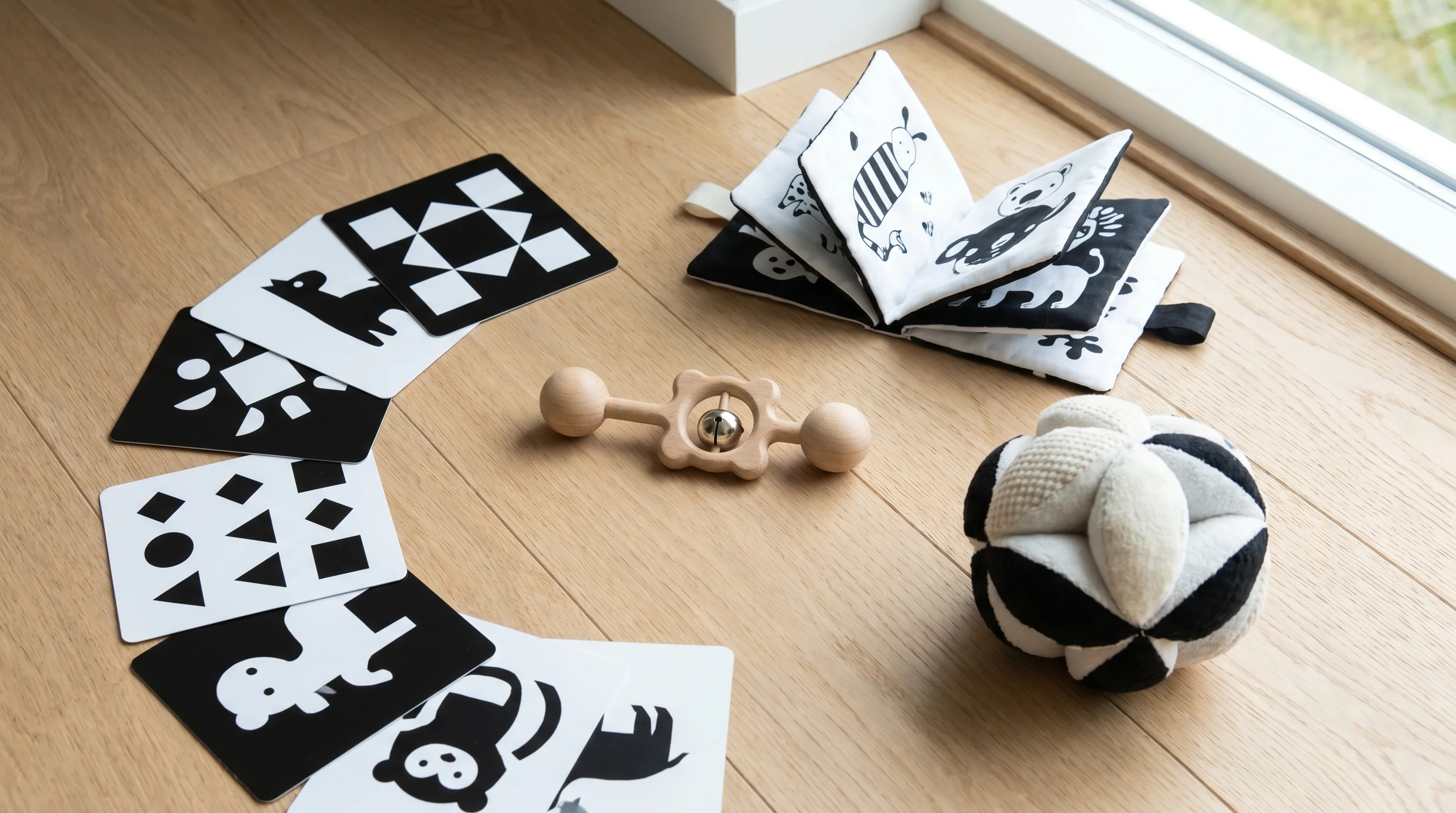
Sensory play — play that stimulates sight, hearing, touch, smell or taste — is how babies learn about the world in the first year. Every time your baby squeezes a crinkle toy, watches a mobile spin, or feels the difference between a smooth board book and a textured sensory page, they're building neural pathways and making sense of their environment.
You don't need a dedicated "sensory toy" for this — most good baby toys have sensory elements built in. But a few specific types are worth knowing about:
Sensory books for babies
Sensory books for babies are cloth or board books with texture pages, crinkle elements, mirrors, peek-a-boo flaps and high-contrast images. They're genuinely brilliant for any age from newborn onwards. Babies who are too young to follow a story can still engage with the textures and images, and they remain useful as proper books once language starts developing. A good sensory book is one of the best baby shower gifts you can give.
Baby sensory lights
Baby sensory lights — projectors, colour-changing nightlights and light-up ceiling projectors — are particularly popular for bedtime and for calming overtired or overstimulated babies. A projector that puts stars or moving images on the ceiling is endlessly fascinating for babies and toddlers alike. Look for ones with a timer so it switches off automatically once your baby is asleep.
Sensory balls and textured toys
Textured balls with different surfaces, bumps and ridges are perfect for babies learning to grip, transfer between hands and explore with their mouths. Sensory balls in a small set give babies a variety of textures to explore and roll after once they're moving. They're also brilliant for soft play at home — roll them gently and babies will do everything they can to get to them.
Montessori Toys for Babies — Worth the Hype?
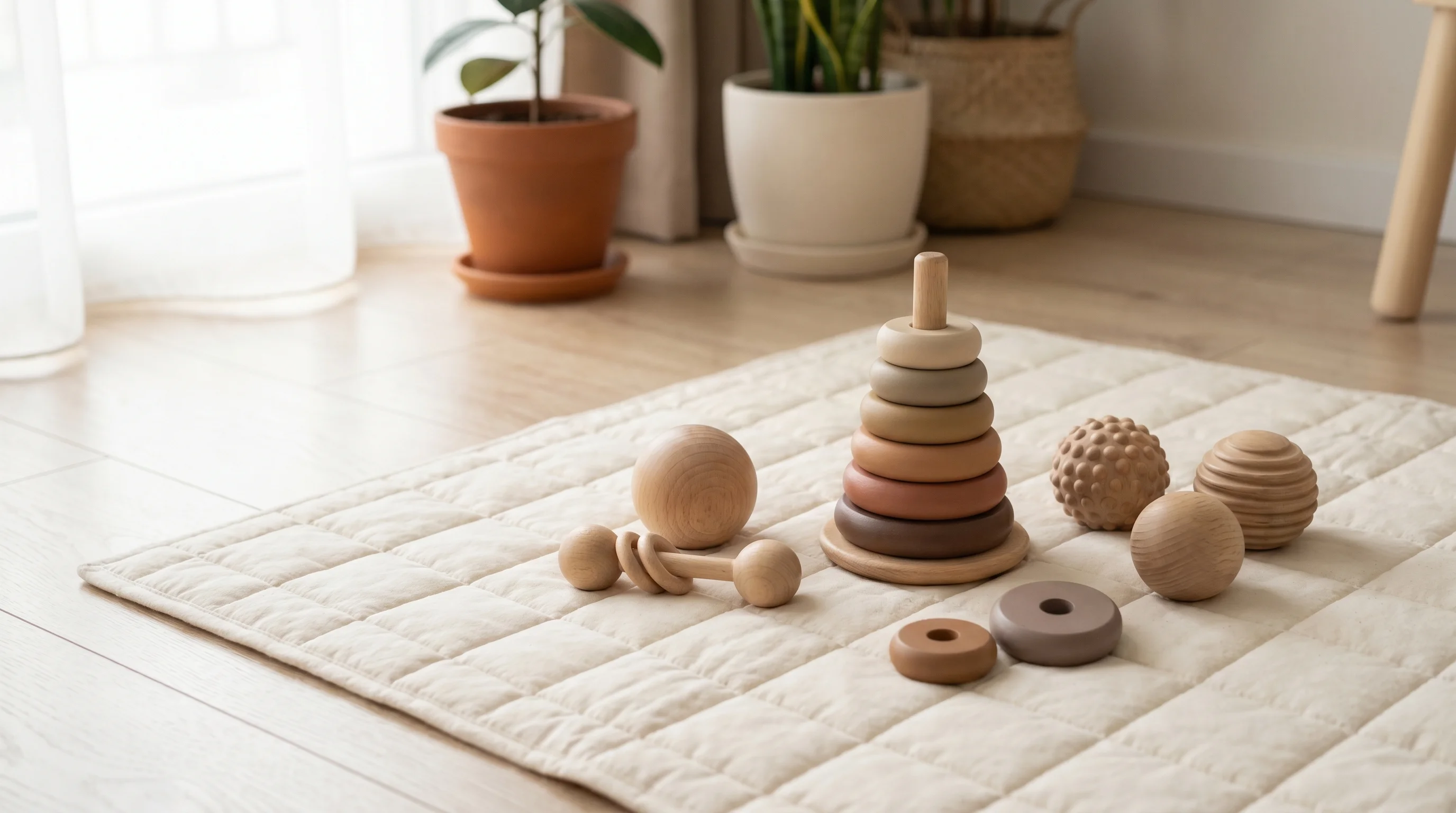
Montessori toys have become very popular over the last few years, and if you've been on any parenting social media you'll have seen the aesthetic — beautiful natural wood, simple shapes, no flashing lights or electronic sounds. The question everyone asks is whether they're actually better, or just more expensive and photogenic.
The honest answer is: both, depending on the toy.
The principles behind Montessori play are genuinely sound. Open-ended toys — ones with no fixed "right" way to play with them — do encourage more creative and sustained play than toys with a single function. Natural materials like wood have a quality and weight that plastic doesn't. Simple, uncluttered toys let babies focus without overstimulation.
But you don't need to spend a fortune on artisan wooden toys from a Montessori boutique. Montessori-inspired baby toys on Amazon include wooden object permanence boxes, grasping balls, simple shape sorters, and stacking rings — all of which are reasonably priced and genuinely useful.
The wooden object permanence box (where you drop a ball in a hole and it comes out the bottom into a tray) is particularly brilliant for around 8–12 months. It's one of those toys where you can see the exact moment your baby understands what's happening — their face when the ball comes back out is priceless every single time.
What Montessori toys are generally not good for: the pure physical excitement of a door bouncer, the wild entertainment value of an activity centre at 5pm when you need to cook dinner, or anything that needs to be impressive to a grandparent who is used to flashy toys. There's a place for all types of play.
Baby Door Bouncers and Activity Centres
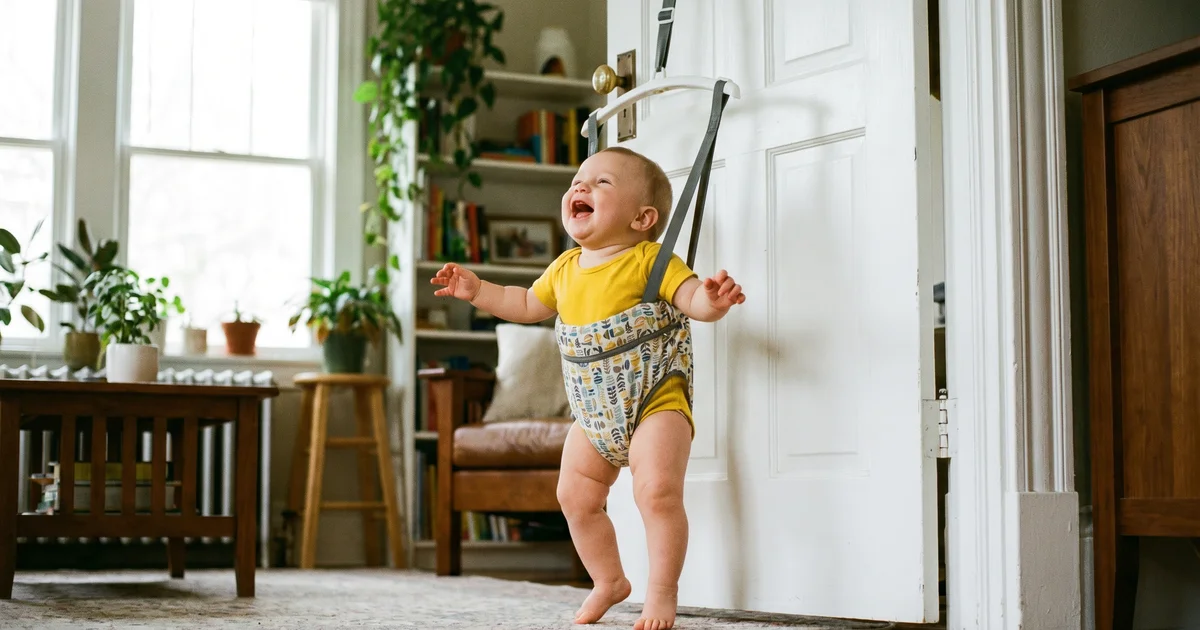
The baby door bouncer deserves its own section because it is, genuinely, one of the most useful items you can buy for the 5–12 month period. The principle is simple: you hang it from a door frame, put your baby in it (when they can hold their head up, usually from around 4–5 months), and watch them bounce with absolute wild joy.
Most babies are completely obsessed with baby door bouncers. The sheer delight of being upright, bouncing, and in control of their own movement is unlike anything else you can give them at this age. It also burns extraordinary amounts of energy, which is relevant at 4pm when you still have two hours until bedtime.
Things to look for in a door bouncer: check your door frame is the right type (most work with standard UK door frames, but check the measurements), look for an adjustable height so you can set the right bounce height as your baby grows, and make sure the harness is secure and comfortable. Babies typically use a door bouncer from around 4–5 months until they're walking — so you do get good use out of it.
One important safety note: never leave your baby unsupervised in a door bouncer, and check the weight limit. Most go up to around 12kg, but check the specific product. For a detailed breakdown of fitting, age limits, best brands and how long per session, see our full baby door bouncer guide.
Baby Walkers — Push Along vs Round Walkers
Baby walkers are one of those topics where you need to be clear about what you're buying, because there are two completely different products that both get called "baby walkers" and they're not the same thing at all.
Push along walkers (the good kind)
A wooden baby walker push along — the kind your baby stands behind and pushes — is excellent for developing walking. Your baby holds the handle, gets upright, and pushes it along the floor while their legs do the walking work. It gives them the confidence to take steps while still having support. Most babies go from cruising along furniture to using a push walker to independent steps over a few weeks.
Look for one with adjustable resistance on the wheels — if it rolls too freely on hard floors, it will shoot away from your baby and they'll fall. A walker with some friction on the wheels, or one that works better on carpet, is much safer for early walkers.
The wooden versions are beautiful and last well, often becoming a keepsake toy. The plastic versions are cheaper. Both work fine.
Round sit-in walkers (the ones the NHS advises against)
These are the circular frames where a baby sits in the middle with their feet touching the floor and scoots around the room. The NHS and many paediatric physiotherapists advise against these because they hold babies in a position that doesn't require them to develop the balance and coordination they'd naturally build by pulling up and cruising. They also move fast enough to be a hazard around stairs — there have been serious accidents.
If you want to use one, keep sessions short, make sure all stairs are gated, and never leave your baby unsupervised in one. But honestly, a push-along walker is a better developmental choice for the same stage.
Baby Annabell and toy baby carriers
Slightly different category, but worth a mention: role-play toys like the Baby Annabell doll and toy baby carriers become brilliant from around 12–18 months, when toddlers start copying what they see their parents doing. A baby who has watched you wear them in a carrier will absolutely try to wear their doll in their toy carrier. It's one of those things that's incredibly sweet and also genuinely useful for parallel play while you get on with things.
Baby Toys as Gifts — What to Buy and When
Buying a toy as a gift for a baby you don't see every day is tricky — you don't know what they already have, you're not always sure of the exact age, and you definitely don't want to give something the baby won't be able to use for another four months.
Here are a few principles that make gift toy buying much easier:
- Buy slightly older than the baby currently is. A toy for 6+ months given to a 4-month-old will be used and loved in a couple of months. A toy for 0–3 months given to a 5-month-old will go straight to the charity shop. When in doubt, size up.
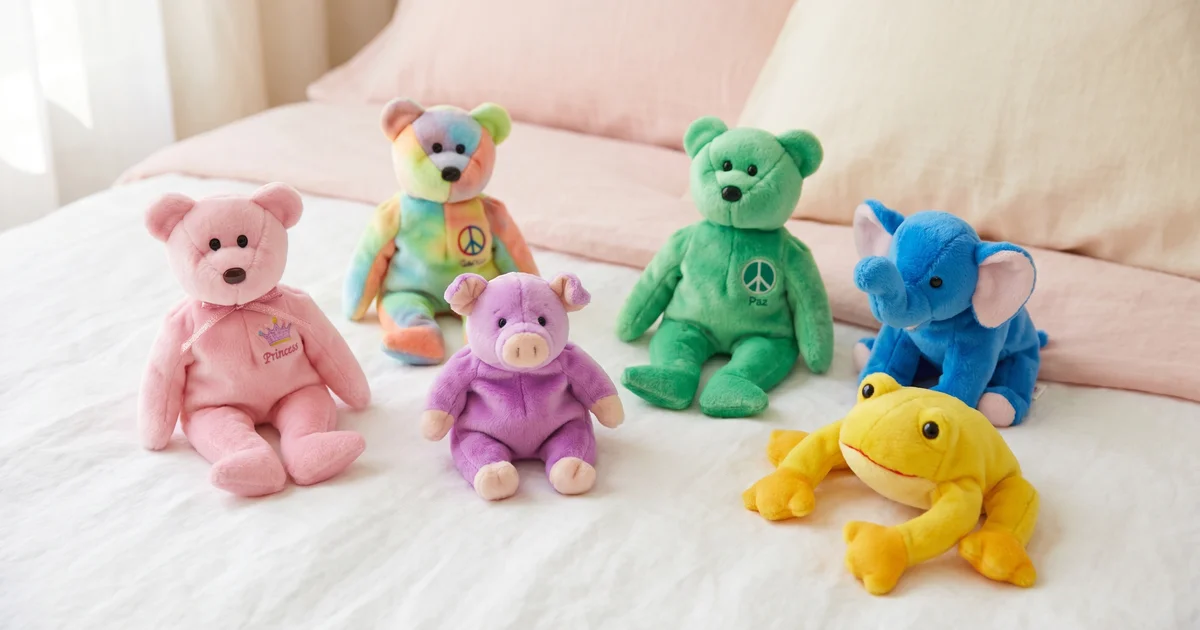
- Soft toys are always received well but rarely played with as actual toys. They become comfort objects, cot companions and photography props. A beautiful personalised baby soft toy with the baby's name on it makes a meaningful gift even if it never gets played with in the traditional sense.
- Sensory books are universally safe choices. A good sensory book works from newborn all the way through toddlerhood. It's never too early and never wasted.
- Personalised baby toys — personalised rattles, name puzzles and wooden toys with the baby's name are brilliant from around 12 months and become keepsakes. A name puzzle in particular is a gift that stays on the shelf for years and looks lovely in a nursery.
- Ask the parents what they need. Counterintuitively, parents are often the hardest people to buy for because they know exactly what they want and already have the obvious things. A quick message asking "what does she need right now?" takes 30 seconds and guarantees the gift will actually be used.
Toys by budget
- Under £15: Stacking cups, wrist rattles, a set of sensory balls, a crinkle cloth book, black and white sensory cards
- £15–£30: A good sensory book set, a baby play gym (basic), a wooden activity shape sorter, baby bath toys
- £30–£60: A quality baby play mat gym with arch, a wooden push-along walker, an activity cube, a Montessori toy set
- £60+: A full baby activity centre, a musical cot mobile, a baby door bouncer, a quality wooden walker
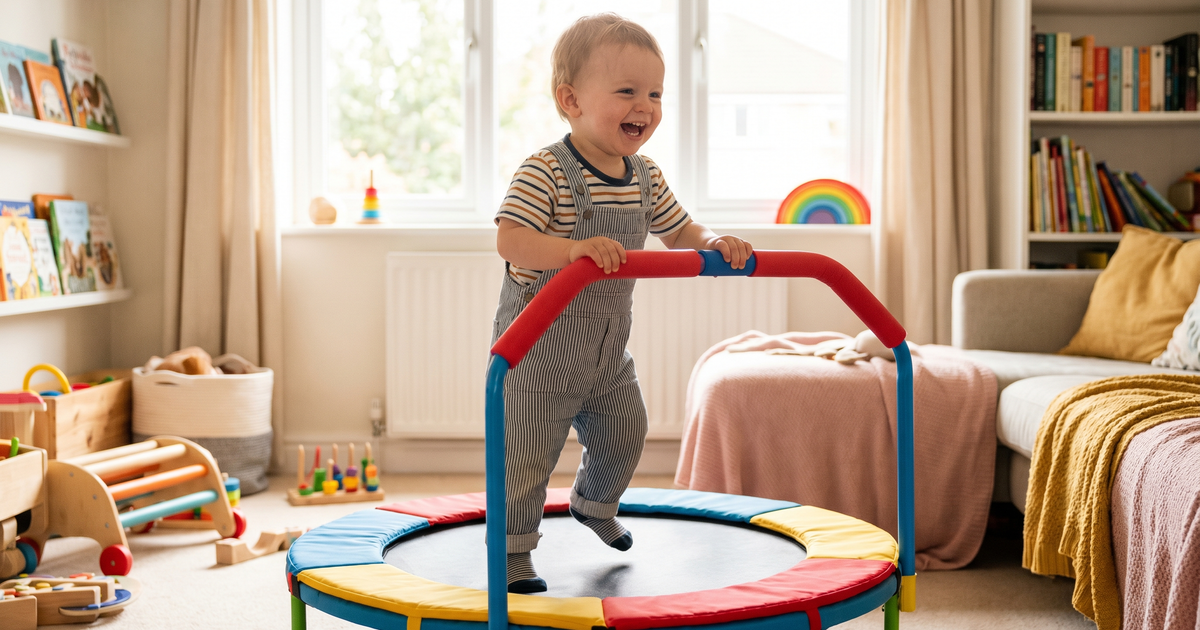
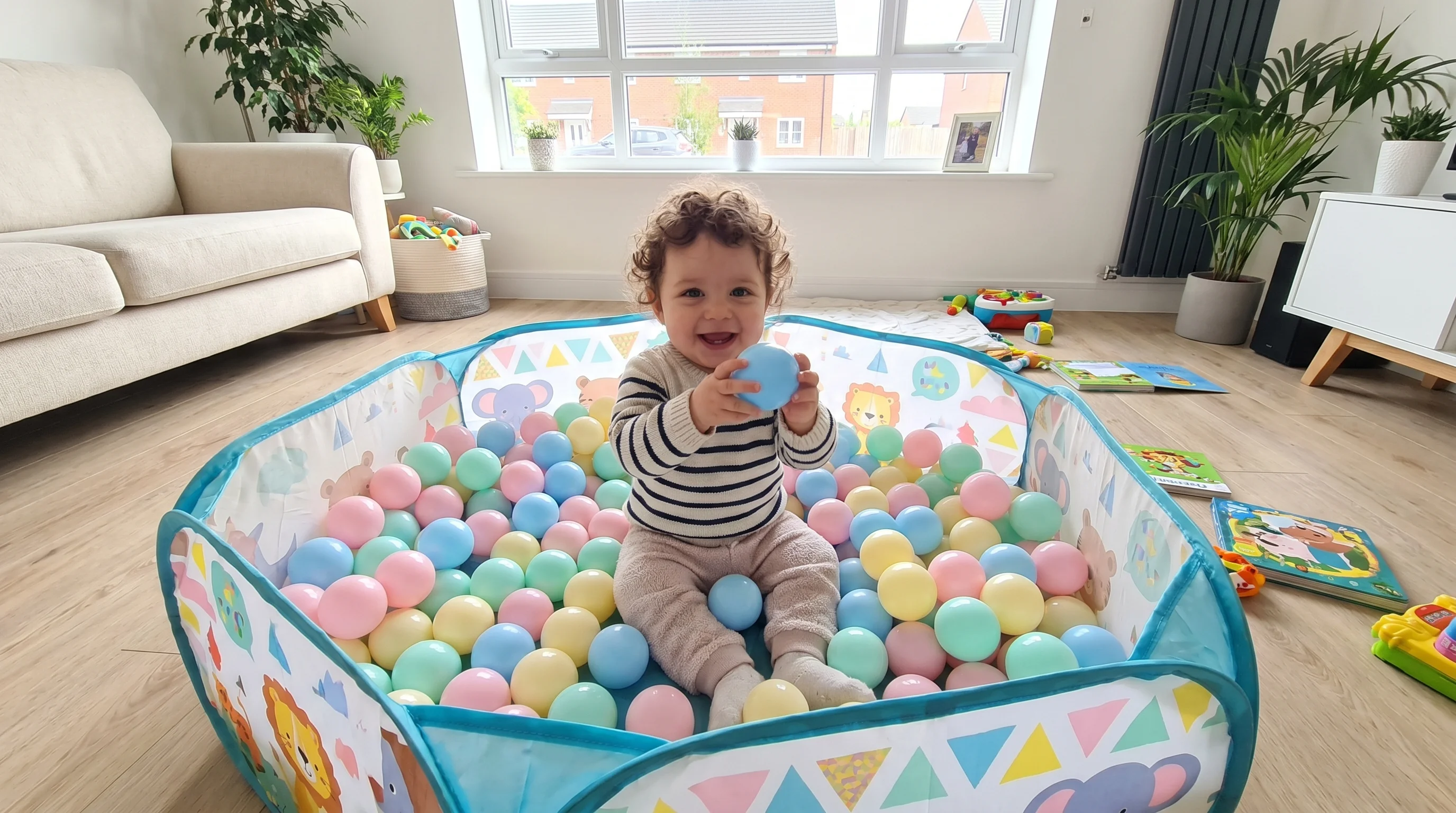
For the 6–18 month stage, a baby ball pit is one of those gifts that goes down brilliantly and gets used constantly — babies and toddlers are genuinely obsessed. Our dedicated baby ball pit UK guide covers what age to start, how many balls you actually need, CE safety standards and the picks worth buying. Once your toddler is walking confidently and ready for more active play, our baby trampoline UK guide covers the safe indoor mini trampolines worth buying from 18 months. And if you're looking for a soft toy that becomes a genuine attachment object, our beanie baby gifts guide covers the best Ty picks for every age.
More gift ideas? For gifts that go beyond toys, see our personalised baby gifts guide — keepsake boxes, embroidered blankets and name grows that parents keep long after babyhood. And our baby shower guide has everything on what to buy for a shower gift.