
About the Authors

We're Tom (33) and Sophie (31) — a Bath couple who launched BabyMade after becoming first-time parents to Freddie. Sophie's midwifery background and our shared obsession with finding genuinely good baby products turned into this blog. We write everything we wish we'd had when Freddie arrived.
Some links in this article are Amazon affiliate links. If you buy through them we earn a small commission at no extra cost to you. We only recommend products we genuinely rate.
Right, baby nests. You've probably seen them everywhere — Instagram, the NCT WhatsApp group, on every "must-have newborn list" that exists. A baby nest for newborn use especially gets talked up constantly in the early weeks — they look gorgeous, baby looks blissfully cosy in one, and everyone seems to swear by them. And then someone in a parenting forum says "actually, are they even safe?" and suddenly you're not sure what to think.
We've been there. When my first was about three weeks old, I'd already set up a beautiful little nest in the living room so she'd have somewhere to lie while I managed to eat a meal with both hands. Then I read one alarming headline and spent forty minutes down a rabbit hole of conflicting advice, by the end of which I'd somehow ended up reading about flat head syndrome and had completely forgotten what I was originally looking for.
So here's the clear, honest version — based on actual Lullaby Trust and NHS safe sleep guidance, plus real experience of using these things. No scaremongering, no fluff.
Quick answer: Baby nests are safe for supervised daytime use. They are not recommended for overnight unsupervised sleep. Keep reading for the full picture — including our top UK picks for 2026.
What Is a Baby Nest, Exactly?
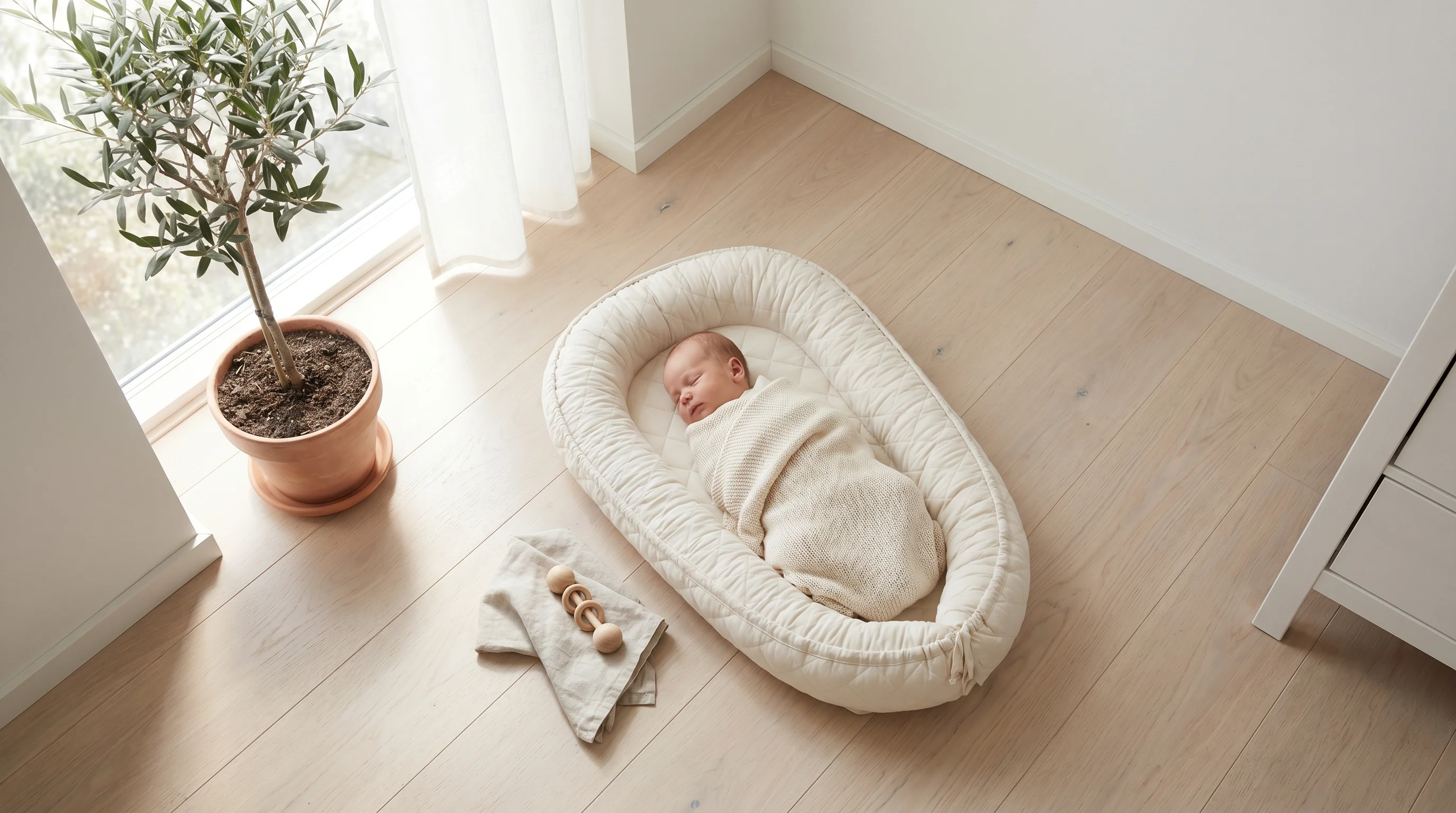
A baby nest (also called a baby pod, baby cocoon or baby lounger) is a soft, padded product shaped like an oval nest or cradle. It has raised sides that gently surround your baby and a padded base underneath. The idea is that it mimics the snug, enclosed feeling of the womb — which newborns find incredibly calming.
They're not a new invention, but they've absolutely exploded in popularity over the last five or six years, helped along by social media and an increasingly crowded market of beautifully designed versions in every neutral colourway imaginable. From a practical standpoint, they give you a portable, familiar spot to put your baby down during the day — on the sofa beside you, on the floor, in another room — which is why a baby nest for newborn use specifically has become one of the first things parents buy. Babies often settle better in one than on a flat surface, particularly in the early weeks.
The important distinction to understand before anything else: a baby nest is not a sleep product. It's a lounger. That difference matters enormously for safety, and we'll cover it properly in the next section.
Baby Nest for Newborn: What the First Six Weeks Actually Look Like
The newborn stage is where a baby nest genuinely earns its place. In those first six weeks, your baby has spent nine months in a tight, enclosed, warm space — and suddenly they're out in the world with no walls around them, their arms flying everywhere (the Moro reflex is something else), and absolutely no ability to self-settle. A baby nest for newborn use replicates that enclosed feeling in a way that a flat play mat or sofa cushion simply doesn't.
What this looks like in practice: you feed, wind, settle — and instead of having to hold baby for the next hour or risk waking them the second you put them on a flat surface, you lower them into the nest. The sides come up around them, their arms don't startle them awake, and you get fifteen minutes to eat something. This is the entire point of a baby nest for newborn use — it's not a gimmick. It actually works, for this specific developmental stage.
A few things worth knowing for the newborn period specifically:
- Head position matters more at this age. Newborns have almost no neck control. Make sure the nest you choose keeps baby's head in a neutral, flat position rather than chin-to-chest — which can restrict the airway. A firmer base helps with this more than a very soft, squishy one.
- The womb-like effect fades around 8–10 weeks. As babies become more alert and start to enjoy looking around, the enclosed sides of a nest become less of a comfort and more of a limitation. Many parents find the nest is most used in weeks two through eight, then gets less use after that.
- Flat head syndrome (positional plagiocephaly) is worth knowing about. Newborns spend a lot of time on their backs, and if they always rest in the same position, it can affect head shape. Choosing a newborn baby nest with a supportive, slightly cushioned base that distributes pressure evenly — rather than one hard point — makes a difference. The Clevamama ClevaFoam is specifically designed with this in mind.
- Always supervised. At this age especially, a baby nest for newborn use means you are in the same room, watching. Not in another room. Not asleep.
Are Baby Nests Safe? The Honest Answer
This is where parents get confused, so let's be completely clear about it.
The Lullaby Trust — the UK's leading charity for safe infant sleep — advises that baby nests are not suitable for unsupervised sleep. Their position is that the safest sleep surface for a baby is a firm, flat, uncluttered mattress, and that soft products like nests, pods and loungers should not be used for overnight sleep or any sleep where you're not right there watching.
The NHS safe sleep guidance backs this up: place your baby on their back on a firm, flat surface free from soft bedding. Baby nests — by design — are soft, have raised sides, and are not a firm flat surface in the clinical sense.
The reason this matters: if a young baby's airway becomes compromised — head slumping forward, face pressing into a soft surface — they don't yet have the muscle control to reposition themselves. That's the risk. It's not that nests are inherently dangerous products; it's that they're not appropriate sleep surfaces for babies who can't control their own head.
Bottom line: Never leave your baby alone in a baby nest to sleep overnight or during a nap where you're not watching. For overnight sleep, use a Moses basket or cot with a firm flat mattress — see our full baby sleep guide for everything you need to know.
When Can You Use a Baby Nest for a Newborn?
With that very clear caveat in place — baby nests are brilliant. Here's when they genuinely earn their place:
Supervised daytime lounging
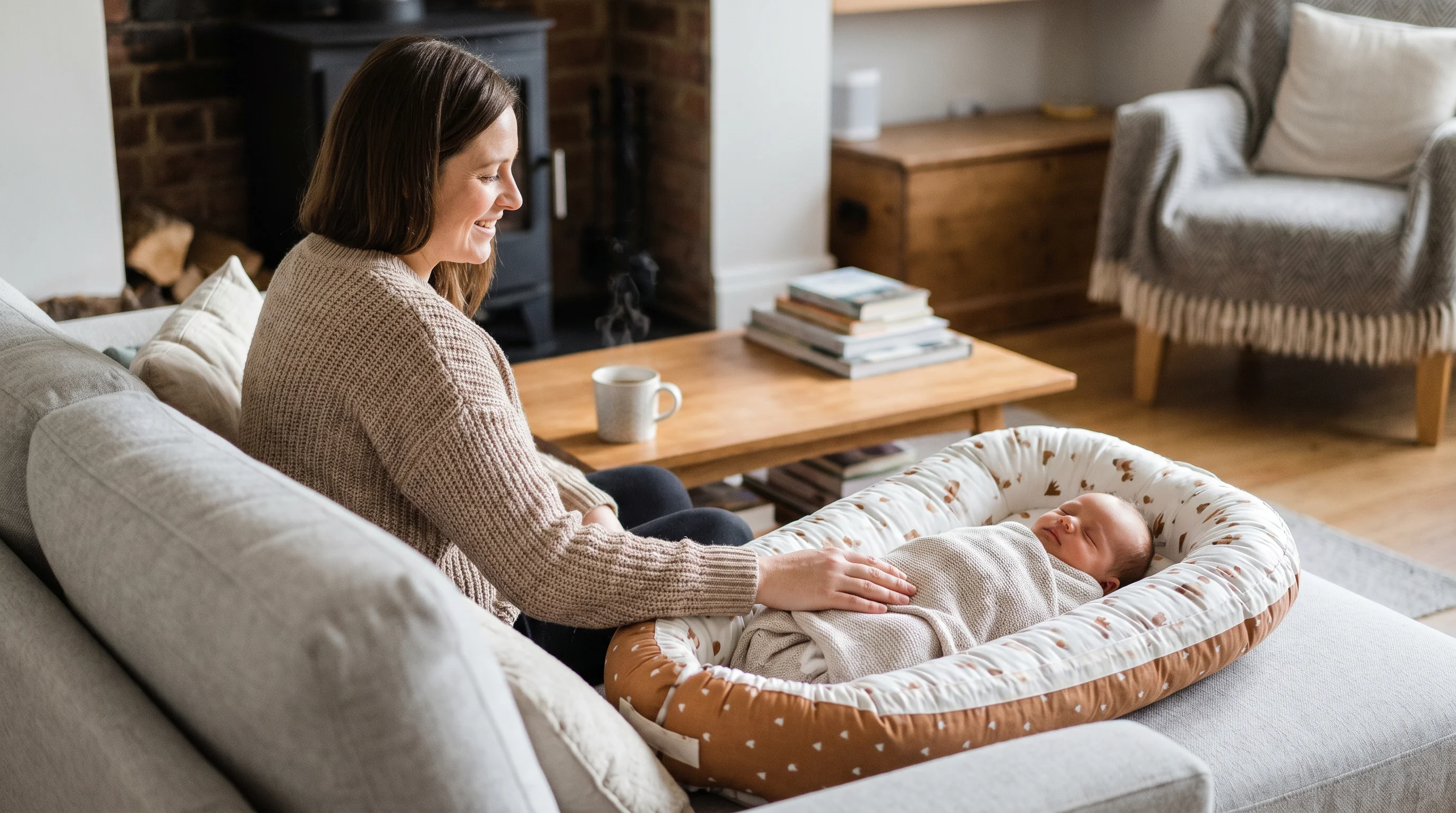
You're on the sofa, baby is in the nest beside you, you can see them at all times. This is exactly what nests are designed for. In the first few weeks with a newborn, a baby nest for daytime settling is genuinely life-changing — it keeps baby comfortable and contained, and you get a few minutes where you're not holding a small human. Revolutionary.
Keeping baby settled in one place
Moving from room to room during the day is much easier when you can pick up the whole nest and carry it with you. Baby has a familiar, cosy spot whether you're in the kitchen, bedroom or living room — and that consistency often helps them stay calm.
Supervised naps while you're present
Many parents use a nest for daytime naps where they're in the same room and actively watching. This is different from putting baby down and walking away. If baby is in your direct line of sight and you can respond immediately, most safe sleep experts consider supervised daytime naps in a nest an acceptable use — though always check with your health visitor if you're uncertain.
Tummy time (supervised)
Some baby nests work well for supervised tummy time — the slightly raised sides give baby something to work against and the position can make tummy time feel less overwhelming for newborns who find it frustrating. Always supervise tummy time in a nest closely.
What to Look For in a Baby Nest UK
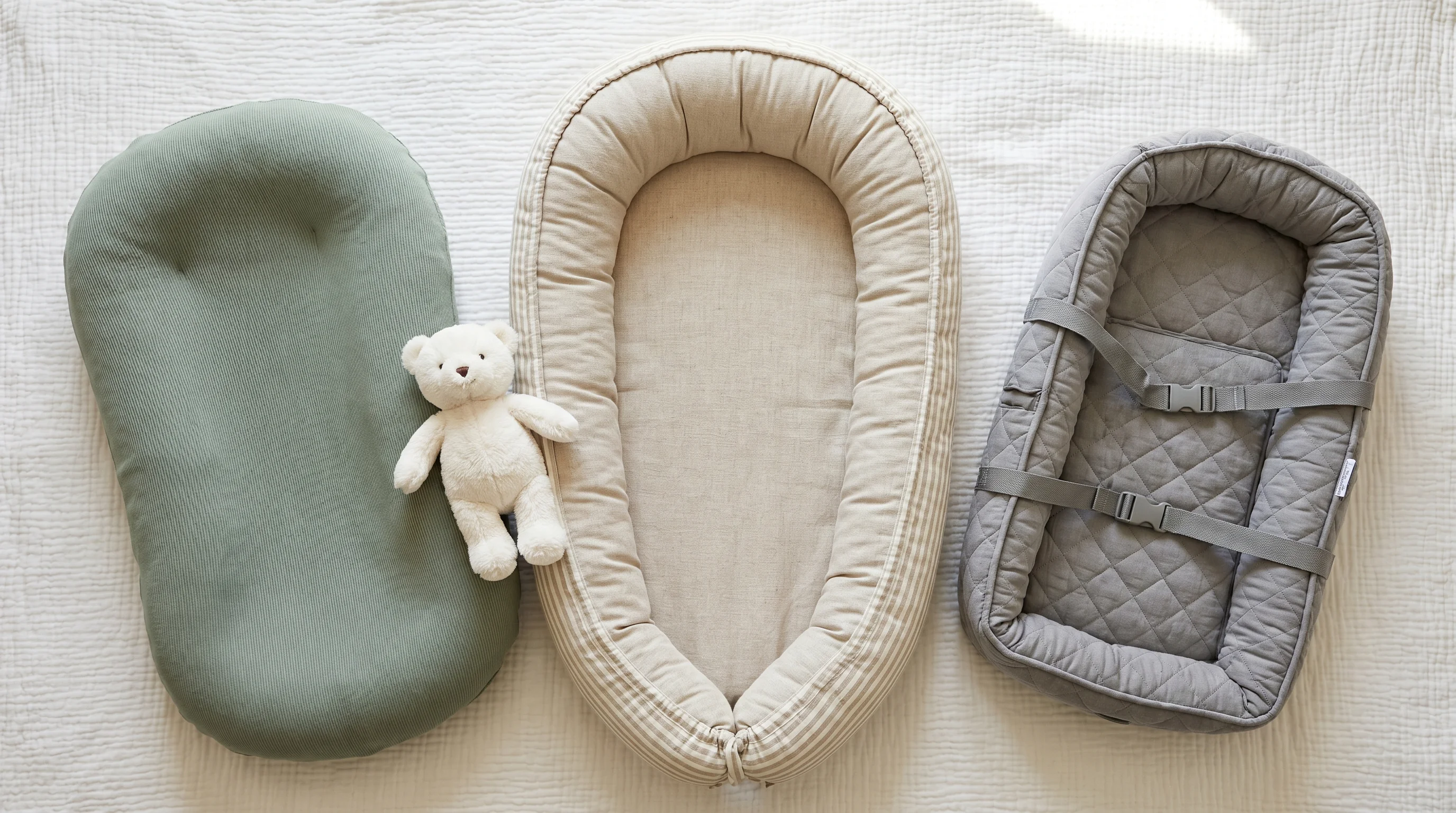
Not all baby nests are equal. Here's what actually makes a difference:
Firm, supportive base
Even though nests aren't overnight sleep products, a firmer base is still better. It keeps baby in a safer, flatter position and is much easier to clean if there's a spillage (and there will be a spillage). Avoid anything that's entirely squishy foam — it's harder to maintain a safe head position.
Breathable sides and cover
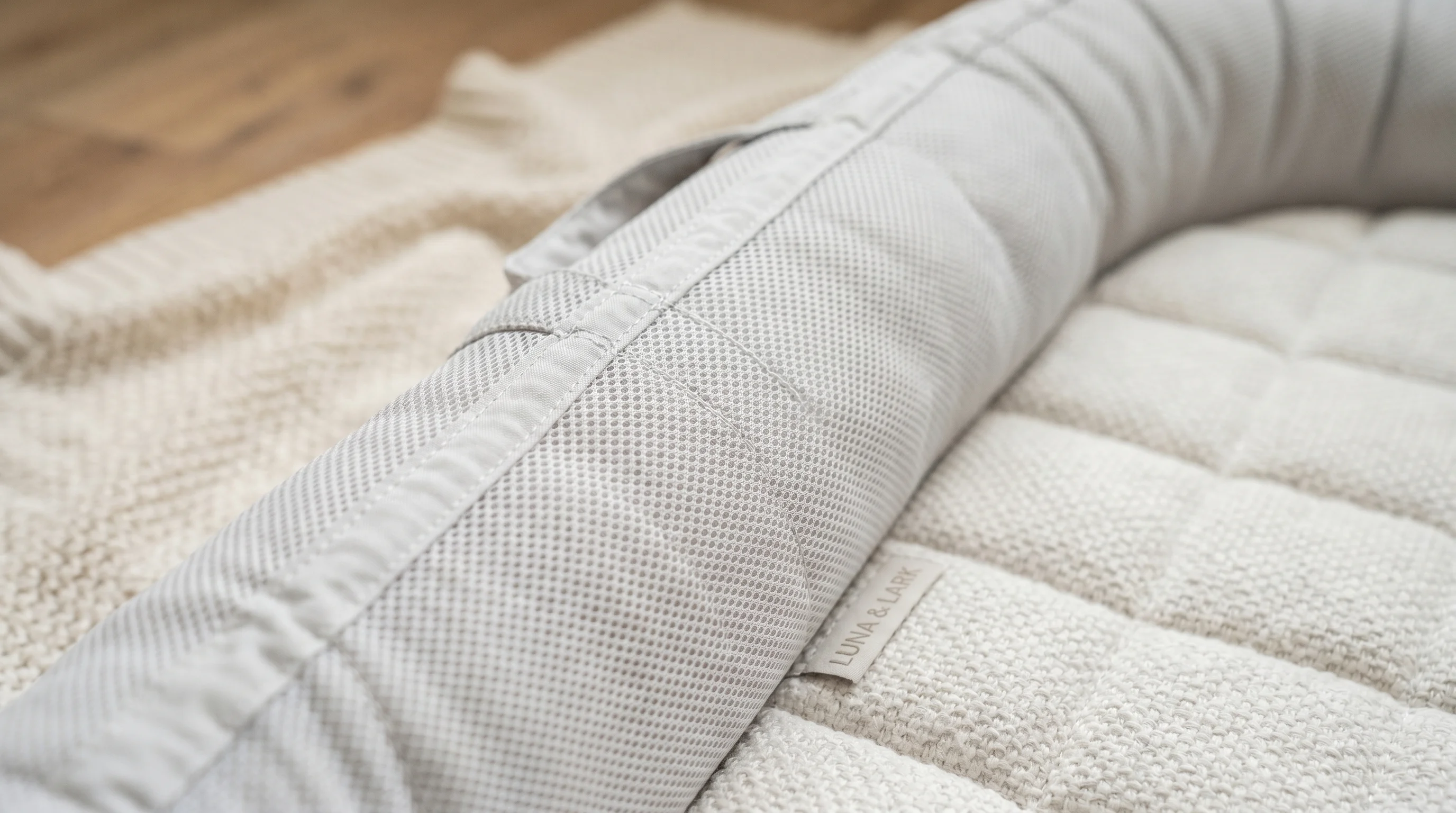
Look for breathable cotton or mesh fabric on the sides rather than dense polyester stuffing. If baby's face ends up against the side — which happens — breathable fabric significantly reduces risk. Breathable baby nests are worth the slightly higher price.
Washable cover
A removable, machine-washable cover is non-negotiable. Babies are messy. The cover will need washing constantly. Check whether it comes off easily and whether the whole thing can be washed or just the outer layer.
Safety certification
Look for UKCA or CE marking on the product. This doesn't certify it as a sleep product, but it does confirm the materials and construction meet UK/EU safety standards. OEKO-TEX certification is an added bonus for fabric safety — it means no harmful chemicals were used.
Age and weight limits
Most baby nests are suitable from birth up to around 6–8 months, or until your baby can roll unaided. Once rolling starts, the nest should be retired — a mobile baby in a nest is a completely different safety situation.
Key features for a baby nest for a newborn specifically
If you're buying primarily for newborn use, a few details matter more than they might for older babies. Look for a newborn baby nest with a supportive, reasonably firm base that keeps the head flat and prevents the chin-to-chest position — this is more important the younger the baby. Adjustable or narrower sizes are better for very small newborns who can feel lost in a wide oval. And avoid nests with very thick, high padded sides that press close to baby's face — breathable, slightly lower sides give you better visibility and airflow.
Best Baby Nests for Newborns UK 2026
There are dozens of baby nests on the market — some brilliant, some overpriced, and a few you should actively avoid. Here's where the most popular newborn baby nests actually stand:
Shnuggle Moon Pod
Consistently one of the top-rated baby nests in the UK. Beautiful design, firm base, breathable cotton cover. The Moon Pod is shaped with a slight waffle texture that looks lovely and is genuinely easy to wipe down. On the pricier end, but it holds its shape well and lasts the full newborn stage without going saggy. Strong contender for best overall pick.
Clevamama ClevaFoam Baby Nest
The standout feature here is the ClevaFoam technology — it distributes pressure more evenly across baby's head and body, which is clinically shown to reduce the risk of flat head syndrome (positional plagiocephaly). If this is a concern for you — and it's worth knowing about — the Clevamama nest is the one to choose. Slightly less stylish than the Shnuggle but more functional in this specific way.
Red Kite Baby Pod
The budget pick — and genuinely not bad. The Red Kite Pod does the job well, has a removable washable cover, and costs significantly less than the premium options. If you're not sure whether your baby will take to a nest, or you've already spent a fortune on everything else, start here. You can always upgrade if it becomes something they live in.
Doomoo Cocoonaround
The adjustable nest. It widens as your baby grows, giving it a longer useful lifespan than most fixed-size nests. Good choice if you're after something that works from newborn through to 6+ months without feeling like baby is swimming in it.
Baby Nest vs Sleeping Bag — Which Do You Actually Need?
Different things entirely, and most parents end up with both — but it's worth understanding the distinction before you buy.
A baby nest is a daytime lounger. It's for keeping baby cosy, contained and comfortable while you're in the room. It's not for sleep.
A baby sleeping bag (sleep sack) goes on the baby — it's a wearable blanket for overnight sleep and naps in the cot or Moses basket. It replaces loose blankets, keeps baby at a consistent temperature, and is the NHS-recommended alternative to duvets for babies under 12 months. See our dedicated guide on what to dress baby in at night for the full TOG-by-temperature breakdown, or our complete baby sleep guide for everything else.
The short version: buy both. Use the nest during the day when you're present. Use a sleeping bag for nights in the cot. They serve completely different purposes and the sleeping bag is the one that matters more for safe overnight sleep. For newborns especially, having a clear distinction between the daytime nest and the night-time sleeping bag helps build sleep associations early — the nest means "daytime, someone's here", the sleeping bag means "night, time to sleep".
On that note: If you're wrapping up your newborn in muslin blankets for daytime, a nest can replace that — it's snug, breathable and much easier than trying to swaddle a wriggly baby every time they fuss.
Baby Nests for Newborns and Travel
One of the genuinely underrated uses for a baby nest is travel. When you're visiting grandparents, staying at an Airbnb or spending a week somewhere new, having a familiar, cosy spot for baby to lie in during the day makes an enormous difference. Babies are sensitive to changes in environment — a familiar smell and familiar texture helps settle them somewhere new.
For travel, you want something that:
- Folds flat — it needs to fit in your luggage or car boot without taking over everything
- Is lightweight — you're already carrying enough
- Has a washable cover — away from home this matters even more
- Comes with a carry bag — makes it much easier to transport cleanly
It's also worth knowing that many airlines and holiday parks won't provide a safe sleep surface for babies. If you're travelling, a proper travel cot is needed for overnight sleep — the nest handles the daytime. Using a carrier like the ones in our baby carriers guide can also give you the flexibility to move around freely without needing to set the nest up every five minutes.
Related reading: For everything overnight — sleeping bags, TOG guides, safe sleep setup and surviving the 4-month regression — head to our complete baby sleep guide. And if a baby nest is going on your shower list, check out our personalised baby gifts guide for gift ideas that go alongside it beautifully.