
About the Authors
We're Tom (33) and Sophie (31) — a Bath couple who launched BabyMade after becoming first-time parents to Freddie. Sophie's midwifery background and our shared obsession with finding genuinely good baby products turned into this blog. We write everything we wish we'd had when Freddie arrived.
Disclosure: This article contains affiliate links. If you buy through them we may earn a small commission at no extra cost to you. We only recommend products we genuinely rate.
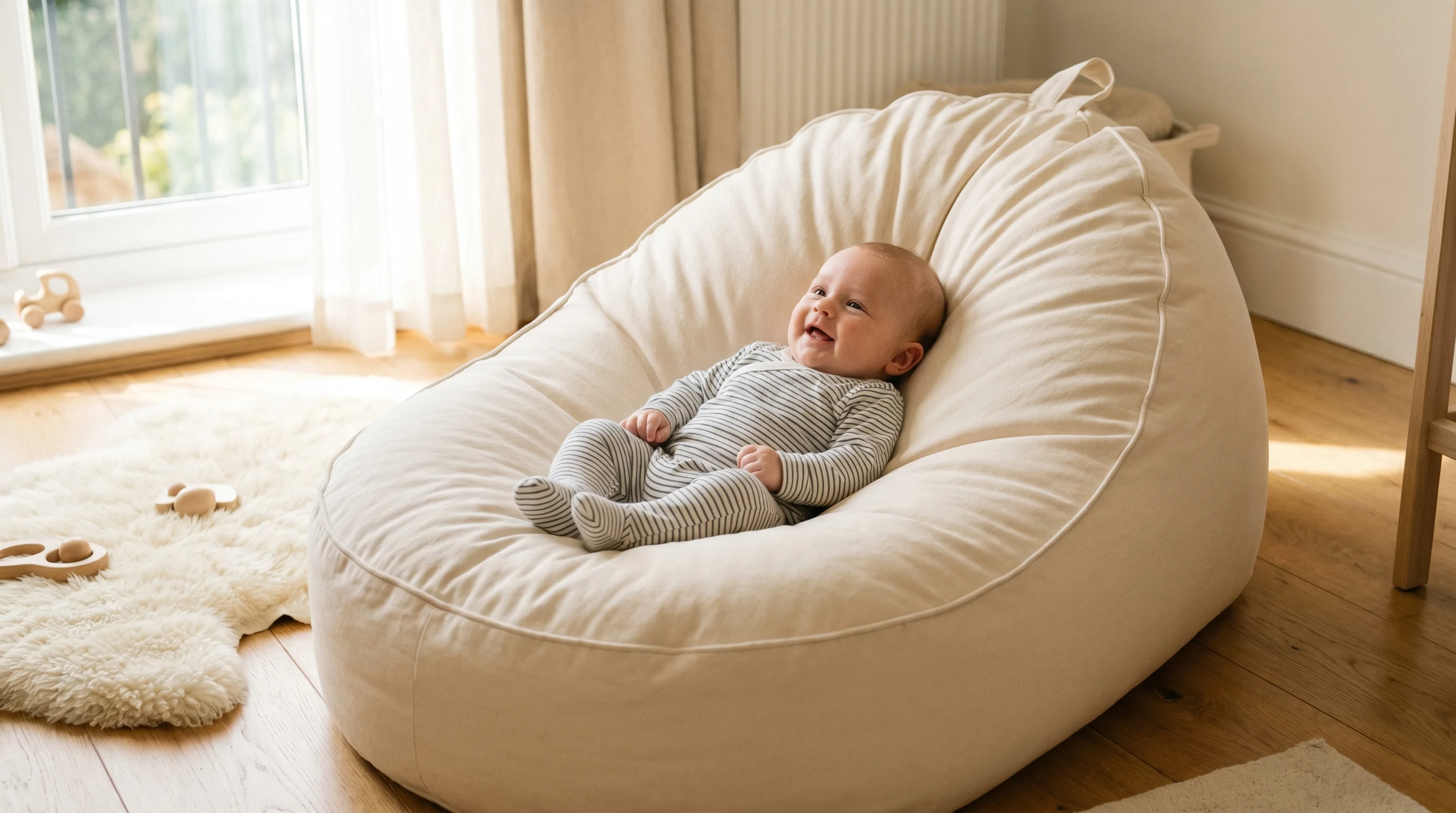
I came across baby bean bags at a friend's house when my first was about six weeks old. Her baby was lying in this gorgeous cream velvet lounger looking completely serene while she actually drank a hot cup of tea. I was immediately jealous. That evening, I went home and put one in my basket.
Then I did what every new parent does before buying something — I googled it at 11pm. And that's when the rabbit hole started. "Are baby bean bags safe?" "Baby bean bag Lullaby Trust." "Can baby sleep in bean bag overnight?" Suddenly I wasn't sure about anything.
So here's the guide I needed that night: the honest safety picture, what the different fillings actually mean, which ones are worth buying and for what age, and how to clean the thing when the inevitable happens. For the broader picture on safe baby sleep — nests, sleeping bags, TOG ratings and routines — our baby sleep UK guide covers it all in one place.
Safe sleep reminder: Baby bean bags are for supervised awake time only — not for overnight or unattended sleep. Current NHS and Lullaby Trust guidance is clear: babies should sleep on a firm, flat surface on their back. This guide is written with that in mind throughout.
Are Baby Bean Bags Safe for Babies?
Let's deal with the most searched question first, because if you've been down the same 11pm Google rabbit hole I went down, you deserve a straight answer.
Baby bean bags are safe for supervised awake time. They are not recommended for unsupervised or overnight sleep. That's the summary, and everything else is context.
The Lullaby Trust and the NHS both state that babies should sleep on a firm, flat surface — on their back, with no soft objects around them. A bean bag is, by design, soft and shaped. It does not meet the standard for safe unsupervised sleep. This is the same guidance that applies to bouncy chairs, swings and car seats — all practical, all safe when used as intended, none of them appropriate for unsupervised sleep.
What this means in practice:
- Fine: supervised daytime lounging, awake tummy time support, newborn photoshoots, a comfortable spot to pop baby while you're right there
- Not fine: leaving baby to sleep overnight in a bean bag, leaving baby unattended in one, using it on a raised surface where baby could roll off
Used in this way — supervised, during awake time, on the floor or a firm surface — a good quality baby bean bag is a perfectly practical piece of kit. The key word is supervised. If your baby drops off in the bean bag, move them to a firm, flat surface before you do anything else. Same as you would from a bouncer or swing.
For a close comparison in the same lounger/pod category, our baby nest UK guide covers the same safety territory — if you're weighing up bean bag vs nest, that's a good read alongside this one.
Filling Types — What's Inside Your Baby Bean Bag Matters More Than You Think
The outer cover is what you see, but the filling is what determines how the bean bag actually performs — and crucially, how safe it is if anything goes wrong.
EPS (expanded polystyrene) beads — the most common
The vast majority of baby bean bags use EPS bead filling — the same tiny white balls you find in adult beanbags. They're lightweight, they mould comfortably to baby's shape, and they're easy to top up if the bag flattens over time.
The one safety concern: loose EPS beads are a serious choking and suffocation hazard if they escape. The inner bag — the one that actually contains the beads — must have a secure, child-proof double-zip closure. This is non-negotiable. The outer cover usually has a simple single zip or envelope opening; it's the inner bead bag that needs the safety zip. Always check this before buying. If a listing doesn't mention a child-proof inner closure, ask the seller or don't buy it.
Memory foam
Memory foam filling eliminates the loose bead risk entirely, which is why many parents prefer it for young babies. It distributes weight evenly, holds its shape better than beads over time, and doesn't present the same zip-failure hazard. The downside: memory foam bean bags are heavier, less portable, and generally more expensive. They're a genuinely good choice for a newborn lounger that's going to stay in one spot.
Organic and natural fillings
A smaller number of baby bean bags use organic cotton, natural latex or other natural fibre fillings. These are a good choice for parents who prefer to avoid synthetic materials against their baby's skin — particularly useful if your baby has eczema or very sensitive skin. Check the GOTS certification if organic is important to you; "organic" in baby product marketing can be loosely applied.
What to avoid
Avoid bean bags with no inner bag at all — where the beads are contained only by the outer cover. This is common in budget products and is unsafe for babies. Also avoid any bag where the zip is accessible to little hands without a child-safety mechanism.
Baby Bean Bag Loungers for Newborns
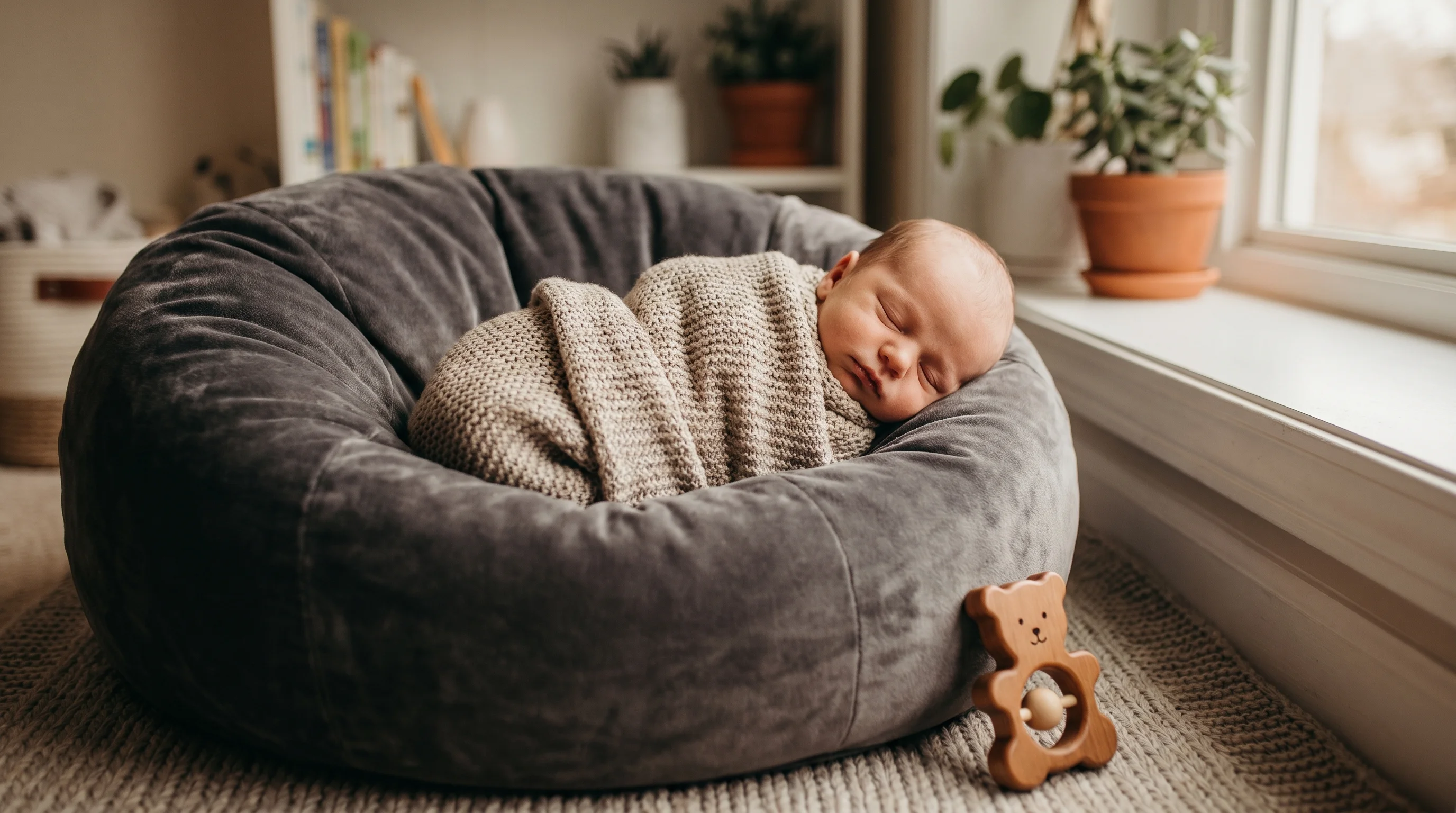
The classic baby bean bag shape — wide, reclined, with slightly raised edges — is designed specifically for newborn and young baby use. The raised sides create a gentle border that feels snug without being restrictive, which many babies find comforting in the early weeks. They're particularly popular for:
- Supervised daytime lounging — a safe, comfortable spot to put baby while you're sitting nearby
- Newborn photoshoots — the shape is perfect for those early milestone photos, and the range of beautiful cover fabrics (velvet, faux fur, organic cotton) makes them genuinely photogenic
- Supported tummy time — placing a young baby slightly reclined in a bean bag can make tummy time less uncomfortable than a flat floor; always supervise closely
- A familiar space between rooms — lightweight loungers can be carried room to room so baby has a familiar spot wherever you are in the house
When choosing a newborn bean bag lounger, the most important features to look for are: a removable, washable outer cover (things will get on it, quickly), a secure double-zip inner safety closure, and a cover fabric that's gentle enough against newborn skin. Cotton and organic cotton are the safest choices for the youngest babies.
For context on how a bean bag compares to a baby nest — which sits in the same lounger category — see our baby nest UK guide for a direct comparison. And for dressing baby correctly while they're lounging, our guide on what to dress baby in covers temperature layering for awake time too.
Baby Bean Bag Chairs for Sitting Babies and Toddlers
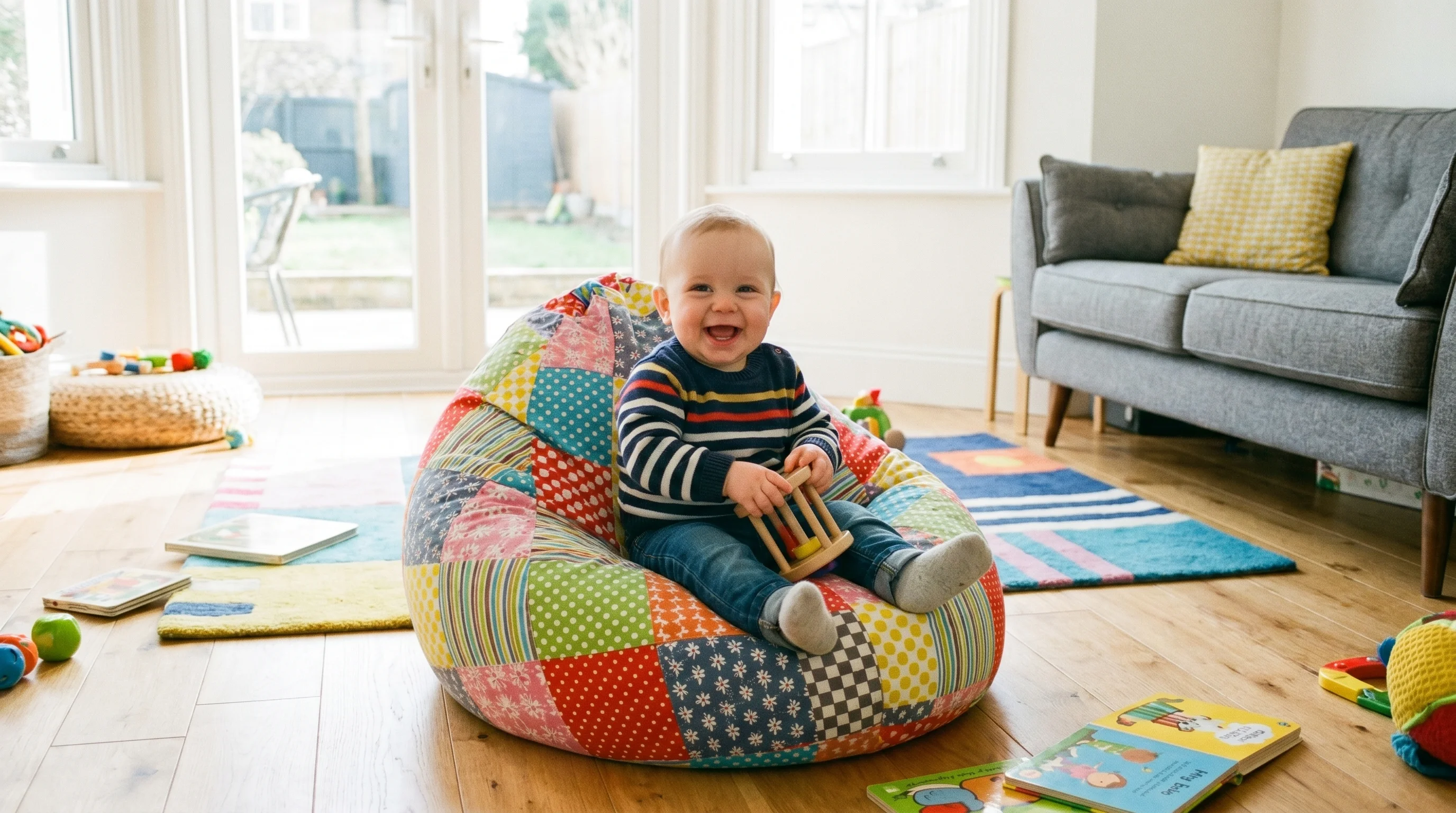
Once your baby develops the core strength to sit with support — usually from around 5–6 months — the lounger-style bean bag starts to feel less appropriate and an upright bean bag chair becomes more interesting. These are designed differently: more vertical, firmer sides for back support, and a wider base for stability.
From 6 months: supported sitter
A baby bean bag chair at this stage gives a sitting baby somewhere comfortable and low to the ground to play, watch the world and practise their balance without the hard edges of a highchair or the instability of the floor. The soft sides provide a gentle safety buffer for the inevitable topples sideways that happen constantly at this stage. Always keep sessions supervised and keep it at floor level.
From 12 months: the toddler years
Toddlers love a bean bag chair with a kind of fierceness that's genuinely charming. It becomes their chair, their reading spot, their domain. A larger bean bag for this age should have a machine-washable cover (non-negotiable — toddlers are spectacular at making mess), a capacity suitable for their size, and ideally a microfibre or cotton cover that wipes down between full washes.
At this age the bean bag is firmly in toy/furniture territory rather than sleep territory, and the safety considerations shift accordingly. The main ones for toddlers: keep it on the floor, check the weight limit regularly as they grow, and inspect the zip periodically.
What to Look for When Buying a Baby Bean Bag
Cover fabric
Cotton is the safest and most practical everyday choice — breathable, gentle on skin, easy to wash. Velvet and plush covers look stunning and photograph beautifully, but check they're machine washable before buying — some plush fabrics require hand washing or dry cleaning, which is impractical with a baby. Faux fur covers are gorgeous for newborn photos but tend to trap heat and collect lint; good as a second cover rather than the primary one.
Removable cover — not optional
Honestly, don't buy a baby bean bag without a removable, washable outer cover. It's the thing that will need washing most often and having to spot-clean a fixed cover is genuinely miserable. Look for a cover with an easy zip opening (but not so easy that a toddler can open it) and check the washing instructions before you buy.
Waterproof inner liner
This is one of those things that seems unnecessary until the first time it's necessary — which will happen. A waterproof inner liner means liquid can't reach the filling, which protects the filling and means you're just washing the cover rather than trying to dry out an EPS bead filling that's absorbed half a bottle. Worth paying extra for.
Size
Newborn loungers are typically around 60–75cm long. They feel huge for a tiny baby but are the right scale for a baby up to about 6 months. For a toddler chair, look for a seated diameter of at least 60cm so there's room to grow. Oversized adult-style bean bags are not appropriate for babies — the lack of defined structure is unsafe for young children.
How to Clean a Baby Bean Bag
The cover will need washing regularly — plan for it and it's easy; be surprised by it and it's stressful. Here's how to handle it:
The outer cover
Remove the outer cover completely before washing — never put the whole bean bag in the machine. Most cotton covers wash at 30–40°C on a gentle cycle. Velvet and plush covers are best at 30°C to preserve the texture; check the label. Air-dry rather than tumble-dry if possible — heat can shrink cotton covers and damage plush fabrics.
The inner liner
If the inner liner has a waterproof coating, wipe it down with a damp cloth and a gentle antibacterial spray — don't submerge it. If there's no waterproof coating and it needs a proper wash, check whether the inner liner specifically states it's machine washable. Many aren't — the weight of wet EPS beads can damage both the bag and the machine.
Spot cleaning between washes
Keep a small spray bottle of diluted baby-safe antibacterial solution and a cloth nearby. Quick spot cleans between full washes extend the time between full cover washes significantly and keep things hygienic day-to-day.
Looking for the full sleep setup? A baby bean bag is one piece of the puzzle. For everything on baby sleep — nests, sleeping bags, safe sleep, white noise and routines — our complete baby sleep UK guide has it covered. And for keeping baby at the right temperature while they lounge or nap, our baby night dressing guide with TOG ratings and temperature tables is worth bookmarking. For the softest companions to pair with a bean bag, see our baby blankets guide too.