
About the Authors

We're Tom (33) and Sophie (31) — a Bath couple who launched BabyMade after becoming first-time parents to Freddie. Sophie's midwifery background and our shared obsession with finding genuinely good baby products turned into this blog. We write everything we wish we'd had when Freddie arrived.
Disclosure: Some links in this article are affiliate links. If you buy through them we may earn a small commission at no extra cost to you. We only ever recommend things we've genuinely looked into and would buy ourselves.
Nobody warned us how many baby girl dresses we'd end up owning by the time Freddie was six months old. His cousins, our NCT group, my mum, Sophie's mum — everyone had opinions about the right dress for the right occasion, and half of them didn't fit when we actually needed them. Sizing inconsistencies, fabric that looked gorgeous in photos but scratched, necklines that slipped off one shoulder in every picture. The whole thing is more complicated than it looks.
If you're buying a baby dress — whether for everyday wear, a christening, a first birthday or just because it's impossibly cute — this guide covers everything: fabrics, sizes, what to put underneath, what works at each age, and the occasions where it genuinely matters which dress you choose.
For a broader look at the full baby wardrobe across every age and season, our baby clothing UK guide covers everything from babygrows and bamboo fabrics to temperature dressing and sustainable brands.
What Makes a Good Baby Dress — Fabric, Fit and Practicality
Before you fall in love with how something looks, check how it's made. Babies have very sensitive skin — anything rough, itchy or with tight elastic can cause irritation fast, especially in the early months. The NHS recommends keeping clothing soft and non-restrictive for newborns, and with dresses that means looking at fabric, necklines and fastenings carefully before you buy.
Fabric to look for
- Cotton jersey — the everyday workhorse. Soft, stretchy, machine washable at 40°C, dries quickly. Fine for most occasions and almost every age.
- Muslin cotton — especially good for summer. Lightweight, breathable, gets softer with every wash. Ideal for warm days and holidays.
- Organic cotton — no synthetic dyes or pesticide residue, which matters if your baby has sensitive or eczema-prone skin. Look for GOTS certification to verify the claim.
- Woven cotton/linen blends — used in smocked and occasion dresses. Structured but can be stiff on very young babies, so check the lining.
Fastenings matter more than you'd think
A plain baby dress sounds simple until you're doing your fifth nappy change of the day and you've had to completely undress the baby each time. Dresses with hidden crotch poppers (like a bodysuit) are genuinely transformative for day-to-day practicality. Zip-back closures are easy for dressing; button backs are pretty but slower. For occasion dresses, a back zip with a hook-and-eye at the top is the most secure and easiest combination.
Baby Dress Sizes UK — How to Get It Right First Time
Baby dress sizing in the UK is one of those things that nobody warns you about. You cannot trust age ranges alone — a "6–9 months" dress from Next fits completely differently to a "6–9 months" dress from H&M or a boutique brand. Always check the height and weight measurements on the specific product listing, not just the age label.
| Size Label | Approx Weight | Approx Height |
|---|---|---|
| Newborn / NB | Up to 5 kg | Up to 56 cm |
| 0–3 months | 5–6.5 kg | 56–62 cm |
| 3–6 months | 6.5–8 kg | 62–68 cm |
| 6–9 months | 8–9.5 kg | 68–74 cm |
| 9–12 months | 9.5–11 kg | 74–80 cm |
| 12–18 months | 11–13 kg | 80–86 cm |
If you're buying for a special occasion — a christening, a birthday party, a family wedding — size up by at least one band from wherever your baby is now. Occasion dresses often take weeks to arrive, and babies grow fast. Arriving at a christening with a dress that pulled tight across the shoulders because you ordered it two months ago and she hit a growth spurt is not a fun experience. Ask us how we know.
Everyday Baby Dresses — Cotton, Muslin and Casual Styles
For day-to-day use, you want dresses that can handle real life. That means washing at 40°C without fading or shrinking, surviving multiple nappy changes without looking dishevelled, and being comfortable enough that your baby can wriggle, kick, tummy time and generally do what babies do without the dress getting in the way.
Cotton jersey dresses with elasticated bodices are the most practical choice for everyday wear. They pull on easily, move with the baby, and don't need ironing. Smock-style casual dresses in soft cotton are a good step up when you want something slightly more put-together than a babygrow but still comfortable for a full day. Everyday baby girl dresses with a floral or stripe print can look sweet without being over-the-top for nursery runs or park visits.
For everyday styling, pair with a cotton vest underneath (essential for nappy changes if there are no crotch poppers) and soft-sole baby booties — they complete the look and add warmth without the rigidity of proper shoes before they're walking. In summer, bare legs with a pair of soft sandals works brilliantly.
Christening Dresses for Baby Girls — What to Actually Look For
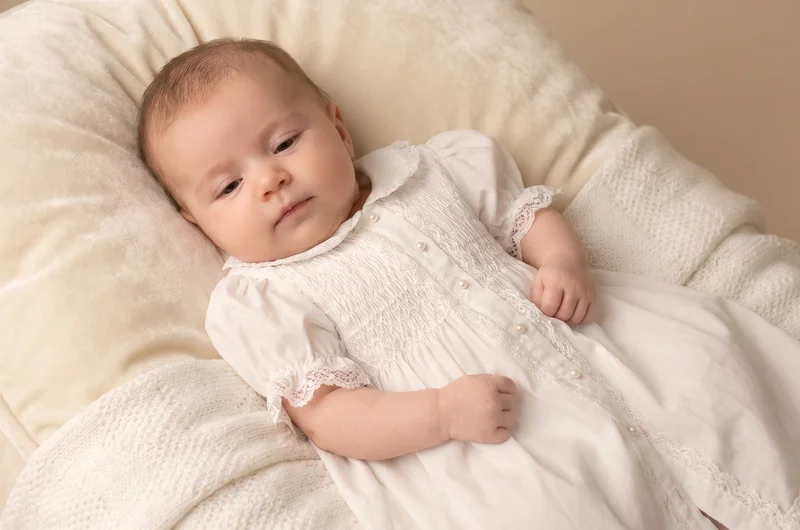
A christening dress is one of those purchases where you genuinely do get what you pay for. The very cheap end tends to scratch, the lining isn't quite right, and the photos show it. You don't need to spend a fortune, but it's worth spending a little more on something that feels special — because christening photos last forever and the dress often does too, handed down and kept in a box for decades.
White or ivory are both completely appropriate. Ivory tends to look slightly warmer and more flattering in photographs, especially under church or reception lighting. The congratulations on your baby guide has more ideas if you're also looking for christening gifts to go alongside the occasion.
What to check before buying a christening dress
- Lining — the dress must be fully lined. Unlined lace or woven cotton directly against baby skin will cause irritation.
- Neckline — not too wide, not too tight. The baby needs to be comfortable for several hours including a church service and a reception.
- Fastening — a back zip is much easier to deal with on the day than dozens of tiny buttons. Hooks at the top of a zip prevent it from slipping down.
- Length — traditional long christening gowns look stunning in photos but can be awkward when carrying baby around all day. A knee-length or midi dress is more practical.
Pair the dress with white tights, soft white pram shoes (see our baby booties guide for soft-sole pram shoes) and a knit cardigan if the venue is likely to be cold. For personalised christening gifts to go with the outfit, see our personalised baby gifts guide — there are some beautiful keepsake options that work well alongside a christening dress.
First Birthday Dresses — Getting the Photos Right
The first birthday dress is almost always chosen with the photos in mind, and there's absolutely nothing wrong with that. It's one of the few genuinely milestone moments where you'll look back at pictures for the rest of your life, so it's worth getting it right.
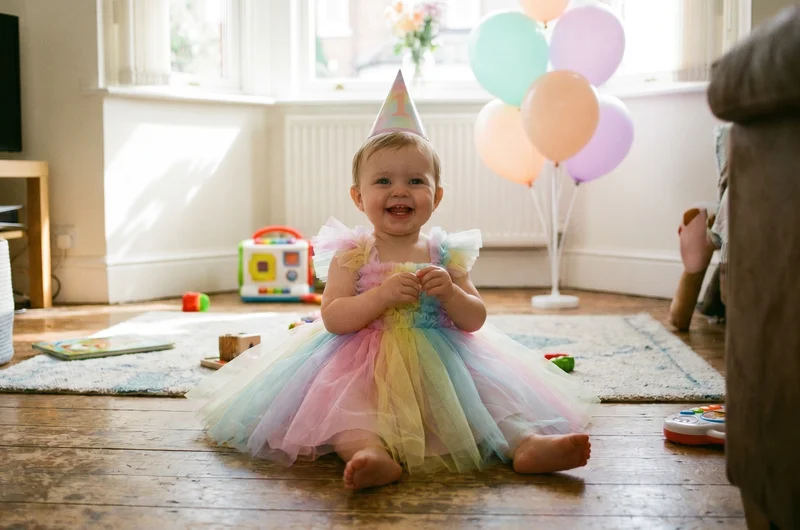
Tutu-style dresses in rainbow or pastel tulle are currently the most popular first birthday choice — they photograph beautifully, they're comfortable enough for a full party day, and they look genuinely joyful in pictures. The layered tulle holds its shape well and creates that "cake smash" photo look that works so well at this age.
If you want something more timeless, a smocked cotton dress in a soft colour — dusty pink, sage, ivory — photographs just as beautifully and doesn't look dated in ten years' time. Some parents go for both: the tutu for the cake smash photos, and the smocked dress for the family party photos. Not the cheapest approach, but both get used.
A personalised first birthday dress with the baby's name embroidered is also a gorgeous option — it becomes a keepsake rather than just a party outfit, and doubles as a thoughtful gift if someone asks what to buy. For more personalised gift ideas around this milestone, see our personalised baby gifts guide.
Baby Dress for Summer UK — Lightweight, Breathable Picks 2026
Summer dressing for babies is one part keeping them cool, one part keeping the sun off their skin. A baby dress in thin muslin or lightweight cotton is ideal — it covers arms and shoulders without trapping heat, which is actually safer than leaving them in just a nappy in direct sun.
Look for summer baby dresses with longer sleeves or an elasticated neckline that covers the shoulders, and pair with a wide-brim sun hat. Avoid synthetic fabrics in summer — polyester doesn't breathe and will leave baby sweaty and uncomfortable fast. Cotton and muslin are the two fabrics that work best in heat.
For any time baby is in direct sunlight, consider adding a sun-protective baby sunglasses — UV400-rated frames are essential from around 3 months, and a good pair combined with a brim hat and a loose cotton dress gives good protection across all the exposed areas.
Baby Party Dresses and Special Occasion Styles UK 2026
Beyond christenings and birthdays, there are plenty of occasions where a baby girl needs something a bit special — family weddings, Christmas, Easter, a naming ceremony, a first photo shoot. For these moments, velvet, tulle and smocked woven cotton all photograph beautifully.
For Christmas specifically, a deep red or forest green velvet baby dress is a classic that never looks dated. Pair with cream tights and white or gold pram shoes. These also tend to make brilliant gifts — if someone asks what to buy as a new baby gift, a beautiful occasion dress is always welcome and something the parents wouldn't always buy themselves.
For baby girl occasion wear, sizing up is always the safer bet. Occasion dresses often have more structured bodices that run smaller than everyday sizing, and you want the baby to be comfortable and able to breathe freely throughout what might be a long day.
If you want more ideas for complete outfits — dresses paired with cardigans, tights and accessories — our full baby clothing guide has a dedicated occasion wear section covering Christmas, Easter and personalised outfit options too.
Baby Dress Brands Worth Knowing in the UK
You don't need to spend designer money on baby dresses — they grow out of them in weeks. But some brands consistently deliver better quality, fit and fabric than others. Here's what we've found actually worth knowing.
- Next — reliable everyday sizing, good fabric quality at accessible price points. The jersey dresses hold up well through many washes.
- JoJo Maman Bébé — a step up in quality, great for occasion wear and smocked styles. Sizing tends to be generous, which is useful.
- Mayoral — Spanish brand, beautiful quality for the price, especially for occasion and party dresses. Often available through Amazon UK.
- Kite Clothing — GOTS-certified organic cotton, ethically made, really lovely everyday dresses. Prices are higher but the quality justifies it.
- Mamas & Papas — consistently good for occasion and special dresses, reliable sizing, nice gift presentation.
- Which? recommends checking fabric content and checking the Which? baby clothing guide before committing to any brand for the first time — their testing covers fabric safety standards and durability.
For everyday dressing alongside special occasions, the baby romper is often a better practical choice than a dress — easier for nappy changes, better for tummy time, and available in the same range of pretty fabrics and prints. Many parents rotate between both depending on the day.
Looking for more baby clothing advice? Our complete baby clothing UK guide covers sizes, fabrics, temperature dressing and sustainable brands. For accessories, see our baby booties guide for soft-sole pram shoes and first walkers, and our baby sunglasses guide for UV400 sun protection that actually stays on.