
About the Authors

We're Tom (33) and Sophie (31) — a Bath couple who launched BabyMade after becoming first-time parents to Freddie. Sophie's midwifery background and our shared obsession with finding genuinely good baby products turned into this blog. We write everything we wish we'd had when Freddie arrived.
Disclosure: This article contains affiliate links. If you buy through them we may earn a small commission at no extra cost to you. We only recommend products we genuinely rate.
Every parent has been there. You spend ten minutes wrestling a pair of tiny knitted booties onto a wriggling newborn, step back feeling pleased with yourself, look away for thirty seconds, and when you look back there is one bootie on the floor and one halfway up the baby's leg doing absolutely nothing useful. The other one has somehow vanished entirely. It will turn up in three weeks inside a cushion cover.
Baby booties are one of those things that seems simple until you're actually in the thick of it. There are dozens of styles, a genuinely confusing range of opinions about when babies should wear them, and a lot of noise about foot development that can make you feel like you're doing it wrong either way. You're not. But there are a few things worth knowing before you buy.
This guide covers the honest picture: what podiatrists actually say about baby feet, when booties are useful and when they're not, the key differences between soft sole and hard sole, which fabrics are worth spending more on, and how to find styles that have a fighting chance of staying on. For the full picture of baby clothing from birth onwards, our baby clothing UK guide covers sizes, fabrics, temperature dressing and everything else in between.
Quick tip: The single biggest predictor of whether booties stay on is the ankle fastening. Booties with elasticated ankles, velcro straps or toggle ties stay on far better than simple pull-on styles — especially once babies start kicking properly around 8–10 weeks.
Do Newborns Actually Need Baby Booties?
The honest answer is: not strictly, no. Newborns can't walk, their feet aren't bearing any weight, and bare feet are actually better for foot development in the long run. The College of Podiatry is fairly consistent on this — babies and toddlers should spend as much time barefoot as possible indoors, because feeling the ground through their feet helps develop balance, strength and coordination.
So why do we all buy them? A few completely reasonable reasons:
- Warmth — newborns struggle to regulate body temperature, and feet lose heat quickly. In a cold house, a soft pair of booties makes a real difference.
- Scratch prevention — tiny babies' toenails are sharper than you'd expect and they have no control over their feet. A soft bootie stops them scratching their own legs.
- Going out — in a pram or car seat in cooler weather, bare feet get cold fast. A pair of warm booties in autumn or winter is just practical.
- Photos — the first newborn shoot. We don't need to justify this one.
Used for warmth and supervised comfort, newborn baby booties are genuinely useful. The key is to make sure they're soft, not restrictive, and that the toes have room to move freely. Nothing tight, nothing with a rigid structure.
Soft Sole vs Hard Sole Baby Booties — What's the Difference?
This is the question that trips most people up, and the answer is much simpler than the internet makes it seem.
Soft sole baby booties have a fabric, suede or leather sole that flexes completely with the foot. The foot can bend, grip and move freely in all directions. These are the right choice for any baby who isn't yet walking independently — and that's most babies up to around 12–14 months.
Hard sole baby shoes have a rubber or rigid sole that doesn't flex in the same way. These are designed for babies who are walking outdoors on uneven or rough surfaces — pavements, parks, shops — where the sole provides protection against the ground. Before a baby is walking confidently outdoors, a hard sole just gets in the way of natural foot movement.
Podiatrist view: The NHS advises that babies should go barefoot as much as possible when indoors and learning to walk. When outdoor protection is needed, choose flexible-soled shoes that allow the foot to move naturally. There is no benefit to putting a hard sole on a non-walking baby's foot.
The grey area is the pre-walker stage — around 9–12 months when babies are pulling up, cruising along furniture and taking tentative steps. At this point, a thin-soled leather or suede bootie with some grip on the bottom is ideal: more protection than a knitted pull-on, but still totally flexible.
The Best Baby Booties for Newborns
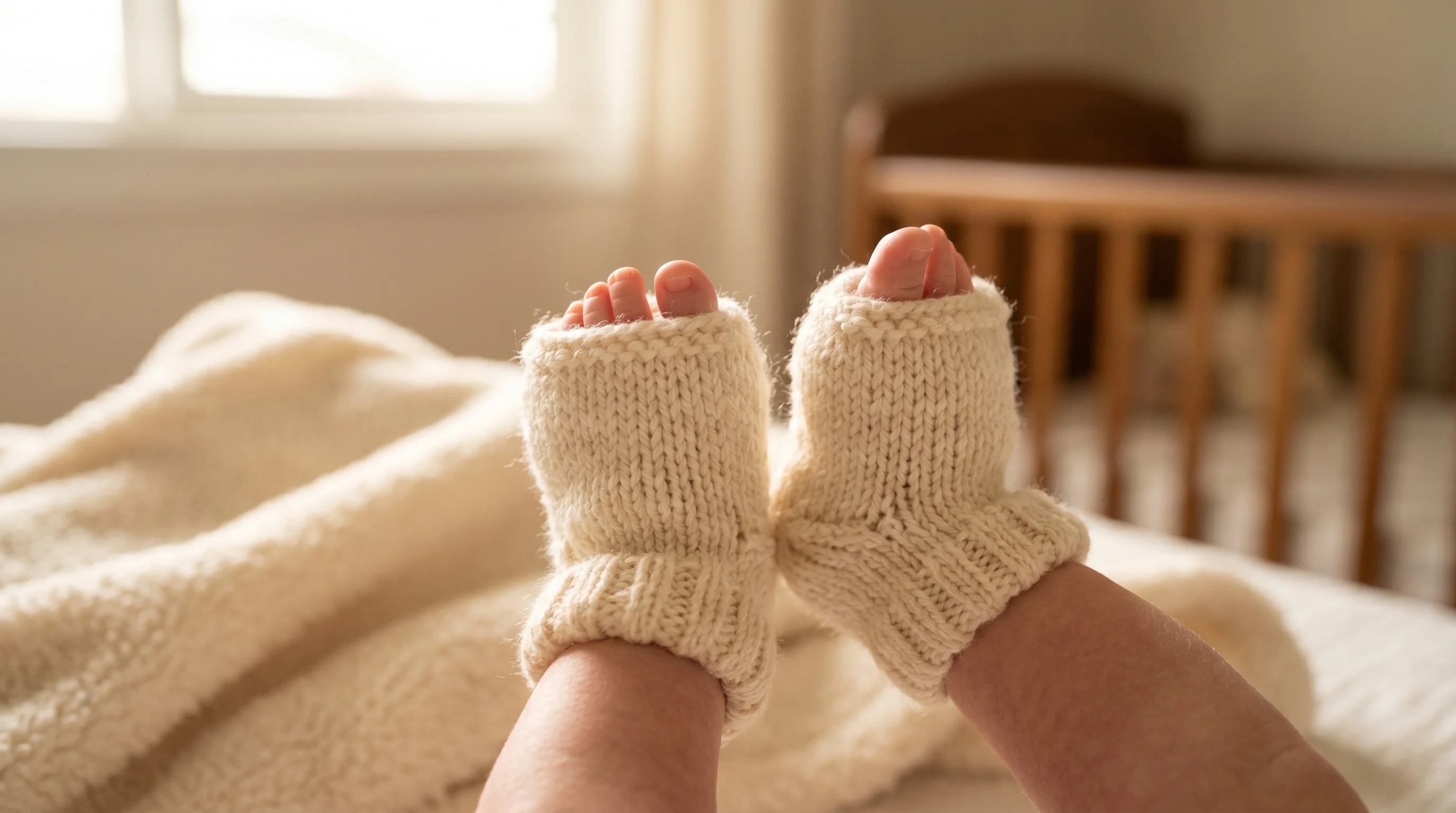
For the newborn stage (0–3 months, sometimes 0–6 months), you're primarily looking for warmth and softness. Here's what to prioritise:
- Soft, natural fabrics — cotton, organic cotton or merino wool. Avoid synthetics directly on newborn skin, which is thinner and more easily irritated than older baby or toddler skin.
- Elasticated or tie ankle — a snug ankle fit is the biggest single factor in keeping newborn booties on. Loose pull-ons are adorable but fall off constantly.
- Room for toes — the toe box should be wide and the bootie should not squeeze the foot. Feet grow remarkably fast in the first months.
- Machine washable — non-negotiable. Everything baby-related gets covered in something within hours.
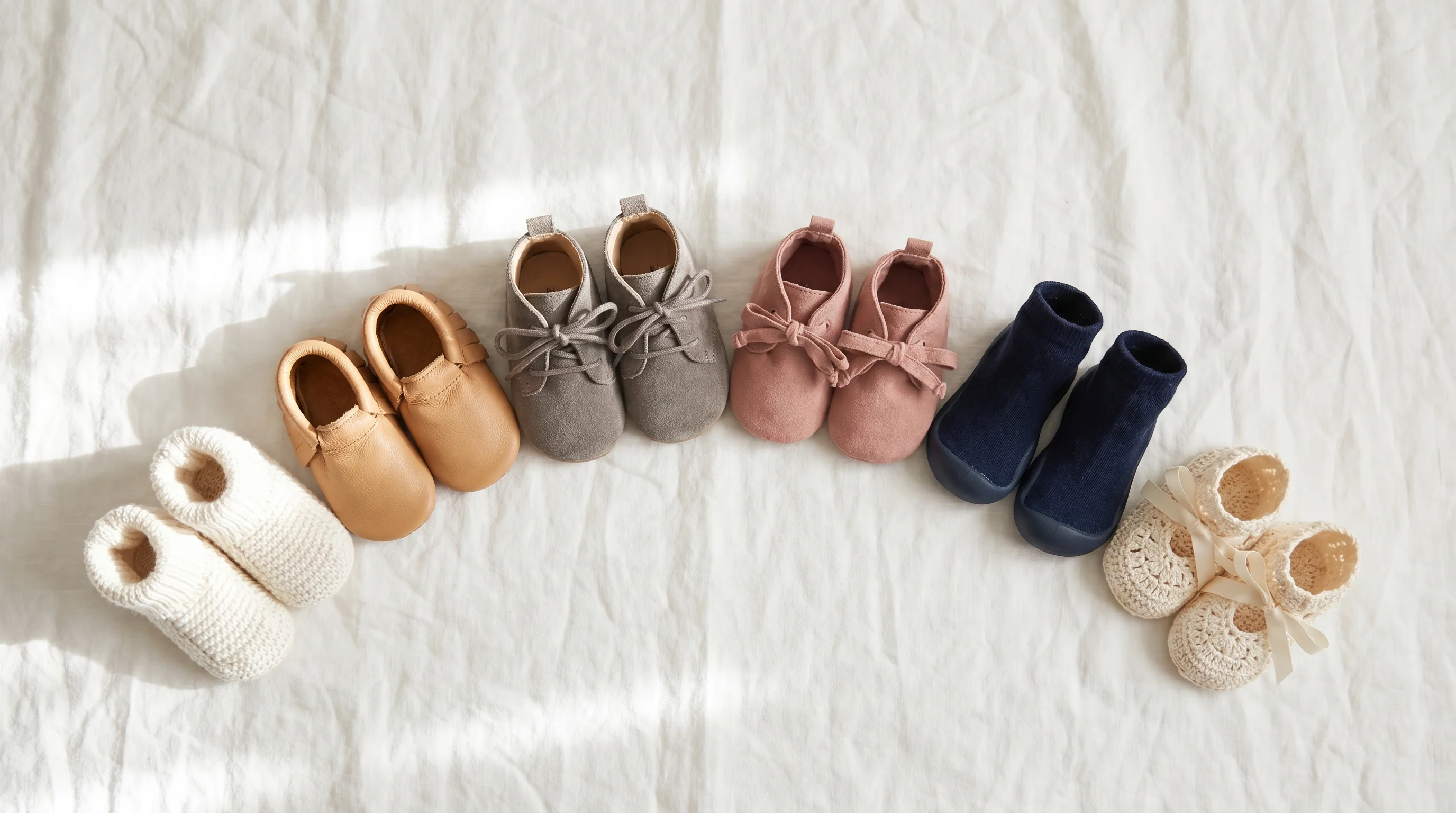
Knitted booties are the classic choice and there's a reason they've been around forever — they stretch to fit, they're warm, and the handmade-looking ones photograph beautifully. The trade-off is they fall off more easily than structured styles. If you're buying for a newborn and practicality matters more than aesthetics, look for cotton bootie styles with proper elasticated cuffs.
Baby Booties for First Walkers (6–18 Months)
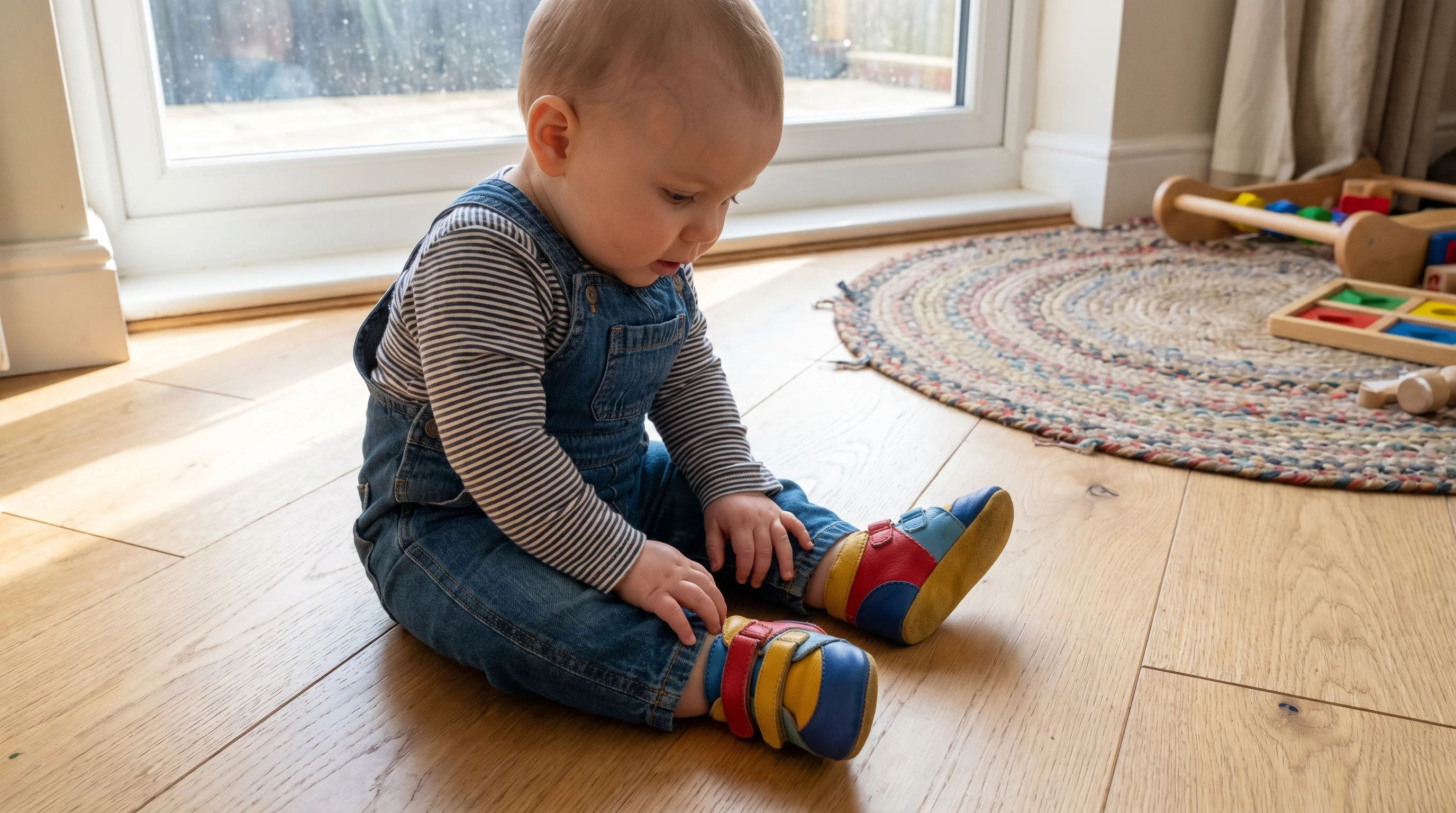
Once your baby is sitting, cruising and starting to pull up on furniture, their footwear needs change. They're putting more weight through their feet, starting to grip the floor, and developing the muscle memory and balance they'll use when they start proper walking. At this point, a soft but slightly more structured bootie is the right choice.
What to look for at this stage:
- Thin, grippy sole — soft suede or leather with a non-slip texture on the bottom. Not rubber, not rigid. Think of it like a slipper sole.
- Secure fastening — velcro is the most practical at this age. Babies can't tie laces and at 12 months they actively try to take their shoes off, so a proper velcro strap that they can't easily undo buys you precious extra minutes.
- Wide toe box — a baby's foot is widest at the toes, not the ball of the foot. Narrow toe boxes cause problems. Look for styles described as "wide fitting" or check the shape of the toe area.
- Flexible across the whole sole — bend the shoe in your hand. You should be able to fold it almost in half. If there's significant resistance, it's too stiff for this age.
This is also the age where the baby romper comes into its own as an outfit — and a matching soft leather bootie with a smart cotton romper is genuinely one of the most photographed combinations for the 6–12 month stage. Worth thinking about if you're buying for a specific occasion.
Knit, Leather and Suede Baby Booties — Which Fabric?
The fabric question comes up a lot, and it genuinely does matter — different materials serve different purposes:
Knitted baby booties
The most common type for newborns. Soft, stretchy and warm. Hand-knitted or machine-knitted cotton and wool versions are widely available and make lovely gifts. The downside is they offer no grip and fall off easily once babies start moving. Great for the first few months, less practical after about 3–4 months when the kicking really starts.
Soft leather baby booties
Soft leather booties are widely considered the best all-round option from about 3 months through to walking age. Real leather moulds gently to the shape of the foot, breathes well, and lasts far longer than knit or fabric alternatives. They usually have a thin suede sole with some grip, which makes them ideal for the pre-walker stage. They cost more — typically £20–£35 for a good pair — but they're worth it if you're going to get several months of use out of them.
Suede baby booties
Suede and nubuck booties sit between knit and leather in terms of structure. They're soft, flexible and generally have a slightly grippy sole. They're particularly popular for the 4–9 month stage — more secure than a knit but not as stiff as a hard-soled shoe. The main maintenance issue is they mark more easily than leather, so avoid pale suede unless you're buying specifically for photos.
Cotton and canvas
Cotton booties are breathable and comfortable, making them good for warmer months. Canvas ones are similar — lightweight, often machine washable, and more affordable than leather. They tend to have less grip than leather or suede, so they work best for younger babies who aren't yet weight-bearing.
How to Stop Baby Booties Falling Off
This is the question every parent of a young baby has Googled at some point, usually while fishing a bootie out from somewhere improbable.
There's no bootie that stays on 100% of the time — but some are significantly better than others. Here's what actually makes the difference:
- Elasticated ankle cuffs — these grip gently around the ankle and are much more effective than simple ribbed cuffs that stretch out after a few uses.
- Tie or toggle fastenings — knitted booties with a proper tie or toggle around the ankle stay on noticeably better than plain pull-ons.
- Velcro straps — the most secure option for older babies. Awkward to put on quickly, but they genuinely don't come off.
- Right size — if the bootie is too big, no fastening in the world will keep it on. Measure the foot and check the specific measurements, not just the age range.
- Anti-slip socks underneath — for knit booties that keep escaping, a snug non-slip sock underneath can help anchor them in place.
And the honest truth: some babies are just escape artists. If yours kicks everything off within minutes regardless of the style, breathable cotton socks with a simple pull-on bootie over the top is often a better combination than fighting with fancy fastenings at every nappy change.
Baby Booties as Gifts
Baby booties are one of the best baby shower gifts there is — small, affordable, genuinely useful, and they photograph brilliantly. A set of hand-knitted booties, or a gift-boxed pair of soft leather first shoes, feels considered without breaking the bank.
A few things to keep in mind when buying baby booties as a gift:
- Buy slightly bigger than you think — the tendency is to buy newborn size because it looks more fitting for a baby shower, but most babies are in 0–6 month by six weeks. Buy 3–6 month and they'll last longer.
- Personalised options — personalised baby gifts with the baby's name embroidered or printed on them make beautiful keepsakes. Personalised booties and first shoes are widely available on Amazon and Etsy.
- Gift sets — a bootie and hat set, or booties matched with a coordinating romper, make a lovely packaged gift that feels more generous than either item alone.
- Consider the season — a pair of thick wool knit booties makes a brilliant winter gift, but not so much for a June baby. Check the due date and buy for about 6–8 weeks ahead of it.
If you're shopping for a baby shower and want to go beyond the basics, our baby shower guide covers gift ideas at every budget — including a few combinations that always go down well with new parents. For something truly memorable, the personalised baby gifts guide has ideas that last well beyond the newborn stage.
Looking for more baby clothing ideas? Our complete baby clothing UK guide covers everything from babygrows and cardigans to bamboo fabrics, sizing charts and seasonal buying advice. And if sun protection is on your radar — especially for summer — see our guide to the best baby sunglasses UK for UV400-rated options that actually stay on.