

About the Authors

We're Tom (33) and Sophie (31) — a Bath couple who launched BabyMade after becoming first-time parents to Freddie. Sophie's midwifery background and our shared obsession with finding genuinely good baby products turned into this blog. We write everything we wish we'd had when Freddie arrived.
Disclosure: This article contains affiliate links. If you buy through them we may earn a small commission at no extra cost to you. We only recommend products we genuinely rate.
There's a moment — usually around 3am during a nappy change — where you become genuinely furious at whoever decided that a romper should require the entire thing to go over the baby's head. The baby is half asleep, you're fully asleep, and the neck opening is approximately the size of a golf ball. Whoever invented the envelope neckline deserves a medal.
Rant aside, baby rompers are one of those wardrobe staples that earn their keep at every stage. They're easy to layer, they photograph beautifully for every milestone shoot, and once your baby starts moving around, they stay put in a way that a separate top-and-trouser combo simply doesn't. There's a reason most parents end up buying approximately 47 of them.
This guide covers everything you need before buying: how a romper differs from a babygrow, which fabrics actually matter, what to look for in summer and occasion styles, and how to get the sizing right without buying something your baby's outgrown before it's been washed twice. For everything else in the baby wardrobe, our baby clothing UK guide has the complete picture — sizes, temperature dressing, fabrics and more.
Before you buy: Check the neckline opening style — envelope or wide scoop necks are a game-changer for easy dressing. Also check the popper quality: cheap plastic poppers pop open constantly. Metal poppers are worth the extra penny.
Baby Romper vs Babygrow — What's the Difference?
These two get mixed up constantly, and it matters when you're building a wardrobe because they serve different purposes.
A baby romper is a one-piece outfit without feet. It can be short-sleeved, sleeveless or long-sleeved, but the legs end at the thigh or knee — there's no foot coverage. Rompers are designed for daywear: they're usually made from lighter fabrics, styled more as outfits, and look great worn alone in warmer weather or layered over a bodysuit vest when it's cooler.
A babygrow (sometimes called a sleepsuit or all-in-one) has enclosed feet and full-length arms. It's designed primarily for sleep, though plenty of parents use them as daywear in the early newborn weeks when everyone's just trying to get through the day.
When do you use each?
- Baby romper: daytime outfits from about 3 months onwards, holidays, warm weather, photos, occasions
- Babygrow: sleep, cold-weather daywear for young babies, newborn essentials
- Both layered: a romper over a long-sleeve bodysuit is a great combination for spring and autumn
The bodysuit vest — the short or long-sleeved one-piece that poppers at the crotch — is technically different again. It's worn as an underlayer beneath both rompers and babygrows and is arguably the single most-used item in a baby wardrobe.
Best Fabrics for Baby Rompers — What Actually Matters
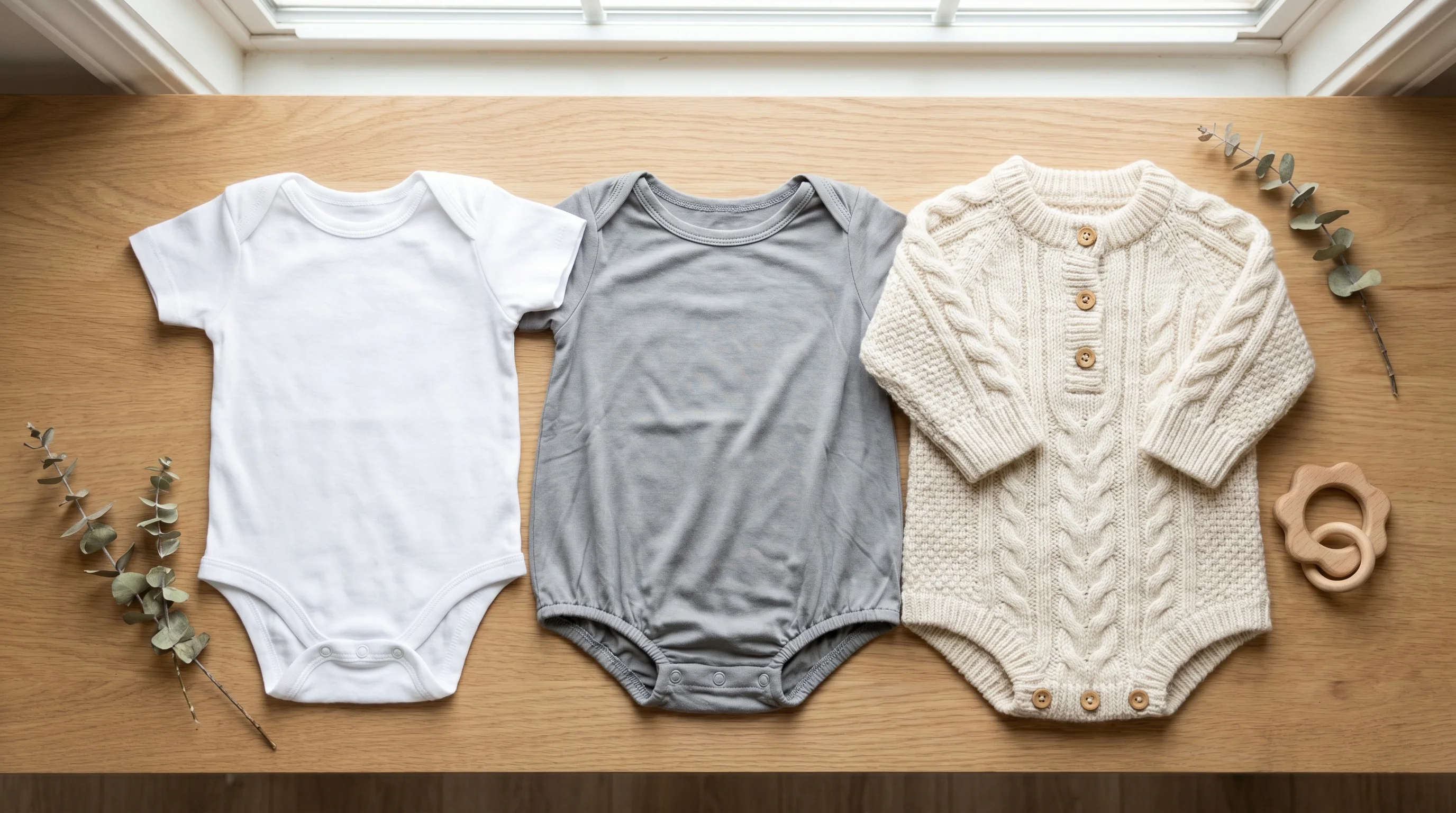
Fabric choice matters more in baby clothing than adult clothing, because babies can't regulate their temperature, can't tell you they're too hot, and have skin that's around 30% thinner than adult skin. What feels fine to you can be scratchy, too warm or irritating to a baby.
100% cotton — the everyday workhorse
Cotton is the default for baby rompers and for good reason. It's breathable, durable, washes well at 40°C without losing shape, and it's soft without being delicate. For everyday baby rompers, cotton is all you need. Look for pre-washed cotton — it's already been through the shrinkage process before you buy it, so a 3-month romper should still fit a 3-month baby after washing.
GOTS-certified organic cotton is worth it if your baby has sensitive skin or eczema — it means no synthetic pesticides or harsh chemical dyes were used in production. The difference in softness is noticeable on new cotton, though both wash out similarly after a few washes.
Bamboo — for sensitive skin and summer
Bamboo viscose (usually blended with a small amount of cotton or elastane) has become genuinely popular for baby clothing in recent years, and it's earned its reputation. It's incredibly soft — noticeably softer than standard cotton — and it's naturally thermoregulating, meaning it keeps babies cool when it's warm and warm when it's cool. For babies with eczema, heat rash or very sensitive skin, bamboo rompers can make a real difference.
The one caveat: bamboo requires more care in washing. Higher temperatures can shrink it, so stick to a 30°C gentle cycle and air-dry if possible.
Knit — for cooler weather and occasions
Knit rompers — whether cotton-knit, merino or a cotton-merino blend — add warmth without bulk and look beautiful. They're particularly popular for occasion wear: a fine-knit ivory romper for a christening, a soft grey knit for Christmas card photos. For everyday cooler-weather use, a cotton-knit romper under a cardigan is a practical and stylish combination.
What to avoid
Synthetic fabrics — polyester, nylon and most acrylic blends — don't breathe, which means babies overheat quickly. They're also prone to pilling and can irritate sensitive skin. They're fine for outerwear (a waterproof jacket over a cotton outfit), but for anything that sits against your baby's skin all day, avoid them.
Summer Baby Rompers — Keeping Cool Without Sacrificing Cute
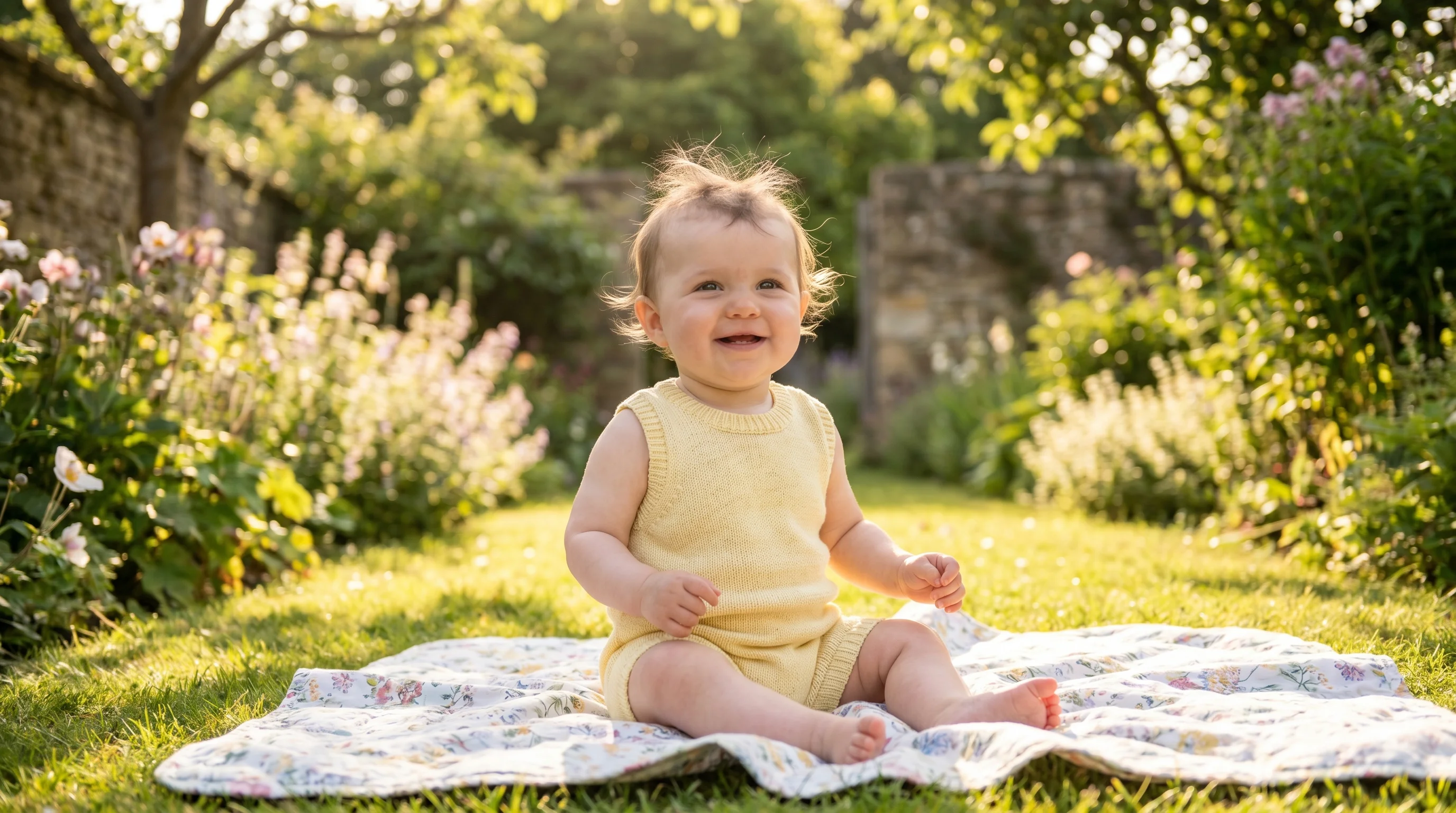
Summer in the UK is unpredictable, but when it does arrive properly, a lightweight baby romper is the obvious answer. The challenge is balancing keeping your baby cool with making sure they're not getting sunburnt or chilled by an unexpected sea breeze.
Sleeveless cotton rompers
A sleeveless romper in 100% lightweight cotton is the default summer choice. Look for adjustable shoulder straps (good for fitting between sizes) and a generous leg opening — nothing defeats the point of a cool romper like tight leg elastics that cut in. White and pale pastels reflect more heat than darker colours, which is worth considering on genuinely hot days.
Pairing tip: a sleeveless romper with a wide-brimmed sun hat, a swipe of SPF on any exposed skin, and you've nailed summer dressing for a baby. For the best options in sun protection, see our baby sunglasses UK guide — UV400 lenses and the frames that actually stay on are covered in full there.
UV-protective sunsuits
For beach days, holidays and particularly sunny spells, a UPF 50+ sunsuit romper is genuinely worth having. These look like a regular short-sleeve romper but the fabric itself provides sun protection equivalent to factor 50 sunscreen. You still need to apply SPF to the face, hands and feet — but for covered skin, the sunsuit does the job and means less reapplication stress. Most are quick-dry too, so they work well in and out of paddling pools.
Baby Rompers for Special Occasions
Occasion wear for babies is one of those areas where you can spend an absolute fortune on something that gets worn once, photographed extensively, and then sits in a memory box forever. Which is fine — it's a lovely memory. But there are smart ways to approach it.
Knit rompers
A fine-knit romper in ivory, cream or soft white is the most versatile occasion buy you can make. It works for christenings, weddings as a guest, newborn photoshoots and first Christmas outfits. A merino or cotton-merino blend looks beautiful and is soft enough that babies don't object to wearing it. The key is fit — knit rompers can pull at the shoulders if sized too small, so check the shoulder snap or button opening allows for a baby with a proportionally large head (all of them).
Linen and smocked styles
Linen rompers have become very popular for summer occasions — they wrinkle slightly, which is actually part of the charm, and they're genuinely cool to wear. Smocked styles — the ones with the gathered, embroidered front — are brilliant for girls' occasion wear and photograph beautifully. Both styles tend to run slightly small, so size up by one if in doubt. If you're weighing up whether a romper or a dress is better for a particular occasion, our baby dress UK guide covers christening gowns, first birthday dresses and occasion styles in detail.
Personalised occasion rompers
A personalised baby romper with the baby's name embroidered on the front is both a practical outfit and a keepsake. These are particularly popular for first birthday photos and first Christmas. They work beautifully as gifts too — if you're looking for a thoughtful baby shower present or new baby gift, a personalised romper in organic cotton is something the parents will actually use and keep. Our personalised baby gifts guide has more ideas if you're shopping for someone else's baby.
Baby Romper Sizing — How to Get It Right
Baby clothing sizing is notoriously inconsistent across brands. A 3–6 months from one brand can fit a 9-month-old from another. Here's how to navigate it without ending up with a wardrobe full of things that were never worn.
Always size up
The single most useful rule: when in doubt, go up a size. A romper that's slightly big today will fit perfectly in three weeks. A romper that fits perfectly today will be too small in three weeks. Babies grow out of clothes so fast it's almost impressive — you want things to last at least a few weeks, not to fit precisely on the day they arrive.
Check the crotch length, not just the age label
Rompers can fit well in the body and shoulders but be uncomfortably short in the crotch — particularly for babies who are long in the torso. If the poppers are straining when fastened, or there's visible pulling between the legs, the romper is too short regardless of what the label says. Most listings include body length measurements — this is the measurement that matters for rompers specifically.
Popper vs zip openings
Poppers (snap buttons) are the standard for baby rompers, and they're fine once you get used to them. Metal poppers are significantly better than plastic ones — they stay fastened, they don't warp in the wash and they don't leave a gap where a plastic one has partially popped. Some rompers have a zip at the crotch instead, which is faster for nappy changes but can be less comfortable if the zip guard is thin. Either works; the quality of the fastening matters more than the type.
Baby Rompers as Gifts — What to Buy and When
A baby romper makes one of the most practical and appreciated new baby gifts you can give — parents genuinely go through them quickly, they're easy to buy in the right size if you know roughly how old the baby is, and there's no shortage of beautiful options at every price point.
A few things that make romper gifts land well:
- Buy 3–6 months, not newborn. Most new babies are showered in newborn and 0–3 month clothing. A 3–6 month romper will be genuinely appreciated because it's something the parents haven't already got six of.
- Go for a romper set if budget allows. A romper with a matching hat, bib or cardigan makes a much more impressive gift presentation than a solo romper, and many sets come ready-boxed.
- Personalised rompers stand out. If you want to give something a bit more special, a personalised romper with the baby's name embroidered on the chest is a meaningful gift that doubles as a keepsake. For more along these lines, our baby shower gift guide has brilliant ideas across every budget.
Building the full wardrobe? A baby romper is just one piece of the puzzle. For everything from newborn layering to bamboo grows, temperature guides and the brands worth knowing, our complete baby clothing UK guide covers it all in one place.