
About the Authors

We're Tom (33) and Sophie (31) — a Bath couple who launched BabyMade after becoming first-time parents to Freddie. Sophie's midwifery background and our shared obsession with finding genuinely good baby products turned into this blog. We write everything we wish we'd had when Freddie arrived.
Disclosure: This article contains affiliate links. If you buy through them we may earn a small commission at no extra cost to you. We only recommend products we genuinely rate.
One of the things that surprises first-time parents about bath time is how stressful it can be at the start. You're holding a slippery, screaming newborn, trying to support their head, and simultaneously wondering whether the water is too hot, too cold, or just right. Your elbow is in there. Your wrist is in there. You're still not sure.
A baby bath thermometer solves this completely. It costs between £5 and £20, takes about three seconds to use, and removes one entire category of bath-time worry from the list. For something this cheap and this useful, it's one of those buys we'd recommend to every parent before the baby arrives — not after the first panicked bath where you spent ten minutes second-guessing yourself.
This guide covers why water temperature actually matters, what the right temperature is, the three main types of baby bath thermometer available in the UK, what to look for, and our honest picks. For the full bath time picture including which products to use in the water, our Cetaphil baby wash review covers the wash side of the routine.
Why Bath Temperature Matters More Than You Think
Baby skin is not like adult skin. A newborn's skin is up to five times thinner than an adult's, which means it heats up faster, is far more susceptible to scalding at temperatures that an adult would find merely warm, and loses heat more quickly once the baby is out of the water. The margin between "comfortably warm" and "too hot" is narrower for a baby than you'd expect.
The other issue is perception. Adults are not good at judging temperature consistently — your sensitivity changes depending on how cold you were beforehand, how tired you are (and with a newborn, the answer is almost always "very"), and whether you're using your hand or your elbow. The elbow test is better than nothing, but it is not a thermometer.
The temperature risk works both ways: water that's too cold won't scald, but it will cause a newborn to lose body heat rapidly, which is a real concern in the early weeks. A baby bath thermometer takes a consistent, accurate reading in seconds. It's one of those products that earns its place in the bathroom permanently once you've used it. Keeping your baby warm after the bath matters just as much — if you're unsure what to dress them in afterwards, our guide to dressing baby at night has a full temperature and TOG breakdown.
What Temperature Should a Baby's Bath Be?
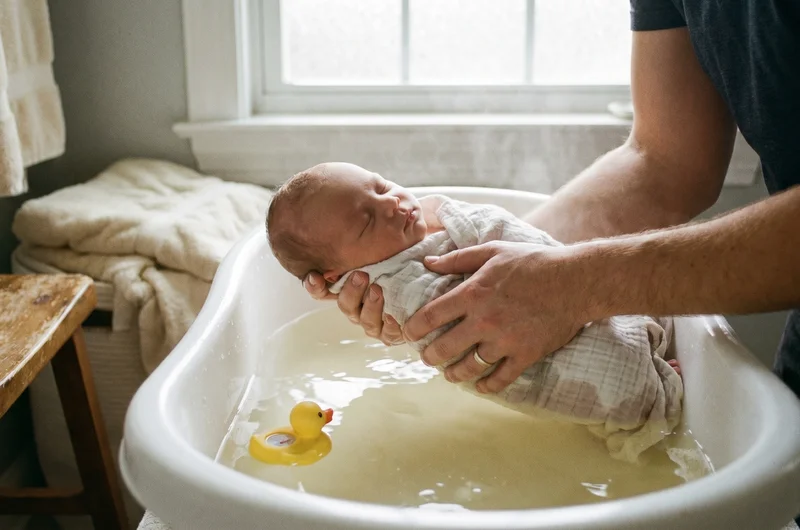
The NHS recommends a bath temperature of around 37–38°C for babies — essentially body temperature. At this temperature the water feels warm but not hot, and won't cause skin damage on contact. Pair the right temperature with the right bath setup: the Angelcare baby bath support is the one we'd recommend for the slippery newborn stage.
Here's a practical guide to temperature ranges:
- Below 36°C: Too cold. Comfortable to touch but will chill a newborn quickly. Add more warm water.
- 36–38°C: The sweet spot. Warm, comfortable, safe for newborn skin.
- 38–40°C: Getting warm. Fine for older babies and toddlers, but on the edge for newborns — err on the cooler side.
- Above 40°C: Too hot for babies at any age. Scalding risk. Run cold water until it cools before bathing.
Tip: Always run the cold water first, then add hot water to reach temperature. This prevents a blast of scalding water hitting the bath while the baby is nearby, and means the tap end isn't dangerously hot when you lower the baby in.
Bath temperature is also relevant to baby sleep — a warm bath followed by dressing in a cooler room mimics the natural drop in body temperature that signals sleep. The bath needs to be genuinely warm (not hot) to trigger this effect, which is another good reason to check the temperature rather than guess.
Types of Baby Bath Thermometer
Digital probe thermometers
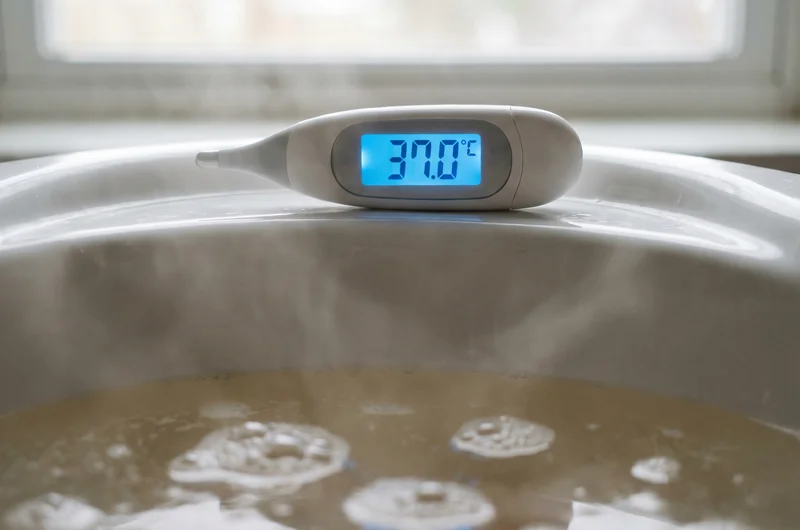
The most accurate option. A digital bath thermometer has a probe you dip into the water — it reads temperature in seconds and displays it on a clear screen. Most have a colour-coded alert system: green for safe, orange for caution, red for too hot. The better ones also have a memory function that shows the last reading. These are the choice if accuracy is the priority.
Floating duck thermometers
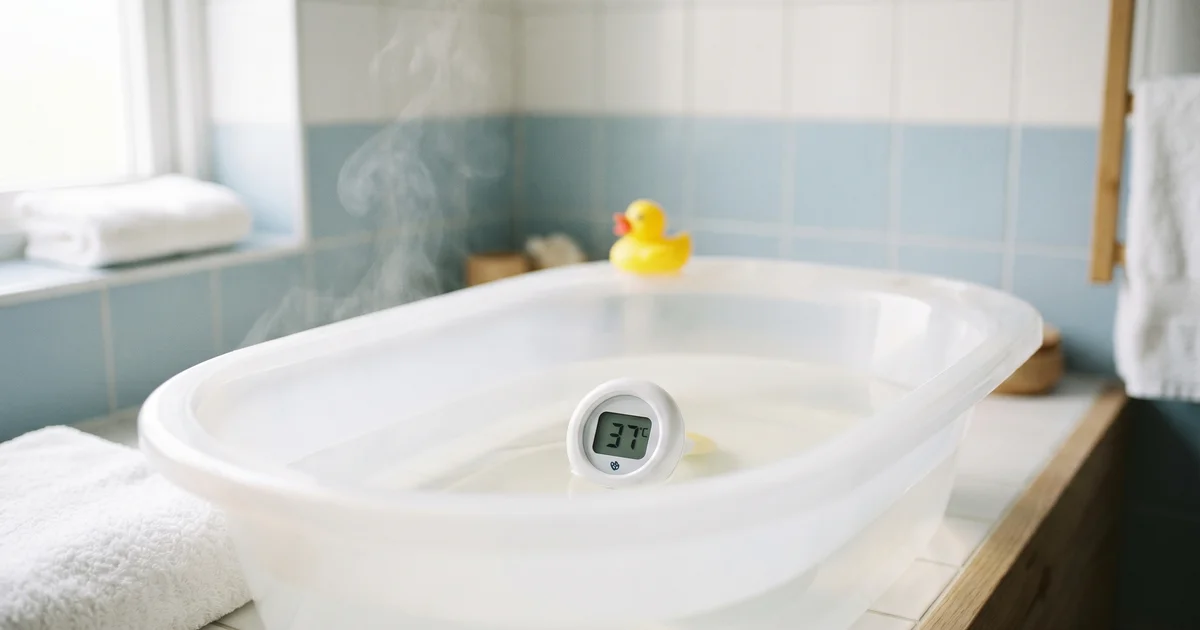
The most popular option for new parents, and for good reason. A bath thermometer duck floats in the water the whole time and displays the temperature continuously. It doubles as a bath toy as the baby gets older, and the constant display means you can glance at it any time during the bath. Most have a colour-coded temperature indicator alongside the digital display. Look for ones that are BPA-free and have sealed electronics so water can't get inside.
Strip thermometers
The simplest option — a plastic strip that sticks to the side of the bath or floats in the water and changes colour at different temperatures. They're inexpensive and don't require batteries, but they're less precise than digital options and harder to read quickly. A useful backup or travel option, but not the first choice for everyday use.
What to Look for When Buying
Not all baby bath thermometers are created equal. Here's what actually matters:
Accuracy
Look for a stated accuracy of ±0.5°C or better. Most reputable bath thermometers will meet this standard. Avoid anything that doesn't state its accuracy, or anything suspiciously cheap with no brand name — the whole point of the product is precision, and a thermometer that reads 2 degrees out is dangerous.
Speed
You want a reading in under 30 seconds, ideally under 10. Fast digital probe thermometers are the best here. Duck thermometers are slower to stabilise but give you a continuous reading once they've been in the water a minute.
Clear display
A large, backlit display is much easier to read at arm's length while you're also managing a baby. Colour-coded indicators (green/amber/red) mean you can tell the temperature status at a glance without reading a number.
BPA-free materials
Any thermometer that goes in your baby's bath should be BPA-free. This should be stated explicitly in the product listing. Most reputable brands make this clear — if it's not mentioned, look elsewhere.
Battery life and replaceability
Bath thermometers get used every day. Check that the batteries are replaceable (most use CR2032 or AAA) rather than being sealed in with no way to change them. A thermometer with a non-replaceable battery is a disposable product, and not a good one.
Our Top Baby Bath Thermometer Picks UK 2026
We've tested and researched the best baby bath thermometers available in the UK this year — covering digital probe styles, floating ducks, and combination options. Every pick below meets our accuracy standard, is BPA-free, and has been rated highly by UK parents.
A bath thermometer pairs naturally with a good baby nest for building a consistent evening routine — warm bath, dim light, nest — and that routine is one of the most effective sleep signals you can build. Our baby nest guide covers the safest options for newborns and explains what to look for at each stage.
How to Use a Baby Bath Thermometer Correctly
A thermometer is only as useful as how you use it. A few things to get right:
- Always run cold first, then add hot. This prevents the tap end being dangerously hot when the baby is nearby.
- Swirl the water before testing. Hot spots form near the tap and cool spots form near the overflow drain. Give the water a good mix first so the reading reflects the actual bathing temperature.
- Test at the centre of the bath. This gives you the most representative reading, away from the warm tap end and the cooler overflow end.
- Wait for the reading to stabilise. Digital probes usually take 10–20 seconds. Duck thermometers can take 30–60 seconds to display an accurate temperature — they're best used by dropping them in while the bath is running.
- Check again if you add more water. If you've had to top up with more hot water, the temperature has changed — check it again before the baby goes in.
Safe bath temp reminder: 37–38°C is the NHS target. If your thermometer shows above 38°C, let the water cool or add cold water and check again. Never lower a newborn into water you haven't checked.
When Can You Stop Using One?
There's no set age at which you have to stop — or need to. Most parents use a bath thermometer consistently through the first 12 months, when the risk is highest and the habit easiest to maintain. After that, it becomes more of a judgement call.
Once your child can pull away from water that's uncomfortable, and once you've built an instinctive sense of what the right temperature feels like, the thermometer becomes more of a reassurance check than a safety necessity. Some parents keep using one until the child is 2–3 years old. Some put it away at 12 months. There's no wrong answer — if it takes five seconds and removes any doubt, there's no reason to stop.