
About the Authors

We're Tom (33) and Sophie (31) — a Bath couple who launched BabyMade after becoming first-time parents to Freddie. Sophie's midwifery background and our shared obsession with finding genuinely good baby products turned into this blog. We write everything we wish we'd had when Freddie arrived.
Disclosure: This article contains affiliate links. If you buy through them we may earn a small commission at no extra cost to you. We only recommend products we genuinely rate.
The first few weeks with a newborn are a blur of feeds, nappy changes, and trying to learn what on earth your baby actually wants from you. In amongst all of that, someone will inevitably suggest a baby mobile — and you'll find yourself staring at a wall of options wondering what any of it means and whether your baby will even care.
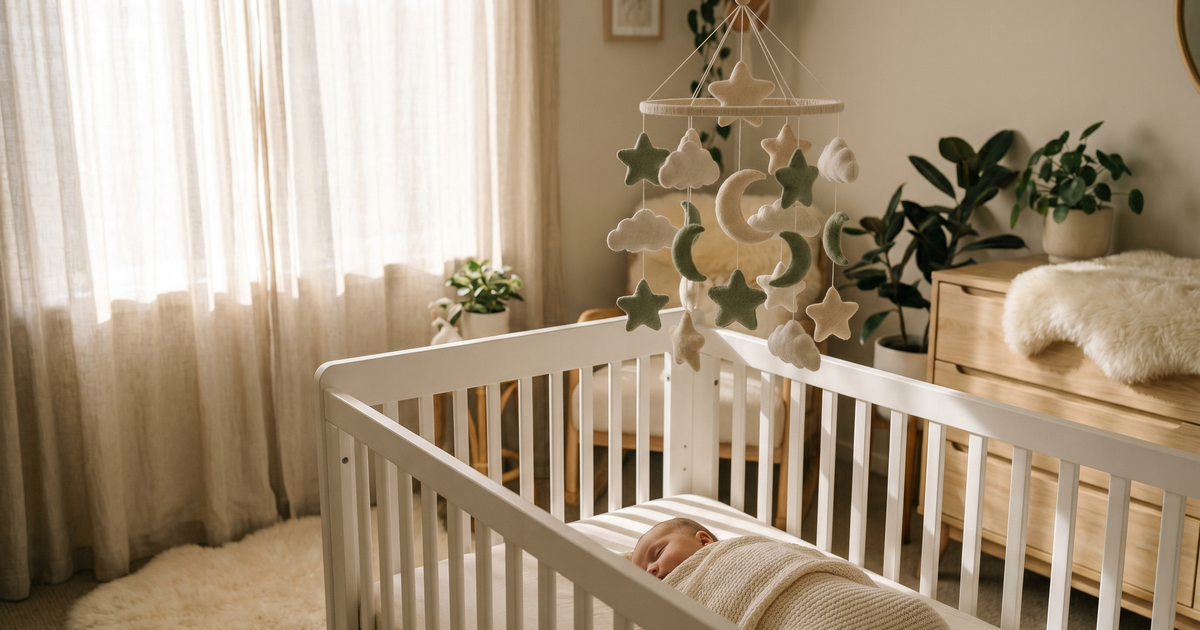
Freddie was completely uninterested in the first one we bought. We'd gone for something we thought looked lovely — soft pastels, little felt animals — and he stared right past it every single time. Turns out we'd been choosing for our own taste instead of what his developing eyes could actually see. Once we swapped to a bold black and white mobile with geometric shapes, he was genuinely transfixed. We felt a bit daft, honestly.
This guide covers what actually matters when choosing a baby mobile — from the science of newborn vision, through to musical vs wooden options, when you must take it down for safety, and which picks are genuinely worth the money. For everything else in the nursery, our baby toys UK guide covers the full picture from birth to 12 months, including play mats, sensory toys, activity centres and first walkers.
Do Babies Actually Need a Baby Mobile?
Honestly? No — there's no single piece of baby kit that's truly essential, and a cot mobile is no exception. But a well-chosen baby mobile is one of the few newborn purchases that genuinely earns its place. It gives your baby something to focus on and track visually during awake time in the cot, it can settle them when you desperately need thirty seconds to yourself, and it actively supports visual development in the early weeks.
The key phrase is well-chosen. A mobile in the wrong colours for your baby's stage of development will just be ignored. And one left on the cot past the point when your baby starts pushing up is a safety hazard that needs to come down immediately. Neither of those things makes it a bad buy — it just means knowing what you're getting and what it's for.
What Can a Newborn Actually See?
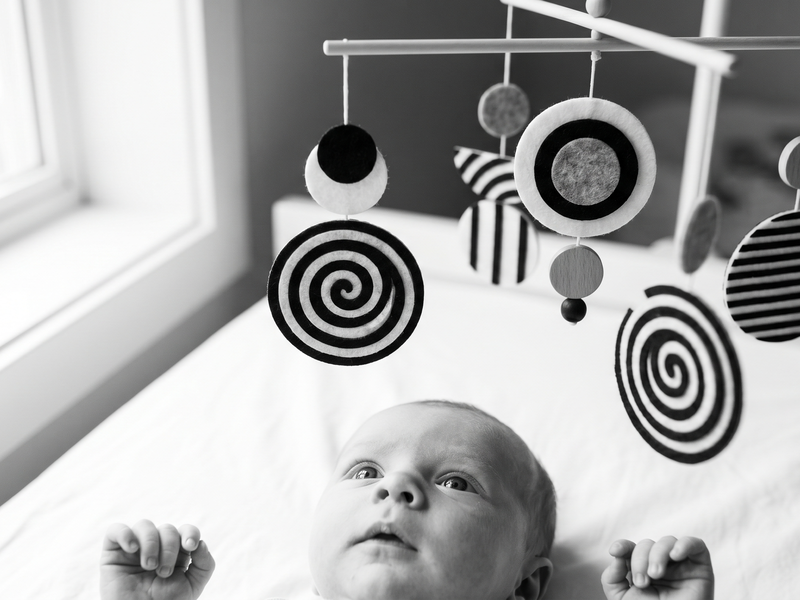
Newborns are born with very limited vision. At birth, they can focus clearly on objects about 20–30cm away — roughly the distance from the breast to the face during a feed. They can't yet distinguish between most colours, but they can see strong contrast: bold black and white patterns, sharp edges, and simple shapes.
This is why high-contrast baby mobiles with black and white geometric shapes hold a newborn's attention so effectively from the very beginning. A pastel mobile with soft colours looks beautiful to an adult, but to a baby under about 8 weeks it's essentially invisible — there's not enough contrast for their developing visual system to process it. By 3–4 months, colour vision improves significantly and your baby will begin responding to a much wider range of colours and more complex patterns.
Best Baby Mobiles for Newborns — High Contrast Picks
For the first 8–12 weeks, maximum contrast is what you're after. High contrast baby mobiles — black and white geometric shapes, bold patterns, simple faces — are the ones that get actual use at this stage. Here's what to look for when choosing one for a newborn:
- High contrast patterns: Black and white, or very bold primary colours on a white background. Avoid pastels for the early weeks.
- Simple shapes: Circles, spirals, stripes. Complexity comes later as the brain develops — simpler is genuinely better for newborns.
- Gentle movement: Slow rotation or gentle swaying. Babies are drawn to movement as much as pattern — the combination of both is what captures their attention.
- Removable elements: Some baby mobiles let you detach individual pieces to use on a play mat arch or pram — extending their useful life beyond the cot stage.
Sophie's note: For sleep time specifically, less visual stimulation is better. If a mobile is so interesting that your baby keeps waking themselves up to look at it, that's a problem. Save the most engaging ones for awake time and use a simpler, more soothing mobile at sleep time — or turn the rotation off and just use the music.
Musical Cot Mobiles — What to Actually Look For
Musical cot mobiles — the rotating ones with hanging shapes, usually battery-powered, that play a tinkling melody while spinning — are what most people picture when they think of a baby mobile. They're genuinely useful, but the range in quality is enormous and a cheap one will frustrate you within the first week.
Here's what actually matters:
Remote control or timer. This sounds like a luxury but it very much isn't. Being able to restart the music without reaching over the cot — and risking waking a sleeping baby in the process — is genuinely important at 3am. Look for either a remote, an integrated long-press timer, or one that connects to an app. We'd put this near the top of the priority list.
Volume control. Some baby mobiles are shockingly loud for nursery use. You want gently soothing, not a full concert. Check that you can turn it right down before you buy.
Something interesting to look at, not just listen to. The best musical baby mobiles combine visual interest with sound — different hanging shapes, varying textures, good contrast. A mobile that just rotates a single identical shape won't hold attention for long.
Battery life or rechargeable option. A musical mobile that needs four AA batteries every three days at 2am is genuinely painful. Rechargeable models exist at similar price points and are worth every extra penny. Check before you buy.
Wooden and Natural Baby Mobiles
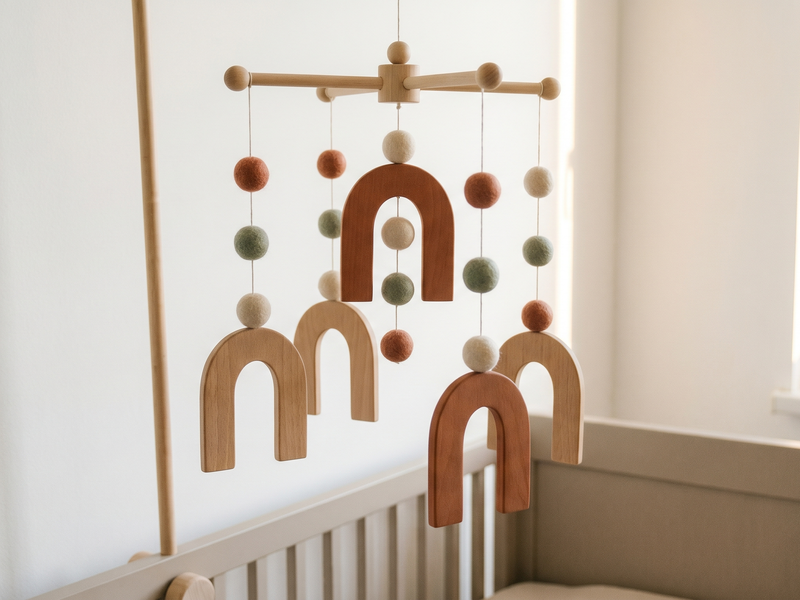
Wooden baby mobiles have become increasingly popular over the last few years — partly because they look genuinely beautiful in a nursery, and partly because more parents are moving away from battery-powered plastic wherever they can. A well-made wooden mobile with felt or cotton elements is lovely, and it's not just an aesthetic choice: natural materials tend to be safer and more durable than cheap plastic alternatives.
The key difference from musical mobiles is that most wooden baby mobiles are static — they hang above the cot but don't rotate or play music. This makes them better suited to visual stimulation during awake time than they are for sleep settling. They're also brilliant as nursery decor that goes up weeks before the baby arrives and looks great in photos.
If you want the soothing and settling benefits of music and rotation, go for a musical cot mobile. If you want something beautiful that also engages your baby visually during the day — or a genuinely lovely nursery centrepiece — a wooden mobile is a lovely choice. Many parents have both.
If you're looking for something with a personal touch, a personalised wooden mobile with the baby's name is one of the nicest options in our personalised baby gifts category — and one of the few gifts that's actually functional rather than just decorative.
When Does the Baby Mobile Have to Come Off the Cot?
This is the bit that doesn't get mentioned prominently enough: cot mobiles have a safety cut-off point, and it's earlier than most people expect.
The consistent guidance from manufacturers and the Lullaby Trust is this: once your baby can push up on their hands and knees — typically around 4–5 months, though some babies get there earlier — the mobile must come off the cot. A baby at that stage can reach up, grab the mobile, and potentially pull it down onto themselves or get tangled in any cords or hanging elements.
Most manufacturers print this guidance on the packaging. Don't ignore it when the time comes. It feels early — Freddie was still very much a tiny baby at 4 months and it felt slightly surreal taking it down — but the safety logic is sound.
The good news is that many musical mobiles detach from the cot arm, and the unit itself can be used as a bedside soother or music box independently. And individual hanging shapes from wooden mobiles can often be moved to a play mat arch or hung as nursery decor, so you usually get continued use from the pieces even after they leave the cot. For broader sleep setup ideas, our baby sleep guide covers safe sleep environments, baby nests and settling routines in detail.
Personalised Baby Mobiles — Worth It as a Gift?
A personalised baby mobile — typically a wooden or felt mobile with the baby's name or initials worked into the design — makes a genuinely lovely new baby gift. It's decorative, it's personal, it's functional in the early weeks, and it's the kind of thing most parents wouldn't treat themselves to. That combination makes it a very good gift.
If you're buying one as a gift, look for something that's made from natural materials (wood, felt, cotton rather than plastic), easy to hang without specialist tools, and personalised in a way that works for most nursery styles — a name is always safer than a very specific design theme that might not match what the parents have chosen.
Baby Mobiles by Budget — What to Expect
The price range for baby mobiles in the UK is surprisingly wide. Here's a realistic breakdown of what you get at each level:
- Under £20: Basic battery-powered musical mobiles and simple static hanging designs. Fine for everyday use, but typically limited features — no remote, no timer, limited battery life.
- £20–£45: Mid-range musical cot mobiles with better features — timers, volume control, more visual interest. This is the sweet spot for most parents buying for themselves.
- £45–£80: Premium musical mobiles with remote control, projection features, rechargeable batteries, and more melodies. Worth it if it's going to see heavy nightly use.
- £80+: High-end musical mobiles and personalised natural pieces. The personalised wooden options sit in this range and make excellent gifts for this reason — they're a genuine treat that feels considered.
For more baby toys ideas that grow with your baby past the mobile stage, see our picks for the best ball pits, sensory toys and activity centres across our full baby toys guide.