
About the Authors

We're Tom (33) and Sophie (31) — a Bath couple who launched BabyMade after becoming first-time parents to Freddie. Sophie's midwifery background and our shared obsession with finding genuinely good baby products turned into this blog. We write everything we wish we'd had when Freddie arrived.
Disclosure: This article contains affiliate links. If you buy through them we may earn a small commission at no extra cost to you. We only recommend products we genuinely rate.
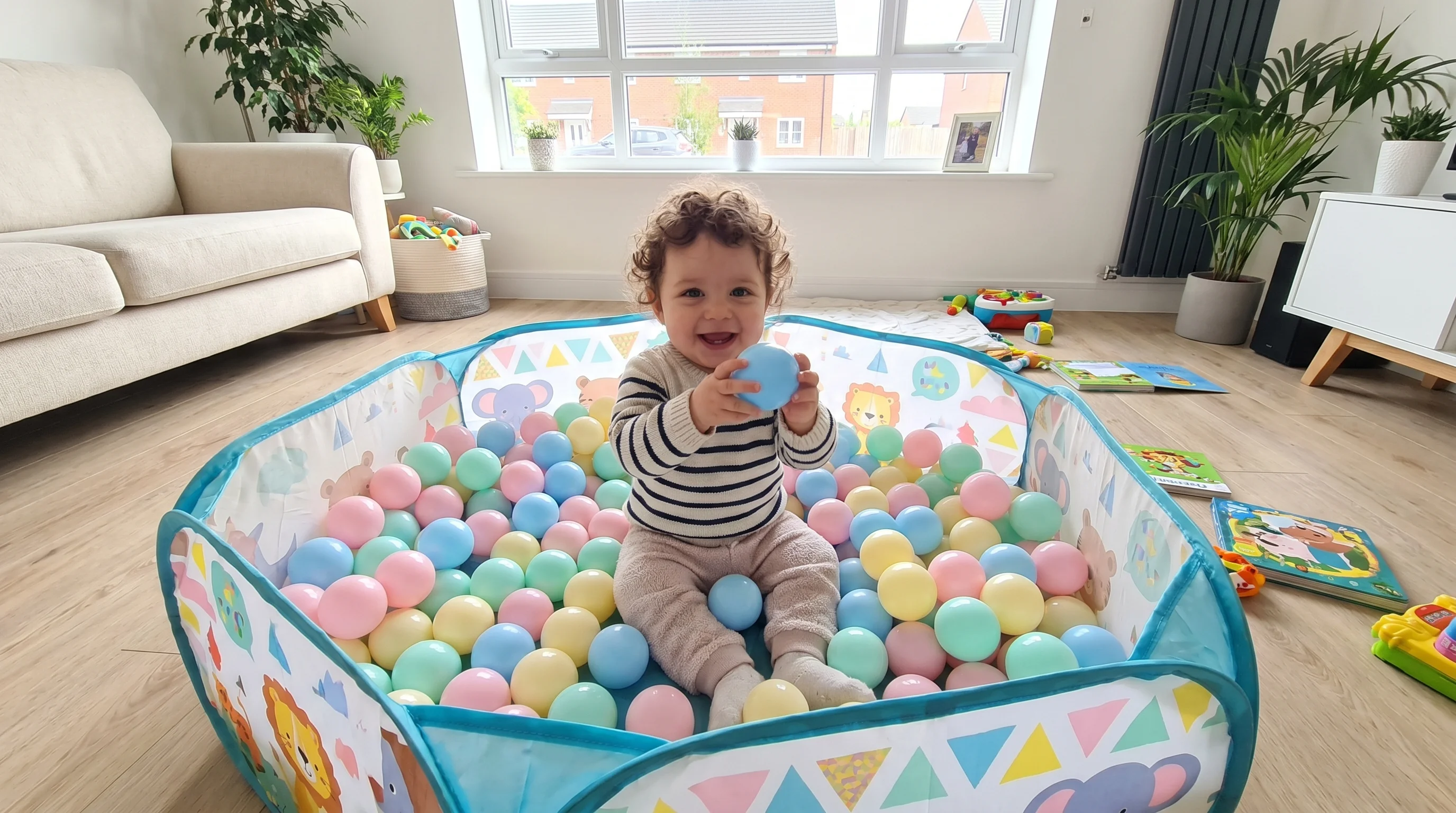
The first time I put my daughter in one was at a soft play when she was about 8 months old. She stared at the balls for a second, like she was working out what was happening — and then just dived straight in, face first. Absolute chaos. Total joy. I went home and immediately started Googling baby ball pits for the living room.
If you're reading this, you're probably at the same point. Ball pits are one of those rare baby toys that genuinely live up to the hype. The less good news is that they vary enormously — in quality, size, safety, ball count and how much of your living room they're going to consume for the foreseeable future.
This is the guide I wish I'd had before I bought: what age they're actually safe, what the CE marking actually means, the types available, how many balls you really need (more than you think), and honest picks that hold up to real use. For a wider look at what's worth buying at every stage, our baby toys UK guide covers everything from newborn sensory toys through to walkers.
Quick note before you buy: The balls matter as much as the pit itself. A brilliant ball pit with cheap, undersized or low-quality balls is a disappointment — and potentially unsafe. Always check ball size and CE certification separately from the pit.
What Age Can Babies Use a Baby Ball Pit?
This is the question everyone asks first, and the honest answer is: earlier than you might think, with supervision — and then it gets better the older they get.
From around 6 months — once your baby has good head control and can sit with support, they can be placed in a ball pit for supervised play. They won't "use" it the way an older baby does — mostly they'll bat at the balls, look fascinated and probably try to eat one — but the sensory stimulation is genuinely brilliant at this age. The different colours, the texture of the plastic and the way the balls move are all interesting to a baby who is just learning to reach and grab.
From 12 months — this is when ball pits really come into their own. Walking babies and toddlers can climb in and out independently, throw the balls with intent, sit and splash around in them, and generally have the kind of sustained entertained that buys you 20 minutes of genuinely hands-free time. Most parents find this the golden age for ball pit use.
The sweet spot — 12 months to around 3 years. Toddlers are genuinely obsessed. The throwing, the burying themselves up to the armpits, the determined work of throwing every single ball out onto the floor — it's peak small human entertainment. Buy extra balls, accept the mess, and enjoy it.
There's no strict upper age limit for a home ball pit, though most are designed with babies and young toddlers in mind. A larger inflatable can keep older kids (4–5+) entertained too, especially in the garden in summer.
Are Baby Ball Pits Safe? What to Look For
Baby ball pits are safe — but like any baby product, the details matter. Here's what to check before you buy:
CE marking (now UKCA for UK products)
Any ball pit or set of balls sold legally in the UK must carry a CE mark — or for UK-manufactured products, a UKCA mark. This means the product has been assessed against European toy safety standards (EN 71). If a listing can't confirm this, don't buy it. It's not worth the risk.
Ball size — this one matters a lot
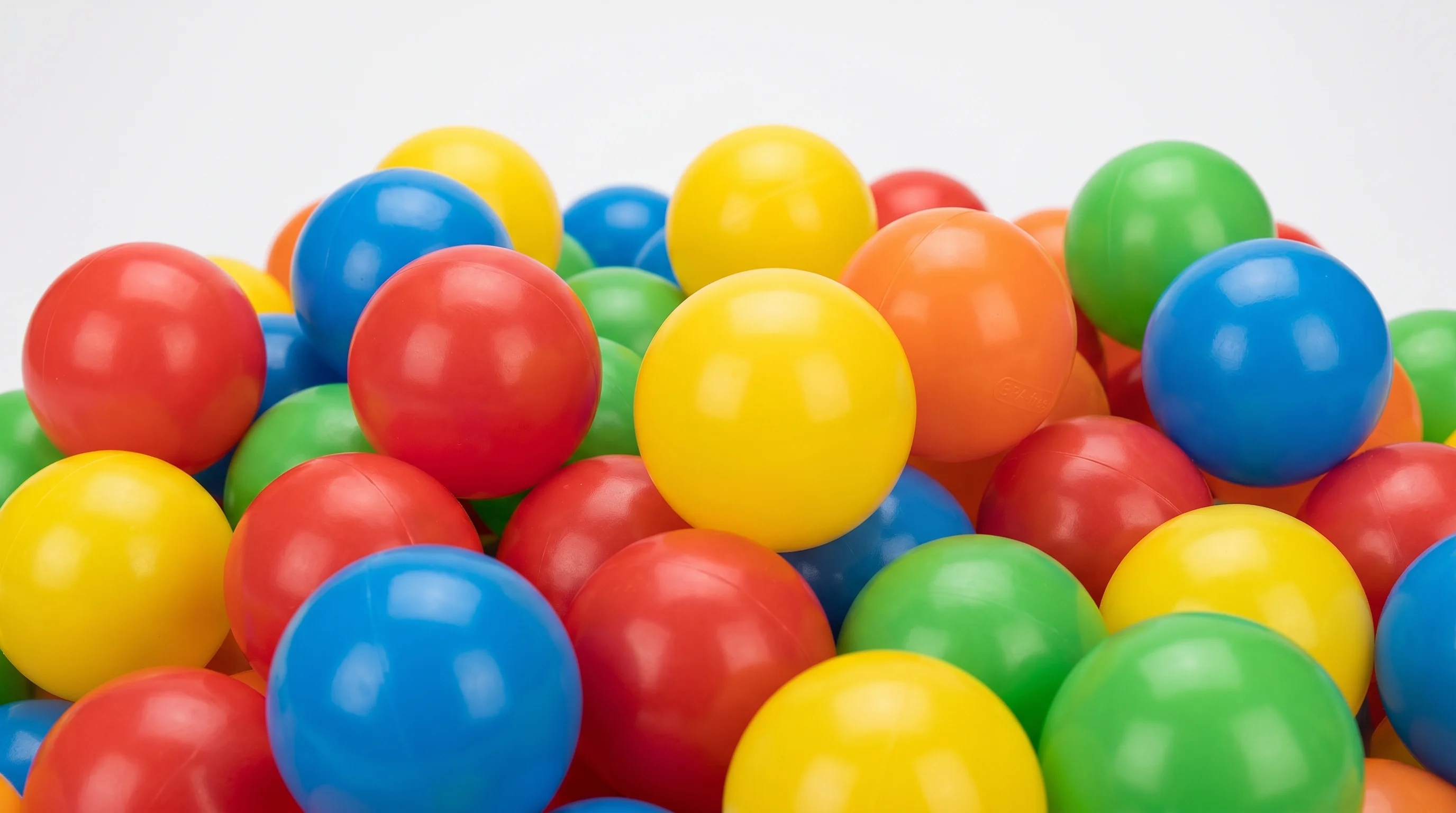
UK toy safety standards require that balls intended for children under 36 months have a minimum diameter of 44mm. In practice, good ball pit balls are 65–70mm — comfortably larger than the minimum and much harder to swallow accidentally. Always check the diameter in the product listing and never buy oversized multipacks without confirming the size. Anything smaller than 65mm for a baby is a no.
Material — BPA-free and non-toxic
Look for "BPA-free", "non-toxic" and "phthalate-free" in the listing. If you open a bag of balls and they smell strongly of chemicals, send them back. Good quality balls have very little smell — the plastic should feel smooth and solid, not flimsy or rough.
The ball pit structure itself
Run your hands around the seams of any inflatable or foldable pit before putting your baby in. Any sharp edges on plastic fittings, rough seams or exposed wire in the frame is a problem. Quality products use reinforced fabric edges and smooth plastic connectors.
Always supervise babies and young toddlers in a ball pit. Never leave them alone in an inflatable that could deflate unexpectedly, and check regularly that balls aren't cracked or damaged.
Types of Baby Ball Pit — Which Is Right for You?
There are four main types of baby ball pit, and the right one depends entirely on your space, budget and how often you'll actually use it.
Pop-up / foldable ball pits
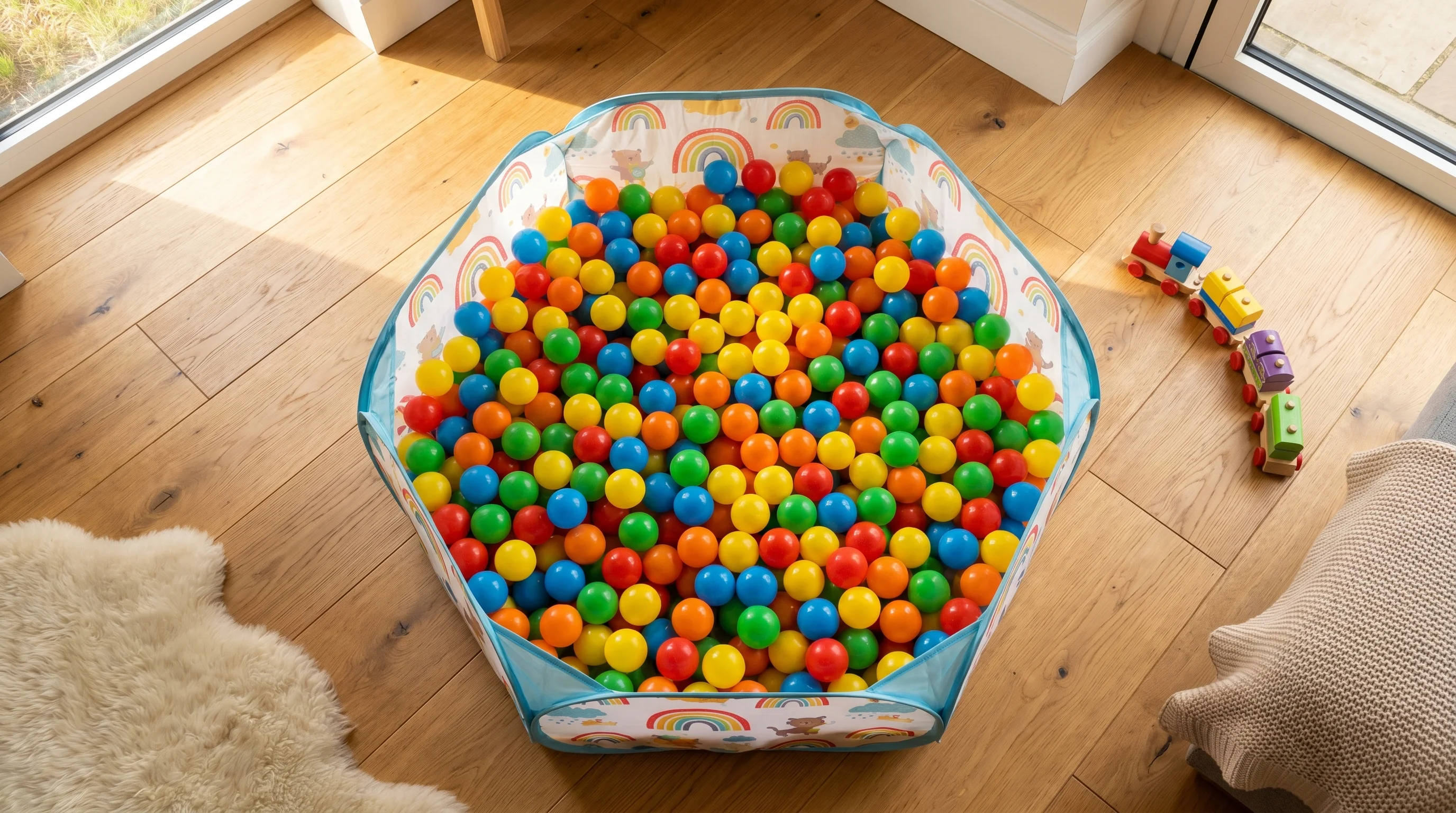
These are the most popular type for good reason. They pop up in seconds (similar to a pop-up laundry bin), need no inflation or assembly, and fold down flat to roughly the size of an umbrella for storage. The fabric walls hold their shape well enough to keep most balls contained, and they're light enough to move between rooms or take to grandparents'. For most families, this is the one to buy.
Inflatable ball pits
Usually larger than pop-up options and create a more enclosed, padded space. They take a few minutes to inflate — check what pump comes included before you order, and test it before the day you actually need it. Once inflated they're very stable, and the padded sides are nice for babies learning to pull up. The downside is storage — they're bulkier when deflated and take longer to get in and out of use.
Frame ball pits
A soft fabric enclosure on a rigid plastic or metal frame — think small pop-up playpen with mesh sides. Very stable, easy to get babies in and out of, and some models can double as a play yard. Generally more expensive, but if you're after something that feels premium and permanent, these are worth looking at.
Paddling pool with balls
The most economical option by far. Buy a cheap paddling pool, fill it with balls — done. You get a much larger area than any dedicated ball pit, and in summer it doubles as an actual paddling pool. It's not the most aesthetically pleasing setup, but for the value-to-fun ratio it's genuinely hard to beat, especially in a garden.
How Many Balls Do You Actually Need for a Baby Ball Pit?
This is the question everyone gets wrong — including me, the first time. The packaging says 200 balls. You think 200 balls sounds like a lot. You tip them in, and they sit in a sad, shallow layer at the bottom of a half-empty pit. Your baby sits down and they barely reach their knees.
The reality: most medium-sized ball pits need 300–500 balls for a satisfying depth, and larger pits can need considerably more. Here's a rough guide:
- Small pop-up pit (~90cm diameter): 200–300 balls for waist-depth on a sitting baby
- Medium pop-up pit (~120cm): 300–500 balls
- Large inflatable (150cm+): 500–800 balls
- Paddling pool (180cm+): 1,000 or more for any real depth
The depth matters because babies need the balls to come up to roughly waist height when sitting for the full sensory experience. Too few and they're just sitting in an empty plastic circle looking vaguely confused.
Buy more than you think you need. Extra balls cost very little per ball when you buy in bulk, and you'll absolutely regret buying too few. Balls also go missing constantly — under sofas, behind radiators, in the cat's bed — so having spare is always a good idea.
Indoor vs Outdoor Baby Ball Pits
Indoor baby ball pits
Most ball pits are primarily designed for indoor use, and for most UK families — where "good weather" is a loosely defined concept — that makes sense. Pop-up and foldable options work perfectly inside. Balls stay relatively clean, you can leave it set up for extended play, and it's usable year-round regardless of whether it's drizzling again outside.
Practical indoor tip: put a fitted sheet or waterproof mat underneath before setting up. The balls that escape (and they absolutely will escape — under the sofa, behind the TV, into every corner of the room) are so much easier to sweep back in when there's something beneath the pit to catch them.
Storage is the main challenge indoors. A medium ball pit plus 400 balls takes up a meaningful chunk of a living room. A pop-up style that folds flat is much more manageable than an inflatable for indoor storage — worth factoring in before you buy.
Outdoor baby ball pits
A ball pit in the garden on a warm day is genuinely one of those perfect childhood moments. Most inflatable pits can be used outside, and the paddling pool approach is particularly brilliant outdoors. Fill it in the morning, let the kids loose, hose it down in the evening.
For regular outdoor use, a few things to consider:
- UV damage — standard plastic balls fade and become brittle with prolonged sun exposure. If you're using outdoors regularly, look for balls labelled UV-resistant or bring them inside when not in use.
- Rain and damp — most fabric and inflatable pits need to come in when it rains. A damp ball pit left outside grows mould very quickly.
- Surface — always set up on a flat, clean surface free from stones, sticks or anything sharp that could puncture an inflatable or scrape a baby's knees.
Keeping It Clean — How to Wash Baby Ball Pit Balls
Ball pit balls get dirty. If you have a baby who puts everything in their mouth (all of them), you'll need to clean the balls regularly — probably more regularly than you'd initially plan. The good news is it's not as painful as it sounds.
The dishwasher method
The easiest option for solid balls without holes: fill a mesh laundry bag (the kind for delicates) with balls, place on the top rack of the dishwasher on a cool cycle (40°C maximum — high heat warps the plastic), and run. Dry naturally. Works brilliantly and takes about 30 seconds of actual effort.
The bath method
Fill the bath with warm water and a baby-safe antibacterial solution — something like Milton sterilising fluid diluted as per the instructions works well. Tip the balls in, swish them around thoroughly, drain and rinse. Spread them on a towel to air-dry. Slower than the dishwasher but gives a very thorough clean.
The garden method (for large quantities)
Fill the paddling pool (the one that is now your ball pit) with warm soapy water, add all the balls, give them a good scrub with a soft brush, then hose down and lay on towels in the sun. Surprisingly satisfying. Gets everything clean in one go and the sun does the drying for you.
What to avoid
- High heat — dishwasher temperatures above 40°C, tumble dryers or direct sunlight for drying all risk warping the plastic
- Bleach or strong chemical cleaners — unnecessary and the residue can be harmful to babies
- Balls with holes — avoid ball pit balls that have holes in them entirely; they trap water and become mouldy inside in a way that's impossible to fix
Ball pit as a gift? A baby ball pit with a bag of soft balls makes a brilliant gift for babies from 6 months. For more ideas in this age range, see our baby keepsakes guide for memorable gifts they'll keep forever, or our baby shower guide for gift inspiration by budget. And if you're building a baby toy collection, our full baby toys UK guide covers every stage from newborn to toddler. For something smaller and equally well-loved, our beanie baby gifts guide covers the best Ty picks that babies carry everywhere.