
About the Authors

We're Tom (33) and Sophie (31) — a Bath couple who launched BabyMade after becoming first-time parents to Freddie. Sophie's midwifery background and our shared obsession with finding genuinely good baby products turned into this blog. We write everything we wish we'd had when Freddie arrived.
Disclosure: This article contains affiliate links. If you buy through a link on BabyMade, we may earn a small commission at no extra cost to you. We only recommend products we'd genuinely use ourselves.
When we were expecting Freddie, we spent longer picking a changing bag than we did picking a pram. That sounds completely mad in retrospect — but you only realise how much you need a decent one once you're elbow-deep in a nappy on a park bench in the rain with nowhere to put anything. A good baby changing bag genuinely makes daily life easier. A bad one makes everything worse, every single day.
This guide covers every style worth considering — backpacks, totes, crossbody bags, pram-clip designs — along with what to actually look for, what to ignore, and our honest picks for 2026. Whether you're buying for yourself or as a gift, we've got you.
Why Your Changing Bag Is the One Thing You'll Use Every Single Day
Your pram might gather dust during a rainy week. Your baby carrier might stay on its hook for a fortnight. But your changing bag goes everywhere, every single time you leave the house — for at least the first two years. Probably longer if you have more than one.
We've seen parents buy something beautiful they found on Instagram, only to discover the pockets are purely decorative, the lining isn't wipe-clean, and there's no way to hang it on the pram. Six weeks in, they're back on Amazon searching for something that actually works.
The bag doesn't need to be expensive. It needs to work. Here's our top overall pick before we get into the details:
What to Actually Look For in a Baby Changing Bag
Ignore the lifestyle photography. Here's what actually matters when buying baby changing bags:
- A changing mat included — or at minimum, a loop to clip one on. A separate waterproof travel mat is fine, but buying both separately adds up.
- Insulated bottle pocket — essential if you're formula feeding or expressing. You want at least one deep enough to hold a standard bottle upright without it flopping over. Two pockets is better.
- Wipe-clean lining — fabric lining sounds lovely until the first exploding nappy. A wipeable interior buys you years without scrubbing.
- Pram clips — not all bags include these, but they're genuinely useful. Most better changing bags have them or offer them as an add-on.
- Waterproof outer fabric — it's the UK. It rains sideways. A bag with no water resistance will be waterlogged within a month.
- Weight when empty — this catches people out. Some bags are surprisingly heavy before you've put anything in. Load one up with nappies, wipes, a spare outfit, two bottles, a mat and your wallet, and you're looking at 4–5 kg. Start as light as possible.
Everything else — extra keyrings, interior pockets for a tablet, USB charging ports — is nice to have but not what makes or breaks a changing bag.
Baby Changing Bag Backpacks — Our Top Picks
For most parents, a backpack is the right choice. Both hands free, weight spread across both shoulders, and it hangs neatly on pram handles without dragging the front wheels up. The key difference between a good changing backpack and a rubbish one is structure — a floppy, unstructured pack is annoying to get into and tips over the moment you set it down. Look for one that stands up on its own.
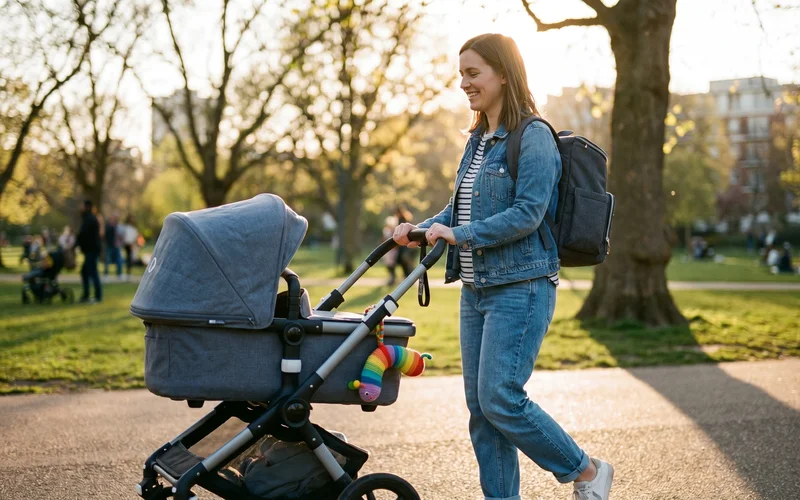
If you want something that looks less like a nappy bag and more like a bag you'd carry anyway, look at the convertible options — backpack one minute, shoulder bag the next. They cost a bit more but you'll actually want to use them.
Tote-Style Baby Changing Bags
A tote is easier to get into quickly — open the top and grab what you need without unclipping buckles or wrestling with zips. If you're doing shorter trips or you prefer something that opens wide, a tote might suit you better than a backpack.
The downside is shoulder strain. A fully loaded tote pulls hard on one side, and by the time your baby is six months old and the bag weighs a small fortune, you'll feel it in your neck and shoulder. If you go the tote route, make sure it has padded shoulder straps.
The other upside of totes: they often look smarter. If you're heading somewhere where a backpack feels too casual, a structured tote in a neutral leather-look fabric passes for a regular handbag from a distance.
Crossbody and Eco-Friendly Changing Bags
Crossbody changing bags sit somewhere between a tote and a backpack — comfortable to carry, easy to swing round to the front for quick access, and generally smaller than a full changing bag. They work brilliantly as a second bag for short trips once you've figured out your minimum packing list. For a full day out, you'll probably want something bigger.
Worth mentioning: the sustainable changing bag market has improved dramatically. If you want something made from recycled materials that actually performs well, there are solid options now that don't compromise on practicality.
What to Pack in Your Baby Changing Bag
This is personal and changes as your baby gets older, but here's what we always carried in the early months:
- 3–4 nappies (more if you're heading somewhere far from a supermarket)
- A pack of fragrance-free baby wipes
- Nappy sacks
- A fold-out waterproof changing mat
- One full spare outfit — including socks, because socks always get soaked or lost
- Two muslins — doubles as a sick cloth, sunshield, emergency table cover
- A lightweight baby blanket or muslin swaddle for the pram or carrier
- Bottles and formula if formula feeding — our glass baby bottles guide covers which ones travel best without leaking
- Dummy and dummy clip if you're using one
- A snack for you — you will absolutely forget to eat
- Your wallet, keys and phone (obvious, but easily left behind when you're running ten minutes late)
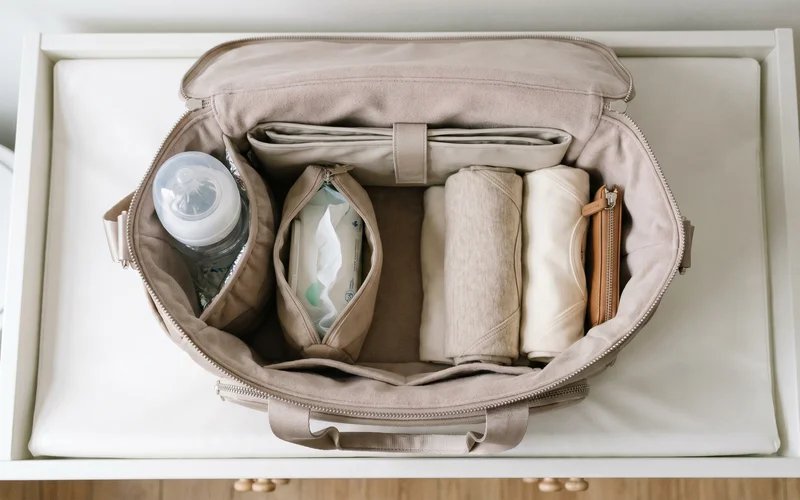
What you can leave at home: every product you bought just-in-case. The bag is heavy enough as it is. Strip it back to what you actually use and it becomes a much more manageable thing to carry.
For layering baby clothing on days out — particularly getting the temperature right — our guide to what to dress baby in at night covers the same logic that applies during the day: always be able to add or remove a layer quickly.
Changing Bags That Work With Your Pram
Some baby changing bags are designed specifically to hang off pram handlebars via integrated clips or a padded strap. The weight distribution matters here — a bag hung off the back of a pram needs to be balanced with whatever's in the under-seat basket, otherwise the pram tips backwards the moment your baby climbs out.
Most brands sell universal pram clips separately if your bag doesn't come with them built in. They're worth having — hands-free walking with a pram and a heavy shoulder bag is miserable.
If you're still sorting your full pram setup, our carriers and prams guide covers everything from lightweight buggies to full travel systems — worth reading before you commit to a system that doesn't have good pram bag options.
Baby Changing Bags for Dads
This deserves its own section because the gendered design of baby products is genuinely annoying. Most changing bags are still marketed almost exclusively at mums, and a lot of them come in pink, floral or pastel. A dad heading out solo with the baby — which is brilliant, please do it — shouldn't have to carry something that makes him uncomfortable.
The good news is the market has caught up significantly. Most of the better bags now come in black, charcoal, navy and olive. A structured backpack in any of those colours is just a backpack — nobody on the street can tell it's a nappy bag. The trick is to buy one bag that works for both of you from the start, rather than ending up with two bags and twice the packing.
How Big Does Your Baby Changing Bag Actually Need to Be?
In the first few months, bigger is usually better. Newborns go through more nappies, more outfits, and need more kit. A full-size changing bag — backpack or tote — is the right tool for the first six months or so.
Once your baby is closer to nine or twelve months, you'll start to realise the large bag is overkill for a one-hour trip to the shops. A compact changing bag — sometimes called a mini changing bag — that holds two or three nappies, wipes, a small mat and your phone is genuinely all you need for quick outings. A lot of parents end up with both: a large bag for full days out and a small one for local trips.
Baby Changing Bags as a Baby Shower Gift
A changing bag is one of the most reliably useful baby shower gifts you can give. New parents use it every single day from week one. Unlike cute sleepsuits that get grown out of in three weeks, a good changing bag lasts two-plus years and gets used multiple times a day.
The sweet spot for a gift budget is around £40–£80. Go for a backpack in a neutral colour — black, grey, olive or camel — with a changing mat included. That way the parents can use it straight away without needing to buy anything extra.
If you want something more personal, a personalised embroidered changing bag with the baby's name or initials is a lovely step up. Most parents wouldn't buy one for themselves, which makes it feel genuinely special. Our personalised baby gifts guide has more ideas at every budget if you're looking for something alongside it.
Whatever you choose, pairing a changing bag with a small pack of quality muslin cloths or a set of reusable wipes makes a thoughtful, practical bundle that new parents genuinely appreciate. Nobody has ever complained about receiving too many muslins.