
About the Authors

We're Tom (33) and Sophie (31) — a Bath couple who launched BabyMade after becoming first-time parents to Freddie. Sophie's midwifery background and our shared obsession with finding genuinely good baby products turned into this blog. We write everything we wish we'd had when Freddie arrived.
Disclosure: This article contains affiliate links. If you buy through our links, we may earn a small commission at no extra cost to you. We only recommend products we genuinely rate.
We started with plastic bottles. Most people do — they're what comes in the starter sets, they're cheaper, and when you're in the fog of the first few weeks, you just grab what's there. It was around eight weeks in, when Sophie started thinking more carefully about what we were heating milk in, that we made the switch to glass baby bottles. We've used them ever since.
This isn't an article telling you plastic is evil or that you're doing something wrong if you use it. It's a proper look at what glass baby bottles are actually like to live with — the cleaning, the weight, the cost, the breakage question, and whether the switch is worth making for your family. For the full picture on all things bottle feeding, our baby feeding guide covers every format in detail.
Why More UK Parents Are Choosing Glass Baby Bottles
The shift toward glass baby bottles in the UK has been gradual but consistent over the last few years, and it's driven by a few things happening at once. Growing awareness about plastics — particularly BPA and phthalates — has made parents more cautious about what they're using to heat and store milk. The NHS guidance on bottle feeding doesn't specifically recommend glass over plastic, but it does emphasise choosing BPA-free products and sterilising thoroughly — both of which glass handles better than most plastics.
There's also a sustainability angle. A good set of glass baby bottles lasts for years — and through multiple children — without degrading, clouding or retaining odours the way plastic eventually does. When you factor in the longer lifespan, the cost difference narrows considerably.
And honestly? Glass just feels cleaner. You can see through it, you can see exactly what's in there, and there's no wondering whether that slightly cloudy patch is residue or just the plastic ageing.
Glass vs Plastic Baby Bottles — The Honest Comparison
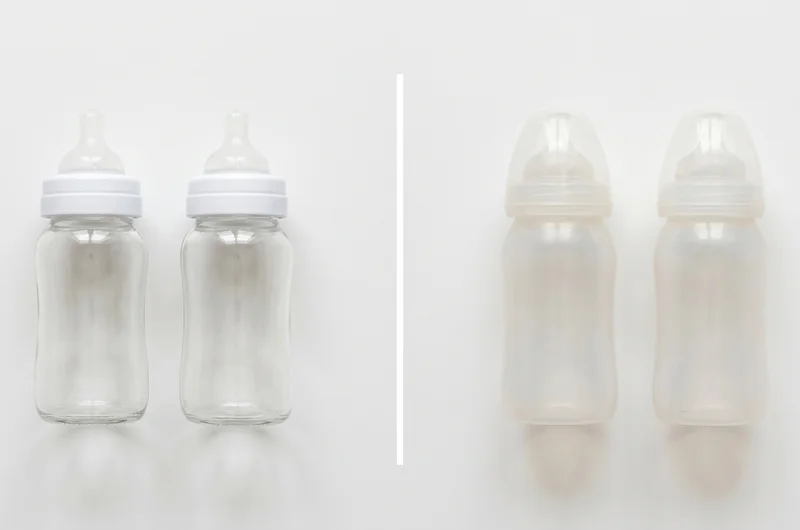
No material is perfect. Here's the straightforward comparison:
- Chemical safety: Glass wins clearly. No plastic polymers, no BPA, BPS or phthalates. Glass does not leach chemicals into milk even when heated or sterilised repeatedly.
- Cleaning: Glass wins. Easier to clean thoroughly, no staining, no odour retention, no clouding over time. Dishwasher safe with confidence.
- Sterilising: Glass wins. Compatible with all methods — steam, microwave, cold water, boiling — and handles high temperatures better than any plastic.
- Weight: Plastic wins. Glass bottles are noticeably heavier, which matters at 3am and becomes more relevant when babies start holding their own bottle.
- Durability: Roughly equal. Glass can break; plastic scratches and clouds. Quality borosilicate glass with a silicone sleeve is tougher than you'd think.
- Cost: Plastic wins upfront. Glass costs more initially but lasts significantly longer — so over 12–18 months the gap largely closes.
- Travel: Plastic wins. Glass is fine in a changing bag but less ideal for trips where you're carrying multiple bottles.
Browse glass baby bottles on Amazon UK — filter by brand and check which come with silicone sleeves included, as this varies.
Are Glass Baby Bottles Safe for Newborns?
Yes — glass baby bottles are safe for newborns, and there's no age restriction on using them. The majority of quality glass baby bottles sold in the UK are made from borosilicate glass, which is the same material used in laboratory glassware and oven-safe cookware. It's thermally stable (handles going from cold fridge to warm water without cracking), chemically inert, and significantly more shatter-resistant than standard glass.
The main practical point for newborns is size — start with the smaller 120ml bottles appropriate for newborn feed volumes, and move up to 240ml as feeds increase. Most glass bottle brands offer both sizes with compatible teats, so you're not switching systems as the baby grows.
If you're formula feeding a newborn, glass bottles are an excellent choice specifically because of how frequently you're heating milk — the repeated heating cycle is where plastic's chemical leaching risk (however small) is highest. Glass eliminates that concern entirely.
Best Glass Baby Bottles UK 2026 — What We Actually Use
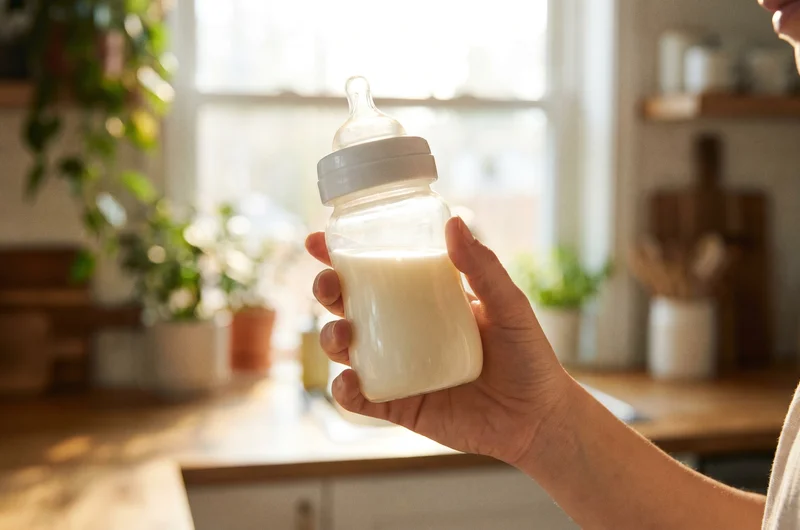
We've tried several glass baby bottles over the past couple of years, and here's our honest take on the main options available in the UK:
Philips Avent Natural Glass: Our personal favourite and the one we'd recommend to most parents as a starting point. The wide-neck design makes it genuinely easy to clean — a bottle brush isn't even necessary if you have a dishwasher. The teat is soft and breast-like, which matters if you're combi feeding. Available in 120ml and 240ml.
Dr. Brown's Wide-Neck Glass: The go-to if colic or wind is a problem. The internal vent system is the most effective anti-colic mechanism we've tested — it genuinely makes a difference for gassy babies. More parts to clean, but worth it. For babies with cow's milk protein allergy where gut discomfort is already a factor, these bottles alongside the right formula are a solid combination — more on that in our CMPA baby guide.
Everyday Baby with Silicone Sleeve: The best option if breakage is your main concern. The colour-coded silicone sleeve provides real protection and makes the bottle easy to grip with soapy hands. Slightly bulkier as a result, but more forgiving on hard floors.
HEVEA Glass with Natural Rubber Teat: For parents who want to eliminate all synthetic materials — glass bottle, natural rubber teat, no silicone, no plastic. More expensive and harder to find in UK shops, but it's the most genuinely natural feeding system available.
How to Clean & Sterilise Glass Baby Bottles
One of the genuinely underappreciated advantages of glass baby bottles is how clean they get and stay. After six months of daily use, our glass bottles look as clear as the day they arrived. Our plastic bottles from the same period were starting to cloud. That cloudiness isn't just cosmetic — it's surface degradation, which makes thorough cleaning harder.
For daily cleaning of glass baby bottles:
- Rinse immediately after each feed — don't let milk sit and dry
- Wash with warm soapy water and a bottle brush, or put straight in the dishwasher (top rack)
- Check the teat separately — milk can pool in the teat hole and is harder to rinse without a teat brush
- Sterilise using any method: electric steam steriliser, microwave steam bag, cold water sterilising or boiling for 5 minutes
You can browse electric steam sterilisers on Amazon UK — most fit both glass and plastic bottles, so no need to change your steriliser if you're making the switch.
Glass Baby Bottles for Breastfed & Combi-Fed Babies
If you're breastfeeding and introducing a bottle — whether for expressed milk, combi feeding or the occasional bottle from a partner — the teat design matters far more than whether the bottle is glass or plastic. What you're trying to avoid is nipple confusion: a teat that requires no effort from the baby will make the breast feel like too much work by comparison.
For breastfed babies, look for:
- Slow-flow teat — so the baby has to actively suck, which mirrors breastfeeding effort
- Wide, breast-shaped base — so the baby latches in a similar way to the breast
- Paced bottle feeding technique — hold the bottle more horizontally, let the baby pause and control the feed
Both Philips Avent Natural Glass and Tommee Tippee Closer to Nature Glass are designed with breastfed babies in mind and have the widest teat bases of any glass bottles we've tried. For a deeper look at combi feeding, managing milk supply and everything else involved in the feeding journey, our full baby feeding guide covers all of it.
Do Glass Baby Bottles Help with Colic?
Glass baby bottles don't reduce colic on their own — but the anti-colic systems inside certain glass bottles do. The distinction matters because some parents switch to glass expecting it to solve wind problems, which it won't unless the bottle also has a proper anti-colic mechanism.
If colic and wind are your main concern, look specifically for glass bottles with internal venting systems — Dr. Brown's is the most established, with a full-length vent tube that channels air away from the milk. MAM and Philips Avent also make glass versions of their anti-colic designs.
Browse anti-colic glass baby bottles on Amazon UK and read the reviews carefully — user experience with colic reduction varies significantly by baby.
If your baby's wind and discomfort isn't improving despite trying anti-colic bottles and different feeding positions, it's worth speaking to your GP — persistent symptoms can sometimes point to cow's milk protein allergy, which requires a different approach entirely.
Are Glass Baby Bottles Worth the Price?
For most families, yes — with caveats. The upfront cost of glass baby bottles is higher than plastic (typically £10–£18 per bottle versus £5–£10 for plastic equivalents). But glass bottles last significantly longer — they don't cloud, scratch or degrade — and a set of glass bottles can genuinely last through a second or third child with no noticeable deterioration. When you factor that in, the cost per use is often lower than plastic.
The situations where glass baby bottles are most clearly worth it:
- You're formula feeding full time and heating bottles multiple times a day — glass eliminates any chemical leaching concern from repeated heating
- You want to minimise plastic in your baby's environment generally
- You're planning to have more than one child and want bottles that last
- Your baby is prone to digestive issues and you want to eliminate as many variables as possible
Where plastic or silicone might make more sense: if you're on-the-go constantly, if your baby is starting to self-feed (glass is heavy), or if budget is genuinely tight right now. There's no shame in using plastic — the most important thing is that your baby is fed. Our baby feeding guide covers every bottle type and feeding method so you can find the right fit for your situation.
Whatever bottles you use, pairing them with a good bedtime routine — including a consistent feed before sleep — makes a significant difference to how the whole feeding and settling process works at night.