
About the Authors

We're Tom (33) and Sophie (31) — a Bath couple who launched BabyMade after becoming first-time parents to Freddie. Sophie's midwifery background and our shared obsession with finding genuinely good baby products turned into this blog. We write everything we wish we'd had when Freddie arrived.
Disclosure: This article contains affiliate links. If you buy through them we may earn a small commission at no extra cost to you. We only recommend products we genuinely rate.
When we were planning Freddie's newborn shoot, I (Sophie) spent an embarrassing amount of time on Pinterest trying to figure out what flowers to use. Every single photo I kept coming back to had the same thing in it — that soft, cloud-like white flower that looks like someone scattered stars across the frame. Baby's breath gypsophila. I didn't even know its proper name at the time. I just typed "pretty white fluffy flower newborn photos" into Google and landed on it immediately.
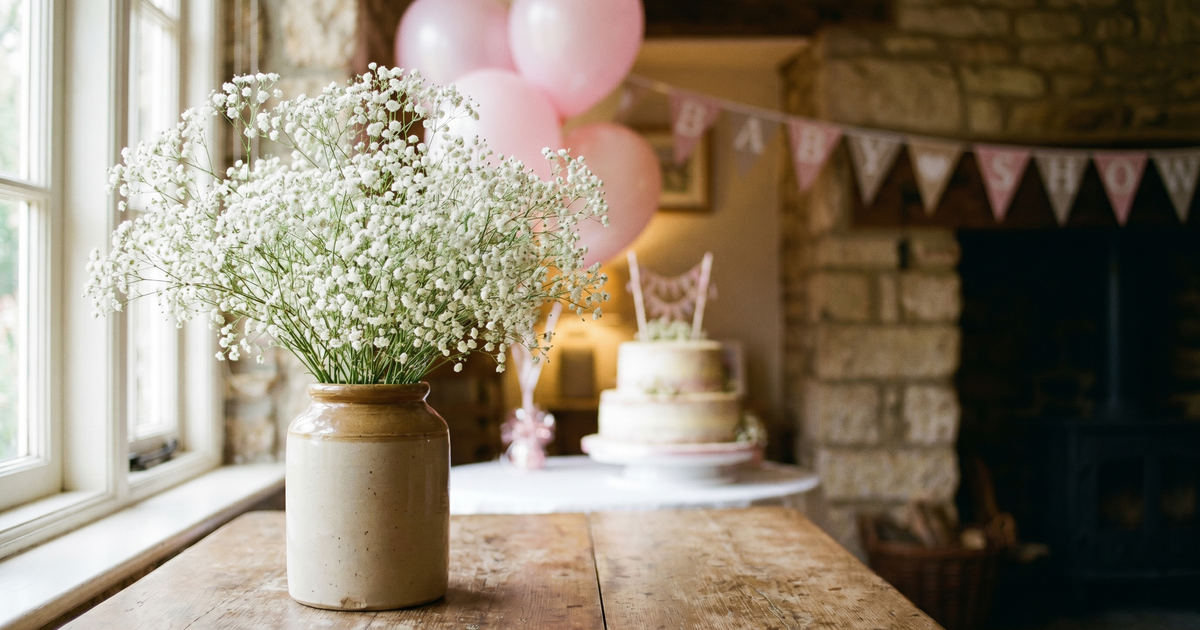
Since then we've used baby's breath gypsophila for basically everything: the table centrepieces at our NCT friend's baby shower, the little dried bunch hanging on Freddie's nursery wall, and the garland we draped across our mantlepiece when we got home from hospital. It's one of those flowers that looks like it should be expensive and fussy but is actually the easiest, most affordable thing going — and it works for almost every style from boho neutral to soft romantic to minimal Scandi.
This guide covers everything you actually need to know about using baby's breath gypsophila for a baby shower, nursery decor, and newborn photography. For the full picture on decorating a baby shower from scratch, see our baby shower planning guide — and our dedicated baby shower decorations guide has 20 specific decoration ideas with budgets.
What Is Baby's Breath Gypsophila?
The botanical name is Gypsophila paniculata — but nobody calls it that, not even florists. In flower shops it's just "gyp" (ask for it by that name and any florist will know exactly what you mean). The common name, baby's breath, comes from the airy, delicate quality of the tiny white blooms — hundreds of small flowers on fine, branching stems that look almost like a little cloud when you hold a bunch together.
It's native to central Europe and Asia, and the RHS notes it grows happily in the UK in well-drained, alkaline soil in a sunny spot — so if you want to try growing your own, it's very doable in most British gardens. The flowers are typically white, though you'll also find pale pink varieties. For decoration purposes, white is the most versatile by far.
It's been a staple filler flower in floristry for decades — the kind of thing that used to be seen as old-fashioned or cheap, before the whole dried and boho flower movement completely rehabilitated it. Now it's one of the most-pinned flowers on Pinterest and a genuine staple of the neutral nursery aesthetic that's so popular in the UK right now.
Why Baby's Breath Gypsophila Works So Well for Baby Showers
There are a few flowers that just work for baby showers — soft, pretty, not too loud — and baby's breath gypsophila is near the top of that list. Here's why it keeps coming up:
It's incredibly affordable. A big bunch of fresh gypsophila from a supermarket costs £3–£5 and goes a very long way. For a dried bunch large enough to fill a medium vase, you're looking at £6–£12 online. Compare that to a similar volume of peonies or garden roses and the cost difference is significant. For a DIY baby shower on a budget, gypsophila is one of the best value decorating choices you can make.
It works with everything. Whether your baby shower is pink and gold, neutral sage and cream, white and silver, or full-on maximalist floral — gypsophila fits. It fills gaps between other flowers beautifully, and on its own in a simple glass vase it looks elegant rather than sparse. There's a reason florists use it as a filler in almost every arrangement style going.
It photographs brilliantly. That soft, slightly out-of-focus quality gypsophila has in photos is genuinely one of its best features. It adds texture and dimension to flat table setups without competing with anything else in the frame. Every baby shower photo looks better with some gypsophila in it.
It's available year-round in the UK. Unlike seasonal flowers, gypsophila is stocked in most UK supermarkets, florists and garden centres throughout the year. You're not at the mercy of growing seasons or expensive specialist orders.
Baby's Breath Gypsophila for Nursery Decor
One of the things I love most about baby's breath gypsophila is how it works in a nursery long after the baby shower is over. Dried gypsophila in particular is having a real moment in UK nursery interiors — and it makes complete sense. It's low maintenance, it lasts for years, it works in tiny spaces, and it fits the neutral, natural aesthetic that most UK nurseries are going for right now.
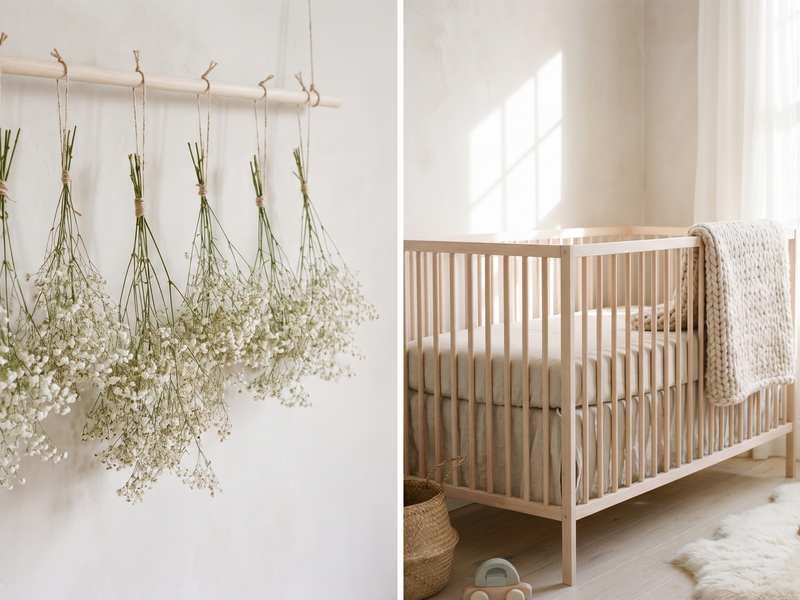
The simplest version: tie a bunch of dried gypsophila with a ribbon and hang it upside down from a small hook or nail on the nursery wall. It dries in place (if it hasn't already), holds its shape, and looks like something from a very expensive interiors magazine. We did this in Freddie's nursery and it's still there now, nearly eight months later, looking exactly as it did on day one.
Other nursery ideas that work well:
- Small vase on the windowsill. A handful of dried stems in a simple white or terracotta bud vase adds softness without taking up much space. Switch it out seasonally or leave it permanently — dried gypsophila doesn't need any attention.
- Framed pressed gypsophila. Press a small bunch flat and frame it behind glass. It sounds fiddly but takes about ten minutes and creates a genuinely beautiful piece of wall art for a fraction of what you'd pay for a print.
- Nursery door wreath. A dried gypsophila wreath on the nursery door is one of those details that photographs so well when you're documenting the newborn stage. Understated, soft, and completely in keeping with that nest-building feeling.
If you're putting together a full nursery aesthetic, these little touches work beautifully alongside personalised baby gifts like name prints, embroidered blankets and keepsake boxes — the kind of thing that makes the room feel genuinely curated rather than just assembled from a shopping list.
Using Baby's Breath Gypsophila for Newborn Photography
Newborn photography and gypsophila go together like — well, like newborns and tiny hats. The flower's scale, softness and neutral white colour make it one of the most photogenic props you can use in a newborn shoot, and it's accessible enough that you don't need to hire a professional florist to put it together.

Here's how it's most commonly used:
Scattered around the baby. Loose dried or artificial gypsophila blooms scattered around a sleeping newborn on a white fluffy blanket or wrap creates a soft, cloud-like effect. This is the most popular newborn photography pose with gypsophila, and it's genuinely beautiful. Always use dried or artificial for this — not fresh — to avoid any moisture or pesticide contact with the baby's skin.
Flower crown or halo. A gypsophila flower crown on a newborn is one of the sweetest newborn photography props going. You can buy ready-made ones in a range of sizes, or make your own by wiring small dried clusters onto a thin wire headband. They sit gently on the head and add a fairy-tale quality to close-up shots.
In a wicker basket or wrap prop. If your newborn shoot uses a basket, bowl or wrap-style prop, a few sprigs of gypsophila tucked in around the baby adds texture and softness. It works particularly well as a border — framing the baby without drawing the eye away from their face.
Alongside a birth announcement board. For photos shared on social media or printed as birth announcement cards, a small gypsophila arrangement next to the announcement board is a lovely touch. Simple, sweet, and recognisably "new baby" without being fussy. For something to complement the photos longer-term, our baby keepsakes guide has lovely ideas for preserving those early weeks.
Fresh vs Dried vs Artificial Gypsophila — Which to Choose
This is the question that comes up most when people are planning a baby shower or nursery setup. Each has genuine advantages — and the right answer depends on what you need it for.
Fresh gypsophila is the most vibrant option and looks the most alive in photos. If you want a proper florist-quality centrepiece for the baby shower table, fresh is the way to go. It's widely available and inexpensive. The downside is that it lasts 5–7 days at most, needs water, and can't be prepared too far in advance. If you're buying it yourself, pick it up the day before or the morning of the shower and condition it overnight in fresh water.
Dried gypsophila is our personal favourite for almost every baby-related use. It lasts indefinitely, looks stunning in arrangements and hanging displays, can be ordered weeks in advance, requires no water or maintenance, and can be reused long after the event. It's slightly less vibrant than fresh but has a romantic, antique quality that actually photographs beautifully. Dried gypsophila also holds its shape far better in props — which is why it's the only version we'd recommend for newborn photography.
Artificial (silk) gypsophila is the most practical option if you need something completely maintenance-free, want to use it repeatedly, or are creating a semi-permanent display. Quality artificial gypsophila is nearly indistinguishable from dried in photos and holds up well in humid environments (a nursery with a humidifier running, for example) where dried might eventually deteriorate. The best artificial versions are made from fabric rather than plastic and have good weight to them.
Baby's Breath Gypsophila Arrangement Ideas
You don't need to be a florist to make gypsophila look beautiful. These are the arrangements we've actually used ourselves or seen at baby showers, that anyone can put together in under ten minutes.
The single-stem vase cluster. Fill three or four simple bud vases (clear glass or plain white ceramic) with a few stems of dried or fresh gypsophila each, and group them together at different heights on the table. Simple, effective, and looks intentional rather than accidental.
Gypsophila and eucalyptus. Dried gypsophila with eucalyptus branches in a tall vase is one of the most popular neutral baby shower centrepieces going. The silver-green of the eucalyptus and the soft white of the gypsophila together are very hard to fault. Add a cream or neutral ribbon tied around the vase and that's genuinely all you need.
Hanging bunch above the table. Tie a generous bunch of dried gypsophila with satin ribbon and hang it from the ceiling directly above the baby shower table. It creates a beautiful focal point and photographs brilliantly when guests are gathered around the table. You can wrap fairy lights through it for evening events.
Table confetti scatter. Rather than foil confetti (which ends up everywhere and is a pain to clean up), dried gypsophila petals or small broken clusters scattered across the table surface create a soft, organic confetti effect that looks lovely in photos and brushes off easily afterwards.
For more decoration ideas across different budgets and styles, our baby shower decorations guide covers everything from balloon arches to flower walls with 20 specific ideas and honest budget breakdowns.
How to Care for Fresh Baby's Breath Gypsophila
If you're going with fresh for your baby shower, here's how to get the most out of it:
- Condition overnight before the event. When you get the fresh gypsophila home, trim the stems at a 45-degree angle (this maximises the surface area for water uptake) and stand the bunch in a bucket of cool, clean water in a cool room overnight. This "conditioning" step makes a significant difference to how long it lasts.
- Change the water every two days. Clean water prevents bacterial build-up on the stems, which is the most common cause of cut flowers dying prematurely. A small amount of flower food (usually supplied with supermarket bunches) helps.
- Keep away from fruit. Ripening fruit gives off ethylene gas, which accelerates flower deterioration. Don't put gypsophila (or any cut flowers) near a fruit bowl.
- Out of direct sunlight. A cool, bright spot is fine; direct sunlight dehydrates cut flowers quickly.
- Recut the stems if they start to droop. If the gypsophila starts looking limp before your event, trim another centimetre off each stem and put them back in fresh water. It usually perks up within a few hours.
And if you want to keep your gypsophila after the event — dry it yourself. Bundle the stems together, tie with string, and hang upside down in a warm, dry room with good airflow for about two weeks. The flowers dry in place and you end up with a beautiful dried bunch for the nursery. It's genuinely that easy.