
About the Authors

We're Tom (33) and Sophie (31) — a Bath couple who launched BabyMade after becoming first-time parents to Freddie. Sophie's midwifery background and our shared obsession with finding genuinely good baby products turned into this blog. We write everything we wish we'd had when Freddie arrived.
Disclosure: This article contains affiliate links. If you buy through them we may earn a small commission at no extra cost to you. We only recommend products we genuinely rate.
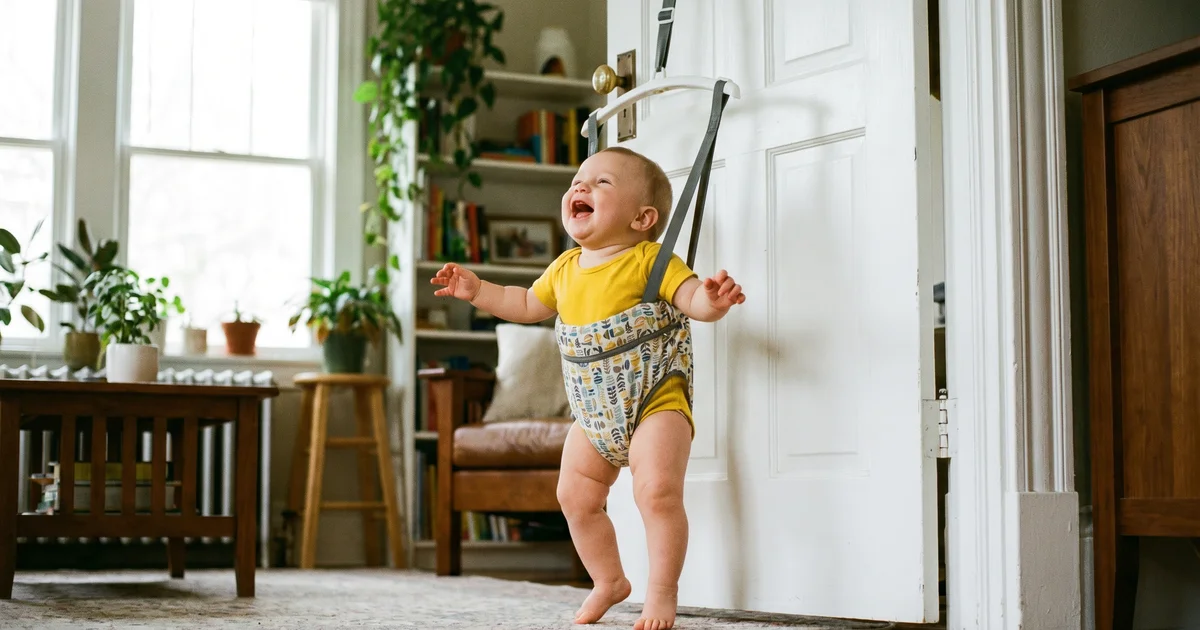
Freddie discovered the door bouncer at about four months old and the reaction was immediate — an enormous grin and the kind of frantic leg action that made it look like he was trying to run away from something. From that point on, it became the answer to the question every new parent asks themselves at some point: what do I do with this baby for the next twenty minutes while I try to eat a meal or have a shower?
A baby door bouncer is one of those products that sounds slightly ridiculous until you actually use it. You clamp a spring to your door frame, you put the baby in a little seat, and they bounce. That's it. And yet the joy it produces — and the freedom it gives the parent — is entirely disproportionate to how simple the concept is.
In the UK, door bouncers have been a parent staple for decades. The same brands that were around when today's parents were babies themselves — Lindam, Jolly Jumper — are still the go-to names. But there are genuinely better options now, with improved harness designs, softer seats and safety standards that make the modern generation of door bouncers noticeably better than the ones from twenty years ago. This guide covers everything: when to start, how to fit one properly, which brands are worth the money, and the safety rules you actually need to know. For our full overview of toys for this age, see our baby toys guide.
What Is a Baby Door Bouncer?
A baby door bouncer — sometimes called a doorway jumper, baby jumper or door swing — is a baby seat suspended from a door frame clamp by a spring or elastic cord. The baby sits upright in the padded seat with their feet touching the floor, and bounces by pushing off with their legs.
The clamp attaches to the top of a door frame (the horizontal part), and the seat hangs from that clamp via the spring. Height is adjustable so you can set the bouncer so the baby's feet rest flat on the floor — they need that ground contact to push off from. The whole thing folds flat for storage when not in use.
This is fundamentally different from a baby bouncer chair, which sits on the floor and reclines. Door bouncers are upright and active — the baby is doing the work, not just being held. That distinction matters for both the developmental benefits and the appropriate age of use.
What Age Can Babies Use a Door Bouncer?
Most baby door bouncers in the UK specify a minimum age of 3–4 months. The reason is head and neck control: a baby needs to be able to hold their head upright independently before they can safely use a door bouncer. In the seat, the head isn't supported — the baby has to do that work themselves.
The developmental milestone to look for isn't the number of months exactly — it's whether your baby can hold their head steady and upright without wobbling or flopping when you hold them in a seated position. Most babies hit this point between 3 and 4 months, but every baby is different. If there's any doubt, wait another few weeks and try again.
The stop signal: Most door bouncers specify a maximum weight of around 11–12 kg. But more importantly, stop as soon as your baby starts pulling themselves to a standing position — they'll have the strength to pull the clamp off the frame at that point. This typically happens between 9 and 12 months.
It's also worth noting that readiness isn't just about age and head control. Some babies take to door bouncers immediately; others need a few attempts before they get the hang of the bounce motion. If your baby looks uncomfortable or upset in the first few sessions, take them out and try again in a couple of weeks. There's no rush.
How to Fit a Baby Door Bouncer Safely
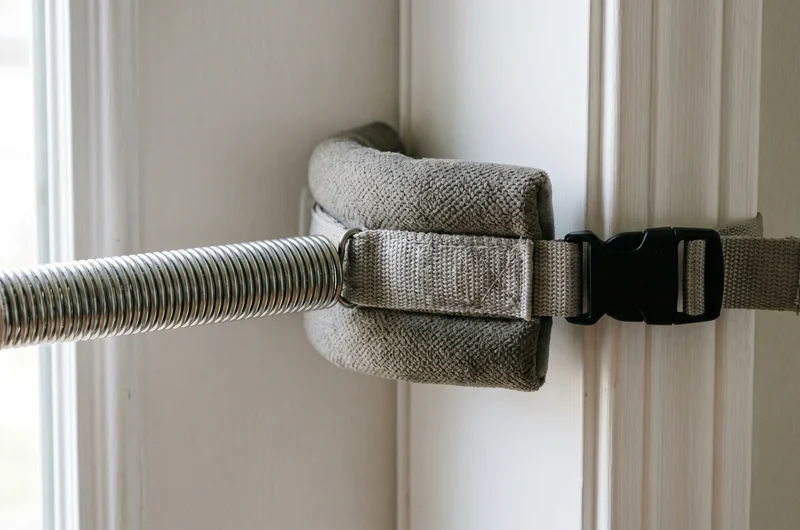
Fitting is the step where most door bouncer problems originate. Done correctly, a door bouncer is very safe. Done incorrectly, it isn't. Here's how to do it right:
Step 1 — Check your door frame
The clamp attaches to the horizontal top section of the door frame. That section must be solid hardwood — if it's hollow-core, MDF, or a modern composite frame, it cannot safely hold a door bouncer. Press your thumb into the frame edge: if it flexes or feels hollow, don't use it. Older houses with solid timber frames are generally fine; many newer builds are not.
Step 2 — Attach the clamp
Open the clamp, position it over the door frame top, and tighten the clamp screw until it's fully firm. The clamp jaw should sit flat against both the top and the front of the frame with no wobble. Follow the specific instructions for your model — the exact position and tightening method varies between brands.
Step 3 — Set the height
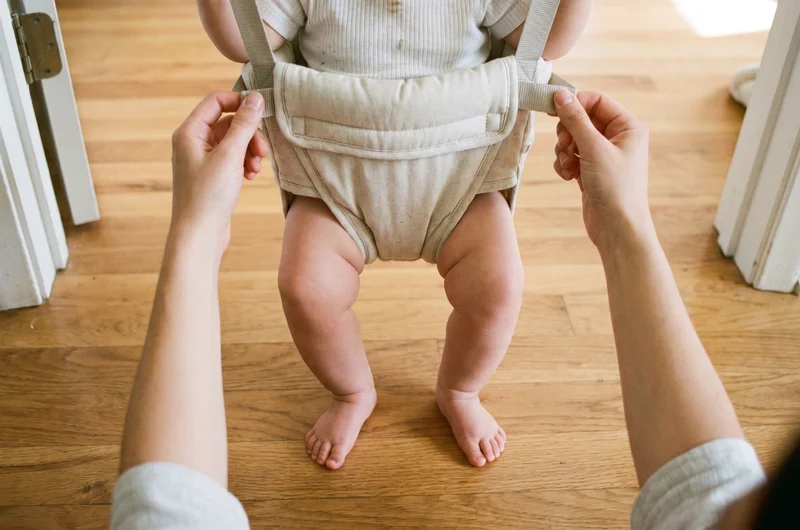
Attach the spring and seat. Adjust the height adjustment straps or extension cord so that when your baby is seated, their feet rest flat on the floor — not on tiptoe, and not with knees bent. Flat-footed contact with the floor gives them the push-off leverage they need and keeps the load through the legs in the correct position.
Step 4 — Do a pull test
Before putting the baby in, grip the spring and pull down sharply. If the clamp shifts, re-tighten it before proceeding. Do this every time you set the bouncer up — the clamp can loosen over time, especially on painted or varnished frames where the surface can compress.
How Long Can a Baby Use a Door Bouncer Per Session?
The standard recommendation from paediatric physiotherapists and most manufacturers is 15–20 minutes per session. This isn't an arbitrary number — it's based on the load a door bouncer puts on developing hip joints and the lower spine during sustained bouncing.
A door bouncer is active equipment. The bouncing motion is great for building leg strength and core stability, but sustained use puts repetitive load through joints that are still forming. Short sessions — two or three times a day at most — are more beneficial than one long one. Between sessions, floor time on a play mat is ideal for varied movement.
The practical reality is that most babies self-regulate this. They bounce enthusiastically for 10–15 minutes and then start to get bored and grizzly, at which point you take them out. Babies rarely stay engaged for longer than 20 minutes in a door bouncer, so the time limit is usually reached naturally. See our baby sleep guide for tips on building routines around active play and rest periods through the day.
Our Top Baby Door Bouncer Picks UK 2026
We've picked out the best baby door bouncers available in the UK right now — covering the established brands, the best value options, and the picks that consistently get the strongest reviews from UK parents who've actually used them through multiple months of daily bouncing sessions.
Best Baby Door Bouncer Brands in the UK
Lindam
Lindam is the name most UK parents know for door bouncers — it's been the market leader here for decades and the quality has stayed consistent. Their Lindam Jump About is reliably good: solid clamp, comfortable padded seat, easy height adjustment. It's not the flashiest option but it does everything it needs to do and the clamp design is robust.
Jolly Jumper
Jolly Jumper is the original door bouncer brand — it's been making them since 1910. The spring design is excellent and the seat is well padded. It's slightly more expensive than Lindam but the quality difference is noticeable and Jolly Jumper models tend to last longer and get used by more than one child.
Chicco
Chicco's door bouncer range is solid across the board — good build quality, good padding, and the brand's usual attention to ergonomics. Chicco tends to be more widely available in physical baby shops than some competitors, which is useful if you want to see one in person before buying.
Mamas & Papas
Mamas & Papas make one of the better-looking door bouncers on the UK market — the design is noticeably more considered than the functional-but-uninspiring look of some competitors. Quality is consistently good and they tend to come with better padding than budget options.
Door Bouncer Safety — What to Check
Door bouncers are safe products when used correctly, but there are a few specific risks that are worth understanding clearly:
- Frame suitability. The single biggest risk with door bouncers is using them on unsuitable door frames. Always check your frame is solid hardwood before attaching any bouncer. A clamp failure with a baby in the seat is a serious fall risk.
- Harness security. The harness should fit snugly — you should be able to fit two fingers between the harness and the baby's body but no more. A loose harness can allow the baby to slip through the seat base, particularly when bouncing vigorously.
- Spring and cord condition. Inspect the spring, elastic cord and all attachment points before each use. Any fraying, cracking or deformation means the bouncer should not be used until that component is replaced.
- Supervision only. Never leave a baby unsupervised in a door bouncer. This is a non-negotiable rule — not because the bouncer is inherently dangerous but because a baby in an upright suspended seat needs to be watched.
- No doors that swing. The bouncer must be attached to a fixed door frame, never a door that can open and close. A swinging door with a baby attached is an obvious hazard.
Look for bouncers that meet BS EN 14036:2003 — the UK safety standard for bouncing cradles. Most reputable brands comply with this standard and will say so in their product listing.
What Door Bouncers Do for Baby Development
The developmental benefits of door bouncers are real, though it's worth understanding what they actually are rather than overstating them.
The bouncing motion — where the baby pushes off the floor and springs back — is a form of weight-bearing exercise that builds leg strength and works the core muscles needed for later motor development. Babies who use door bouncers regularly often show good leg strength by the time they're pulling to stand. The upright position also gives them a different visual perspective on their environment, which is stimulating in its own right.
What door bouncers don't do is accelerate walking. There's no evidence that time in a door bouncer leads to earlier walking, and the old concerns that they delayed walking have also not been supported by research when use is kept to the recommended 15–20 minutes per session. Short, regular sessions as part of a varied play routine are fine. They become a concern when they replace floor time and tummy time rather than complementing it. For more on developmental play at this age, our full baby toys guide covers activity gyms, sensory toys and the rest of the toolkit.
Door Bouncer Alternatives — When It Won't Work
Door bouncers don't work for everyone. The most common problem is door frame compatibility — if your home has hollow-core frames throughout, a standard door bouncer simply isn't an option. Here's what works instead:
Freestanding activity jumpers
Products like the Jumperoo sit on the floor on their own base and don't need a door frame at all. They take up considerably more space but work in any room. The bouncing mechanism is slightly different — the seat rotates as well as bounces — and they tend to have more attached toys. A freestanding baby jumper is the go-to alternative for parents who can't use a door bouncer.
Baby walkers (with caveats)
Baby walkers are heavily debated in the UK — the NHS doesn't recommend them on safety grounds, primarily because of the risk of falls downstairs. If you do use one, stair gates closed at all times is the absolute minimum precaution. They serve a different purpose to door bouncers — mobility rather than bouncing — but are sometimes suggested as an alternative for babies who enjoy the upright position.
Baby bouncers and rockers
For younger babies who aren't yet ready for a door bouncer, a good floor bouncer or rocker provides similar containment and stimulation at a lower developmental stage. These are reclining rather than upright, which makes them appropriate from birth — a different use case but worth knowing about.
What to Look for When Buying a Door Bouncer
If you're deciding between options, here's what actually matters:
Clamp design
The clamp is the most safety-critical component. Look for clamps with a wide jaw that distributes load across the frame rather than a narrow point-contact design. The tightening mechanism should feel solid and have some way to indicate it's fully secure — a visual marker or a firm stop point.
Spring vs elastic
Metal spring bouncers generally have a more responsive, natural bounce feel than elastic cord versions. Elastic cord can degrade over time and become less responsive. If you're planning to use the bouncer for a second child, a spring-based model is the better long-term investment.
Seat padding and harness
The seat should be well padded, support the baby's hips in a neutral position, and have a five-point harness rather than a simple waist band. The harness should be quick to adjust and easy to get a baby in and out of. Removable, washable seat covers are a useful feature — baby bouncers get dirty.
Weight and age limits
Check both the minimum and maximum. The minimum matters because the safety of the design depends on the baby having the head control to use it. The maximum usually applies weight (typically 11–12 kg) and the developmental stage (stop at pull to stand) simultaneously — whichever comes first.
For more on what to buy for a new baby at each stage, our baby feeding guide and baby carriers guide cover the other pieces of the equipment puzzle in the same level of detail.